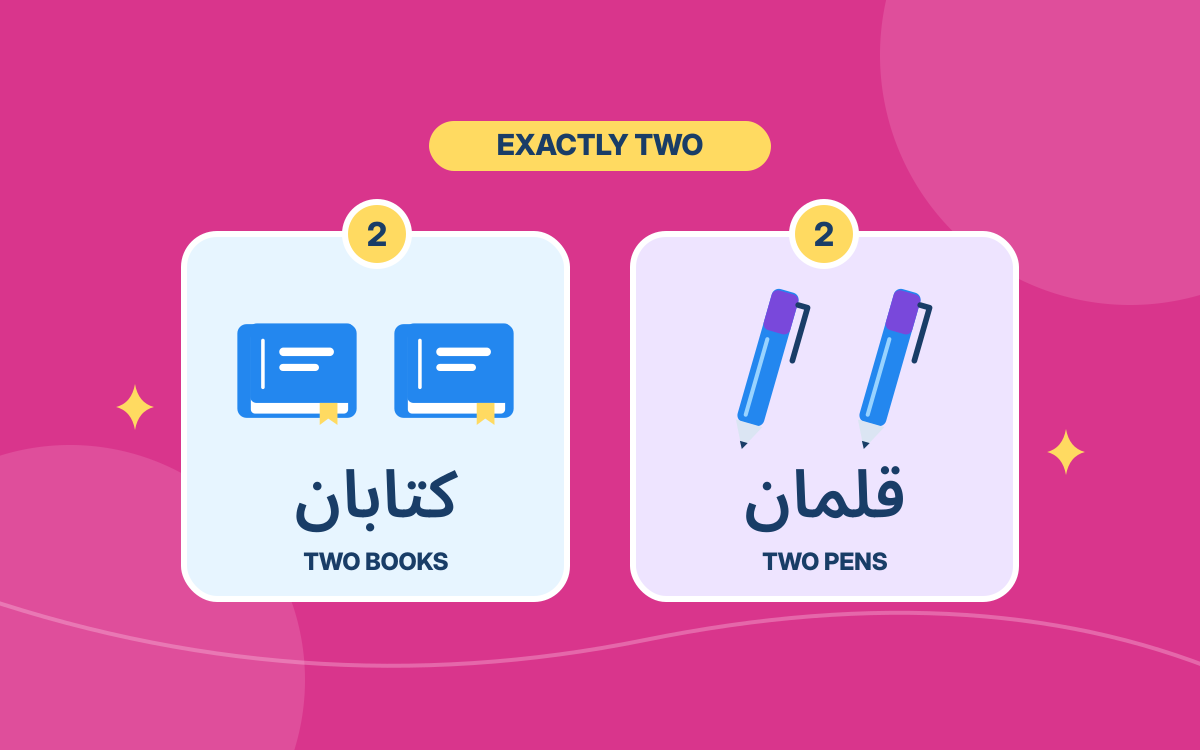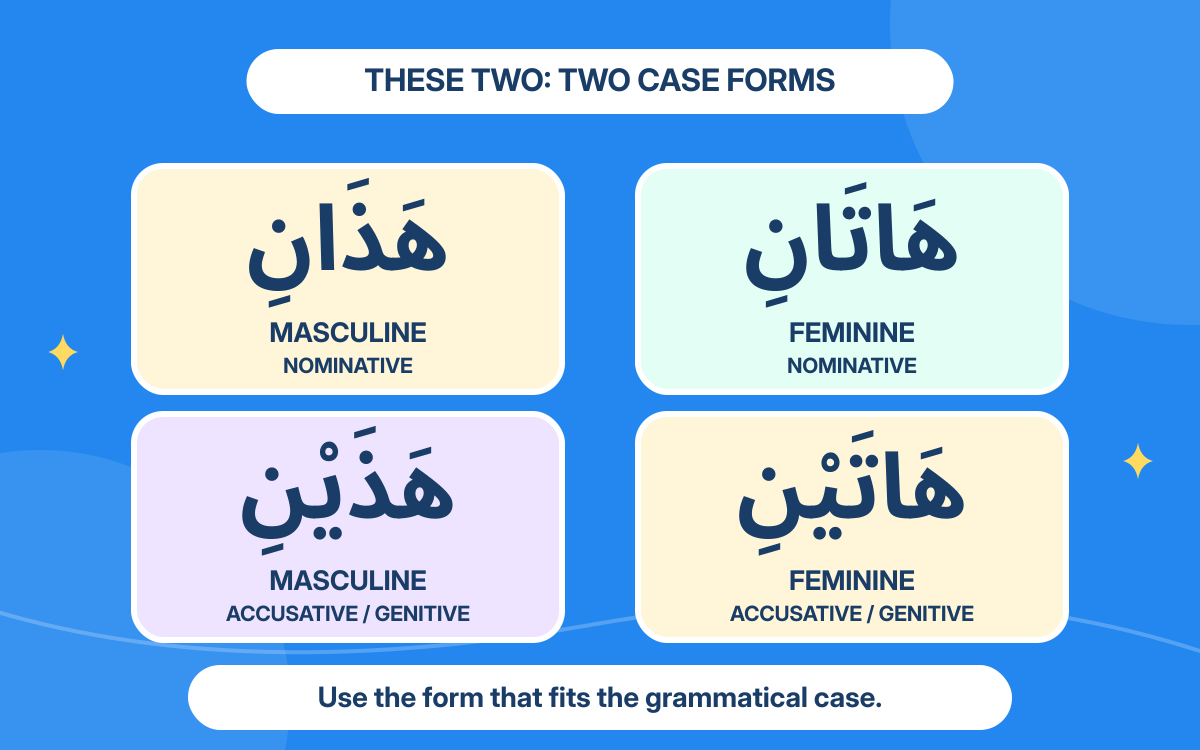
Pointing to two things needs a dual demonstrative. Its form tells you whether the pair is nearby or farther away, whether its noun is masculine or feminine, and which case the sentence requires. You already know dual noun endings; now apply those case choices to “these two” and “those two.”
01Point to a nearby pair
Use hadhani for a masculine pair and hatani for a feminine pair when the demonstrative is nominative. In these simple sentences, it introduces the pair as the subject.
هَذَانِ كِتَابَانِ
hadhani kitabani
These are two books.
هَاتَانِ حَقِيبَتَانِ
hatani haqibatani
These are two bags.
Kitab is masculine and haqibah is feminine. Match that grammatical gender, regardless of who owns the objects. Both demonstratives mean exactly two here. They are not substitutes for the singular hadha and hadhihi.
02Change the form for a direct object
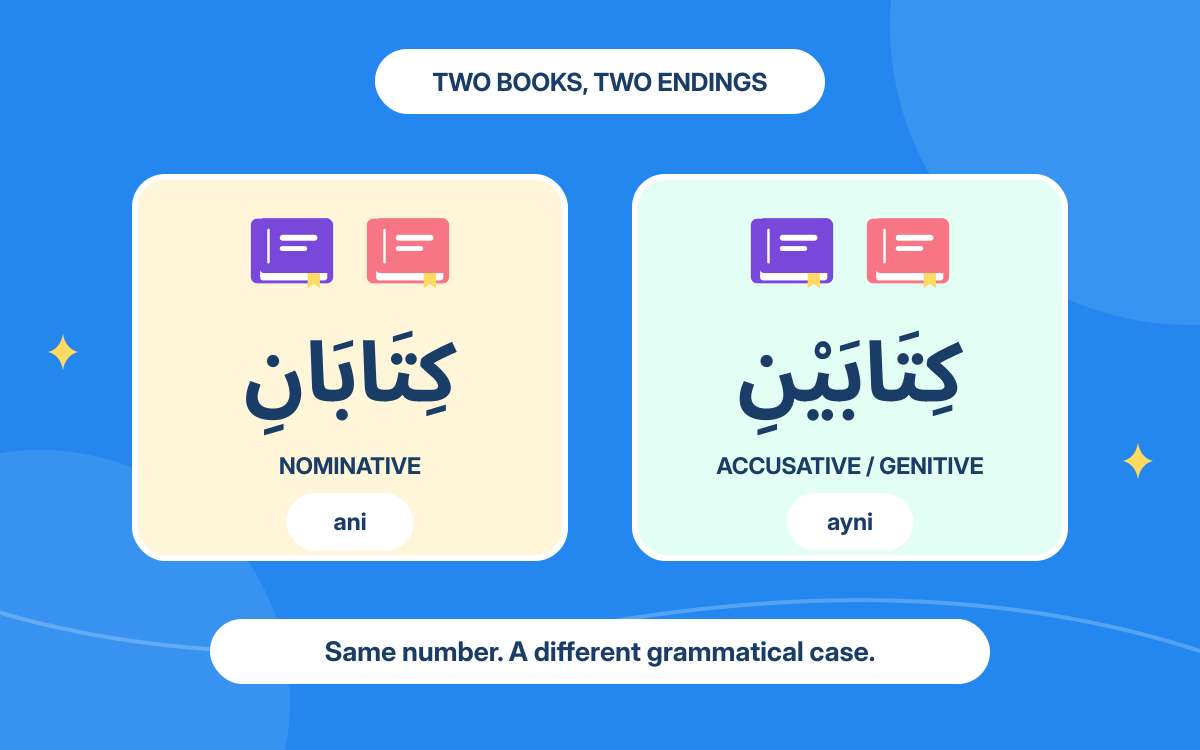
A masculine dual demonstrative changes from hadhani to hadhayni in the accusative or genitive. Compare a nominative subject with an accusative object:
هَذَانِ الْكِتَابَانِ جَدِيدَانِ
hadhani lkitabani jadidani
These two books are new.
فَتَحْتُ هَذَيْنِ الْكِتَابَيْنِ
fatahtu hadhayni lkitabayni
I opened these two books.
In the second sentence, the books receive the action. Both hadhayni and alkitabayni are accusative. The definite noun identifies “these two books”; it is not the indefinite predicate “two books” from the first section.
03Use the oblique forms after a preposition
“Oblique” here means the form shared by accusative and genitive. After fi, choose hadhayni for masculine nouns or hatayni for feminine nouns.
فِي هَاتَيْنِ الْحَقِيبَتَيْنِ
fi hatayni lhaqibatayni
In these two bags
The demonstrative and bag noun are both genitive after the preposition. Hatayni replaces nominative hatani. Likewise, فِي هَذَيْنِ الْكِتَابَيْنِ (fi hadhayni lkitabayni) means “in these two books.” The shared spelling does not make accusative and genitive the same grammatical role; context decides the case.
04Recognise the distant dual forms
For a distant pair, the nominative forms are dhanika for masculine nouns and tanika for feminine nouns.
ذَانِكَ كِتَابَانِ
dhanika kitabani
Those are two books.
تَانِكَ حَقِيبَتَانِ
tanika haqibatani
Those are two bags.
The accusative and genitive counterparts are ذَيْنِكَ (dhaynika) and تَيْنِكَ (taynika). For example, فِي ذَيْنِكَ الْكِتَابَيْنِ (fi dhaynika lkitabayni) means “in those two books.” Learn these formal forms as pairs, changing both distance and case when the sentence requires it.
05Make three decisions before choosing
First decide near or far. Next check the noun’s gender. Finally find the demonstrative’s role: nominative, direct object or after a preposition. The number stays two throughout.
فَتَحْتُ تَيْنِكَ الْحَقِيبَتَيْنِ
fatahtu taynika lhaqibatayni
I opened those two bags.
This pair is distant and feminine, and it receives the action, so choose taynika. The noun uses its accusative dual ending too. These examples keep formal connected pronunciation; at a pause the final short vowel is normally dropped. The plain reading aids simplify Arabic sounds and vowel length.
What to remember
- Near nominative forms are هَذَانِ and هَاتَانِ; accusative and genitive use هَذَيْنِ and هَاتَيْنِ.
- Far nominative forms are ذَانِكَ and تَانِكَ; accusative and genitive use ذَيْنِكَ and تَيْنِكَ.
- Choose by distance, grammatical gender and case, keeping the referenced number exactly two.
Your reference shelf
Open a guide whenever you need it.
Eight forms in one tableCompare near and far forms by gender and case
| Pair | Nominative | Accusative / genitive |
|---|---|---|
| Near masculine | هَذَانِ | هَذَيْنِ |
| Near feminine | هَاتَانِ | هَاتَيْنِ |
| Far masculine | ذَانِكَ | ذَيْنِكَ |
| Far feminine | تَانِكَ | تَيْنِكَ |
The alif marks the nominative dual; ya marks accusative and genitive. Do not classify the case by the final short i on nun. Ordinary singular demonstratives such as hadha remain fixed in these roles, whereas the dual forms taught here change. The ka in the distant forms does not make the indicated things singular. These are the standard forms used in this guide; larger groups and plural agreement have separate lessons.
Sources & further learning
References for the language explanations and learning guidance.