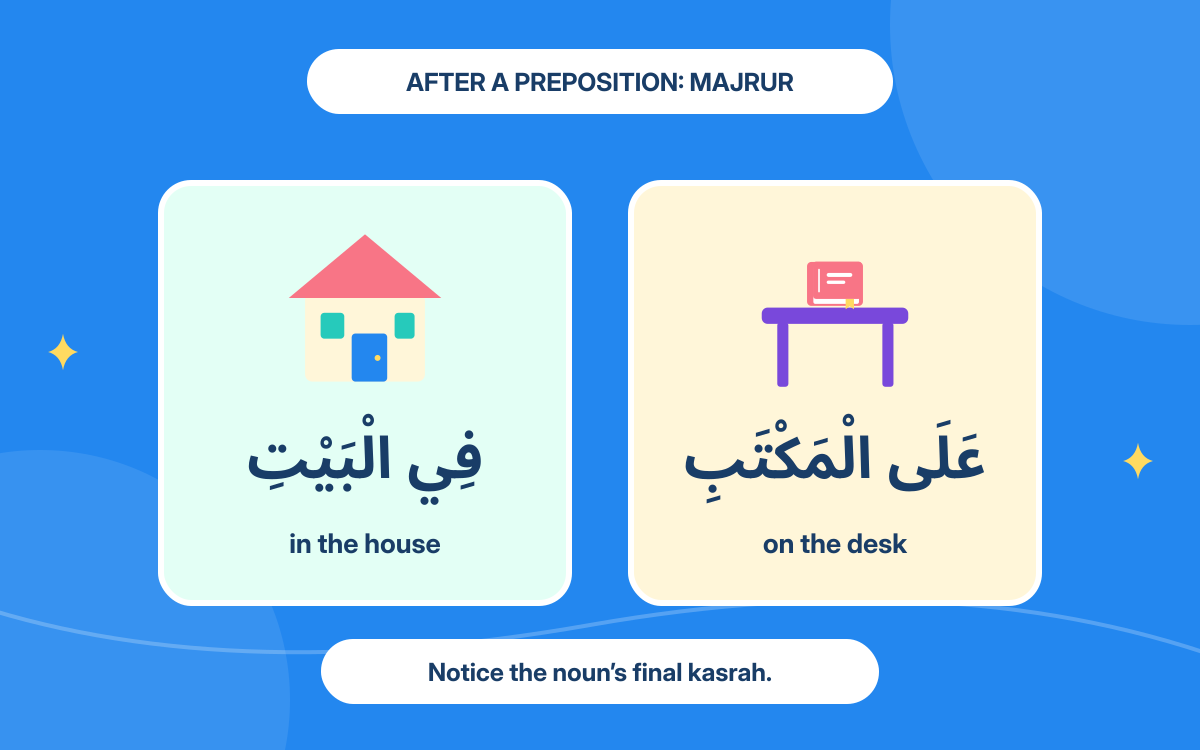
A preposition normally makes the following noun genitive. Yet some nouns show fathah where a beginner expects kasrah. These nouns are called diptotes. The grammatical case is still genitive; the visible sign has changed. Start with two names, then see when the usual kasrah returns.
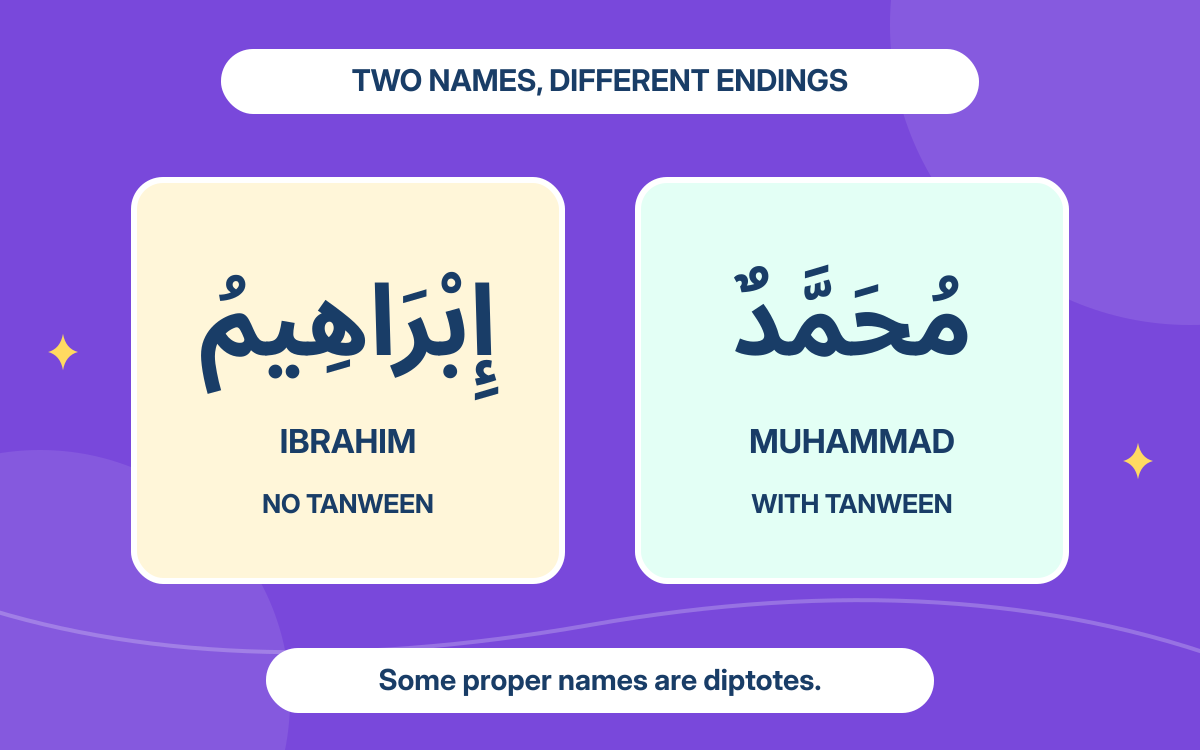
01Compare Ibrahim with Muhammad
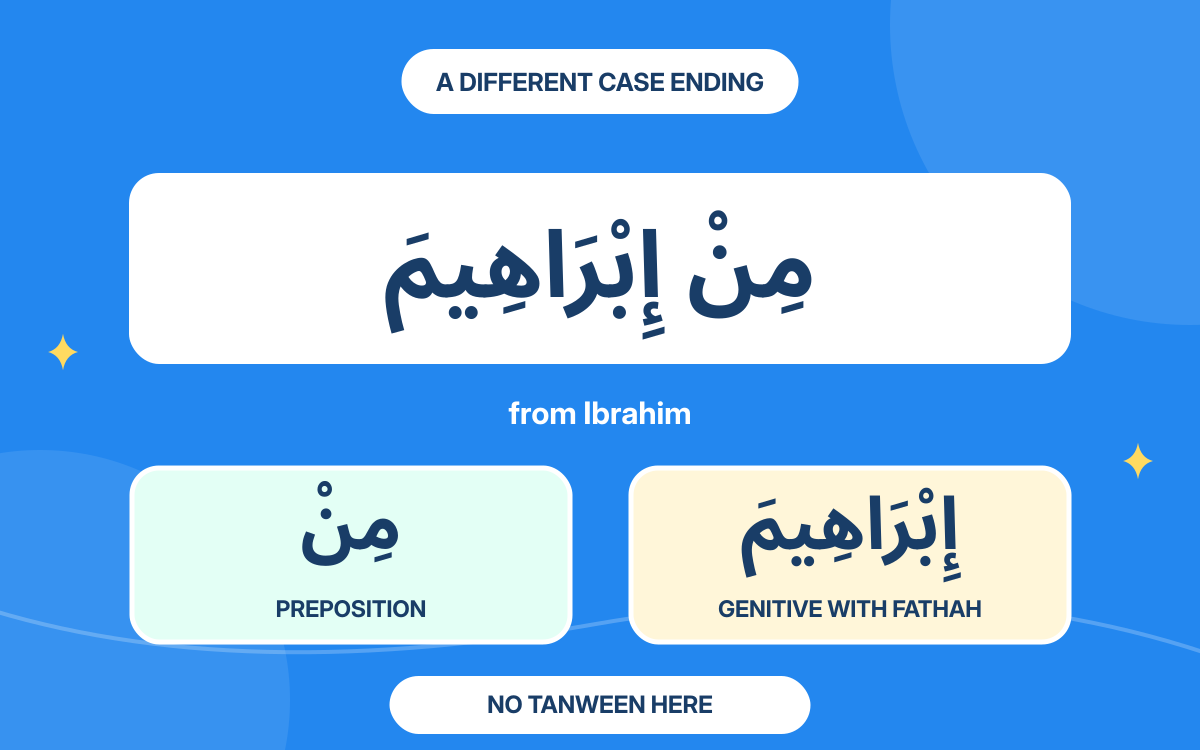
مِنْ إِبْرَاهِيمَ
min ibrahima
From Ibrahim
مِنْ مُحَمَّدٍ
min muhammadin
From Muhammad
Both names follow min, so both are genitive. Ibrahim is a diptote: it has fathah and no tanween here. Muhammad takes regular kasrah with tanween. A proper name can be definite and still carry tanween; names do not all share one ending pattern.
02Separate the case from its sign
In its ordinary form, Ibrahim has dammah in the nominative and fathah in both the accusative and genitive: إِبْرَاهِيمُ, إِبْرَاهِيمَ, إِبْرَاهِيمَ. None of these forms has tanween. Context tells you which job the final a represents.
كِتَابُ إِبْرَاهِيمَ
kitabu ibrahima
Ibrahim’s book
Here Ibrahim is genitive as the second noun of an idafa. It still ends in fathah. Simply being the possessor after another noun does not restore kasrah.
03Some broken plurals are diptotes too
فِي مَسَاجِدَ
fi masajida
In mosques
Masajid, “mosques,” is a diptote broken plural. Without ال and without being the first noun of an idafa, it takes fathah here after fi. The noun is still genitive.
Do not conclude that every plural behaves this way. فِي كُتُبٍ (fi kutubin), “in books,” has a regular genitive ending. Learn the noun’s pattern as well as its meaning. Likewise, knowing that something is a person’s name is not enough to predict a diptote.
04Restore kasrah with al or as the first noun
فِي الْمَسَاجِدِ
fi lmasajidi
In the mosques
فِي مَسَاجِدِ الْمَدِينَةِ
fi masajidi lmadinati
In the city’s mosques
Kasrah returns when the diptote itself has ال or is mudaf, the first noun of an idafa. In the second example, masajid is linked to “the city,” so it is mudaf and takes kasrah after fi.
Compare this with kitabu ibrahima: Ibrahim is the second noun there, not the first. The position of the diptote matters. Neither of the mosque examples adds tanween.
05Ask three questions before choosing the ending
First, is this word a known diptote? Second, does its role require genitive case, for example after a preposition? Third, does the diptote itself have ال or serve as mudaf? If neither condition applies, use fathah for its genitive ending; if either applies, use kasrah.
Do not replace “has ال” with the broader idea “is definite.” Ibrahim is already a definite name, but min ibrahima still ends in a. Keep grammatical definiteness separate from the specific conditions restoring kasrah.
The full formal endings are shown for learning. A pause can hide the final vowel in speech, so inspect the construction as well as what you hear.
What to remember
- A diptote has no tanween and normally uses fathah for the genitive when it lacks ال and is not mudaf.
- Genitive kasrah returns when the diptote itself has ال or is the first noun of an idafa.
- Being the second noun of an idafa, or being a definite proper name, does not alone restore kasrah.
Your reference shelf
Open a guide whenever you need it.
One diptote across three constructionsKeep genitive case separate from its visible vowel
| Construction | Arabic | Why this ending? |
|---|---|---|
| Without ال or idafa | فِي مَسَاجِدَ | Fathah marks the diptote’s genitive. |
| With ال | فِي الْمَسَاجِدِ | The article restores kasrah. |
| Diptote as mudaf | فِي مَسَاجِدِ الْمَدِينَةِ | The first noun of this idafa uses kasrah. |
The Arabic term is الْمَمْنُوعُ مِنَ الصَّرْفِ. Diptotes form several recognised groups, including certain proper names, adjective patterns and broken plural patterns. This introduction teaches the endings rather than every category.
Do not label every foreign name, every feminine name or every broken plural a diptote. The detailed categories have conditions and exceptions. Muhammad is a useful reminder that a name can take regular tanween while remaining definite.
In كِتَابُ إِبْرَاهِيمَ, Ibrahim is mudaf ilayh, the second noun. In فِي مَسَاجِدِ الْمَدِينَةِ, masajid is mudaf, the first noun, and is also genitive because fi governs it. Those are different grammatical relationships.
Sources & further learning
References for the language explanations and learning guidance.