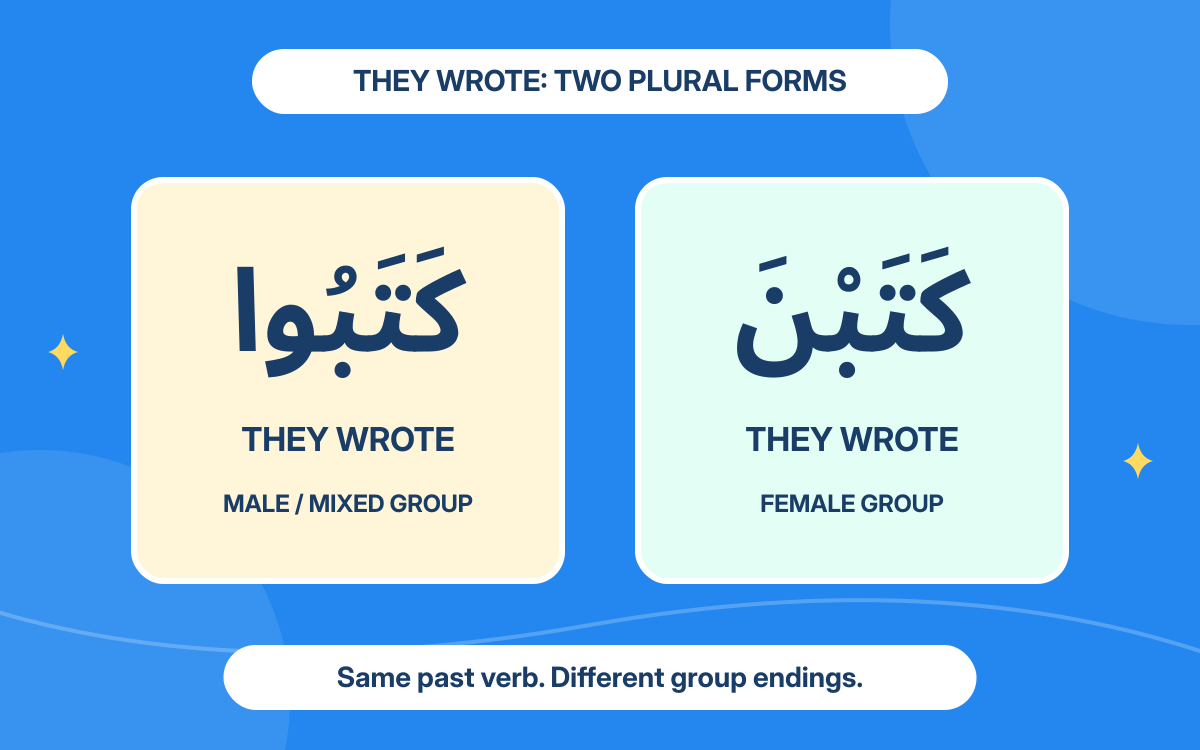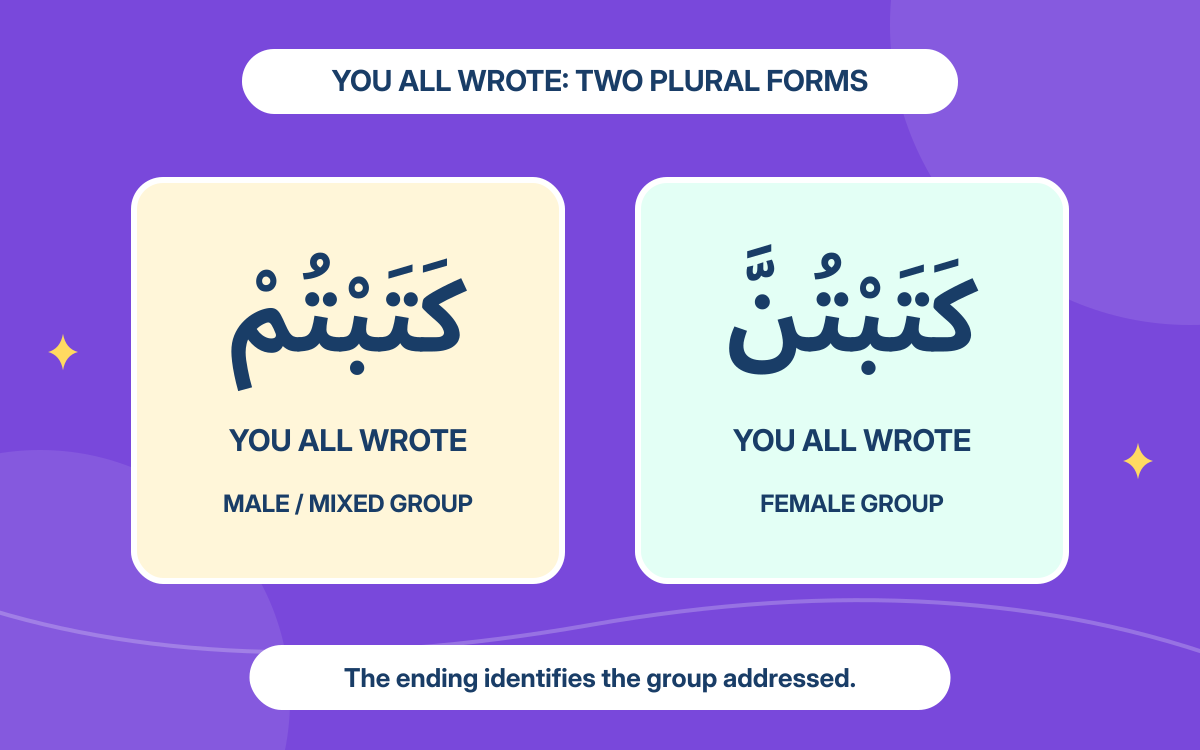
English you wrote can address one person or a whole class. Arabic marks that difference in the past verb itself. Katabtum addresses a male or mixed group, while katabtunna addresses a female group. Choose by the people listening to you, then keep the complete ending clear.
01Address men or a mixed group
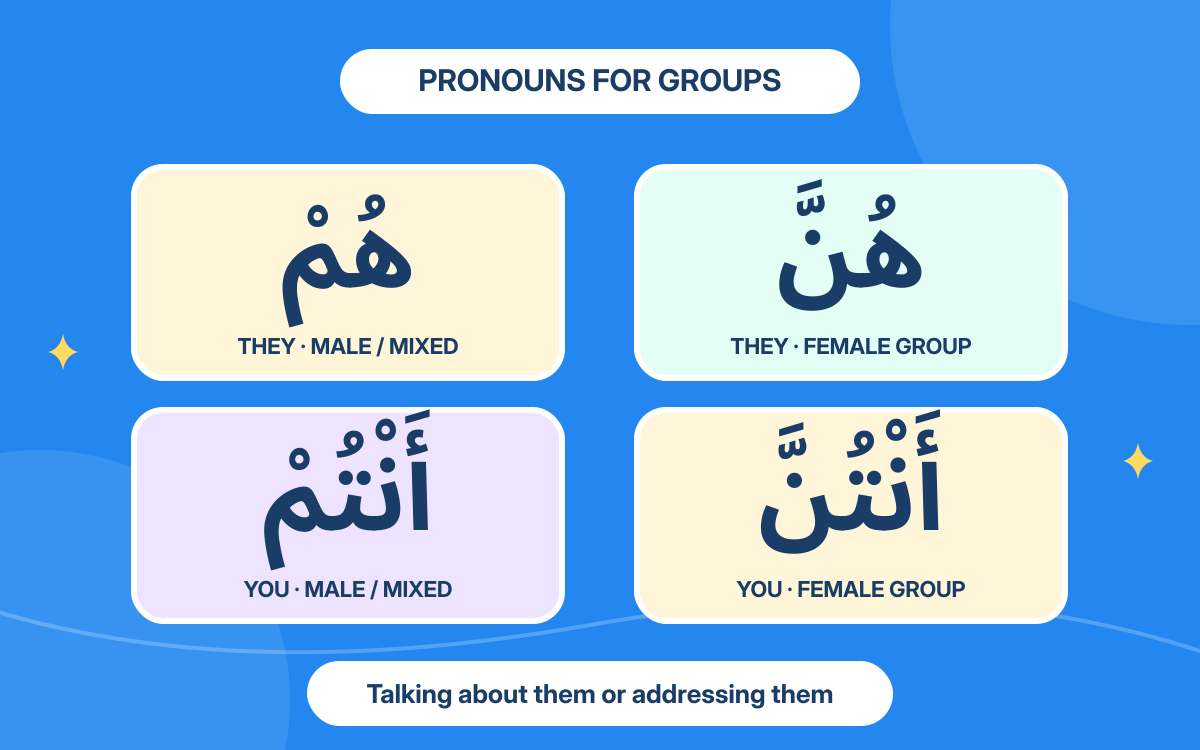
Use antum when speaking directly to several men or to a mixed group of men and women. The matching past form is katabtum, you all wrote. It addresses the people who completed the action; it does not mean they wrote.
أَنْتُمْ كَتَبْتُمْ
antum katabtum
You all wrote. — a male or mixed group
The ending تُمْ is read tum. Notice the final m, which distinguishes this form from katabtu, I wrote. These human plural forms normally address three or more people; two listeners use the dual.
02Address women with tunna
When every listener in the group is a woman, use antunna and katabtunna. The action is still past writing, but its ending now identifies female plural listeners.
أَنْتُنَّ كَتَبْتُنَّ
antunna katabtunna
You all wrote. — a female group
The ending تُنَّ contains tu followed by a doubled n and a final short a. The shaddah on n marks that doubling. Keep it audible when reading the whole form.
The b before the ending has sukun in both katabtum and katabtunna. Say katab, then the appropriate complete ending.
03Choose by the listeners
A female teacher speaking to four men uses katabtum. A male teacher speaking to four women uses katabtunna. The speaker’s own gender does not decide either form.
أَنْتُمْ كَتَبْتُمْ رِسَالَةً
antum katabtum risalatan
You all wrote a letter. — to men or a mixed group
أَنْتُنَّ كَتَبْتُنَّ رِسَالَةً
antunna katabtunna risalatan
You all wrote a letter. — to women
Risalatan names the object, a letter. Its form stays the same in both sentences because changing the writers does not change what they wrote.
04Keep I and singular you separate
Compare كَتَبْتُ (katabtu), I wrote, with كَتَبْتُمْ (katabtum), you all wrote. Do not lose the final m when addressing a male or mixed group.
كَتَبْتَ
katabta
You wrote. — to one man
كَتَبْتِ
katabti
You wrote. — to one woman
The singular listener endings ta and ti differ from the plural tum and tunna. Replace the ending appropriate to the doer rather than stacking several endings onto one verb. Identify how many people are being addressed before choosing their gender form.
05Change the role in a reply
You ask a group of women about their writing. In their answer, those same women become the speakers and use we.
هَلْ كَتَبْتُنَّ رِسَالَةً؟
hal katabtunna risalatan
Did you all write a letter? — to women
نَعَمْ، كَتَبْنَا رِسَالَةً
naam katabna risalatan
Yes, we wrote a letter.
The question uses tunna for the female listeners. The answer uses na for we, which works for a group of any gender. You do not copy the question’s you ending into an answer about yourself and your group.
The separate antum or antunna can be added for clarity; the verb ending already identifies its listeners.
What to remember
- Katabtum addresses a male or mixed group; katabtunna addresses a female group.
- Choose the ending by the listeners, regardless of the speaker’s gender.
- Keep I, singular you and plural you separate; a group replying about itself uses we.
Your reference shelf
Open a guide whenever you need it.
Compare singular and plural listenersReview the complete forms without merging their endings
| People | Arabic | Reading |
|---|---|---|
| I — any speaker | كَتَبْتُ | katabtu |
| You — one man | كَتَبْتَ | katabta |
| You — one woman | كَتَبْتِ | katabti |
| You — male or mixed group | كَتَبْتُمْ | katabtum |
| You — female group | كَتَبْتُنَّ | katabtunna |
These are forms of the regular past verb kataba. Other verbs may change internally, so the table is a clear model rather than a way to build every Arabic verb from an unchanged stem. The separate subject pronouns are optional when the verb and context make the listeners clear.
Before a word beginning with the definite article, connected speech can give katabtum a helping u: كَتَبْتُمُ الْكِتَابَ (katabtumu lkitaba), “You all wrote the book.” That connecting sound does not turn the form into I or we. Our main sentences use risalatan, so the ordinary ending remains tum.
Sources & further learning
References for the language explanations and learning guidance.