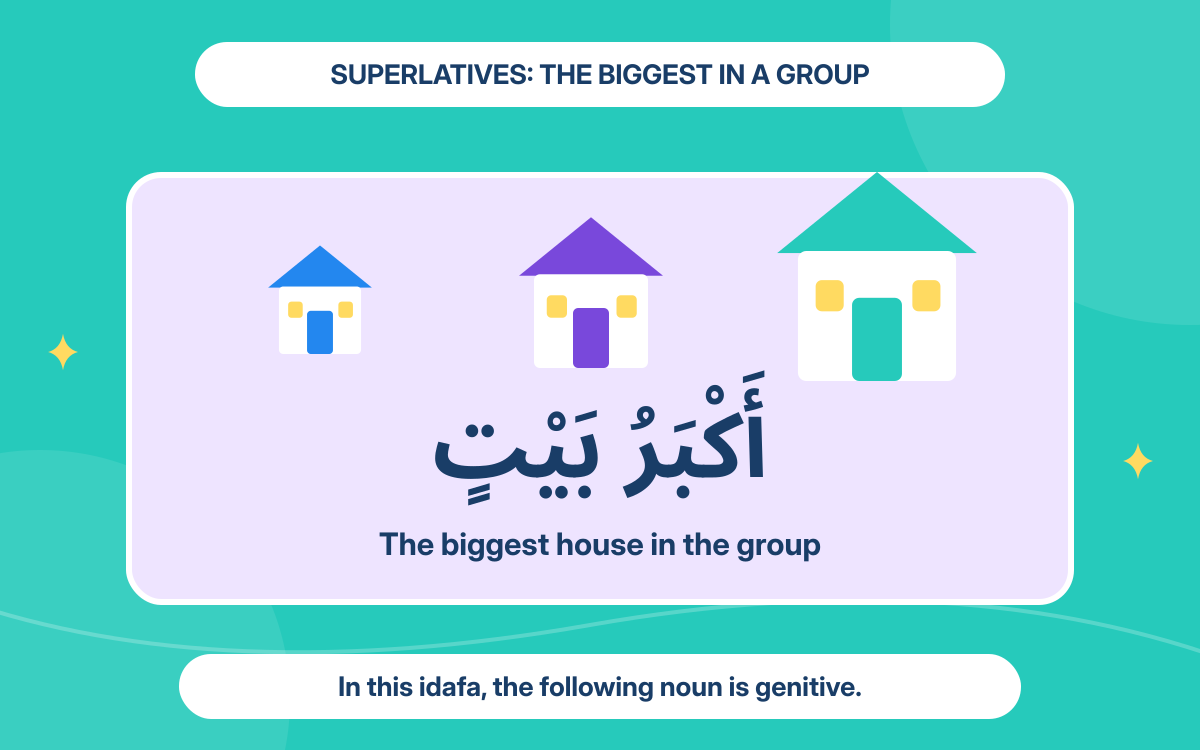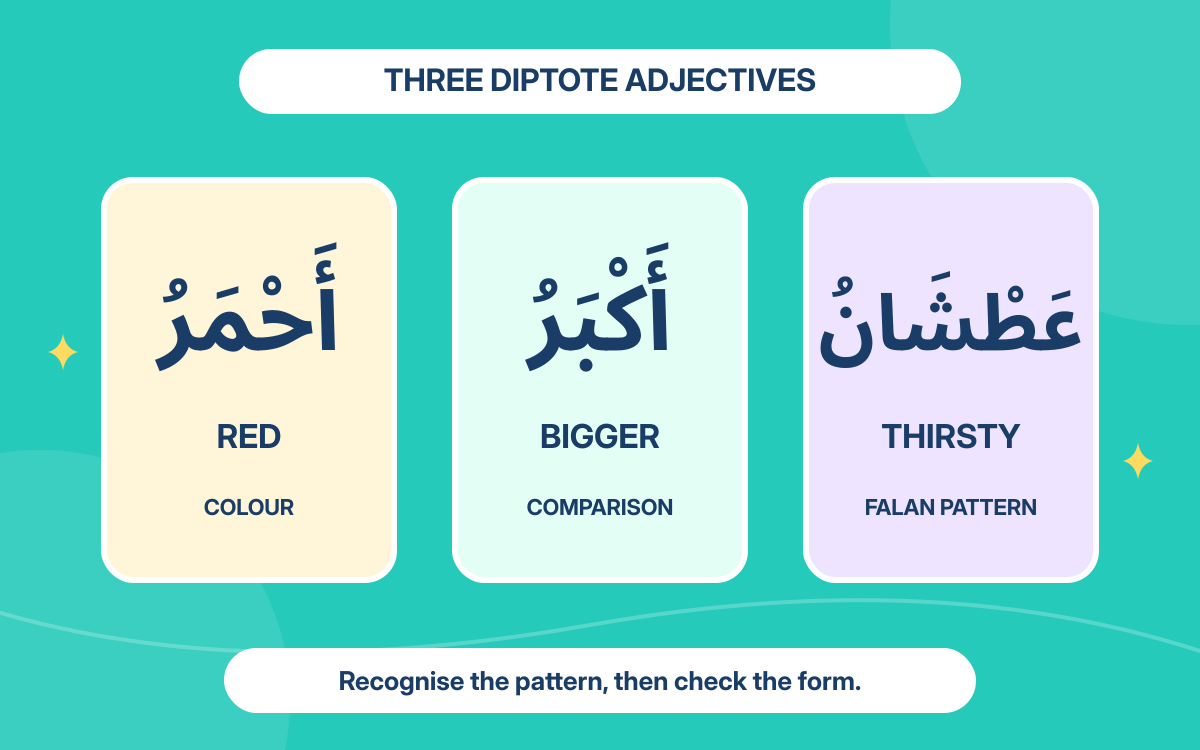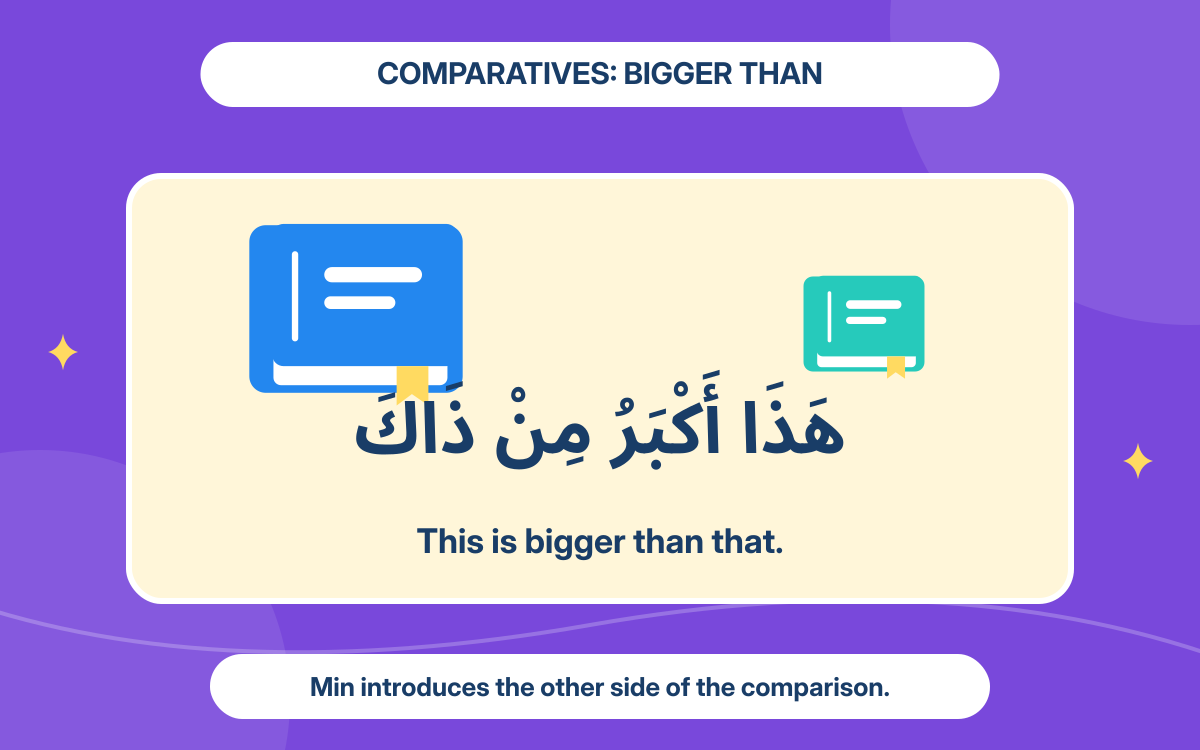
A comparison names a difference between two things. Arabic often puts a comparison word before min, meaning than. You already know that words such as akbar are diptotes; now use them to build complete comparisons.
01Put “than” after the comparison word
كَبِيرٌ means big; أَكْبَرُ means bigger. Add مِنْ after akbar to name the other thing being compared.
الْبَيْتُ أَكْبَرُ مِنَ الْمَكْتَبِ
albaytu akbaru mina lmaktabi
The house is bigger than the office.
The house is the subject of the comparison. The office comes after than. Min means than in this construction, rather than its familiar meaning from.
02Make the noun after min genitive
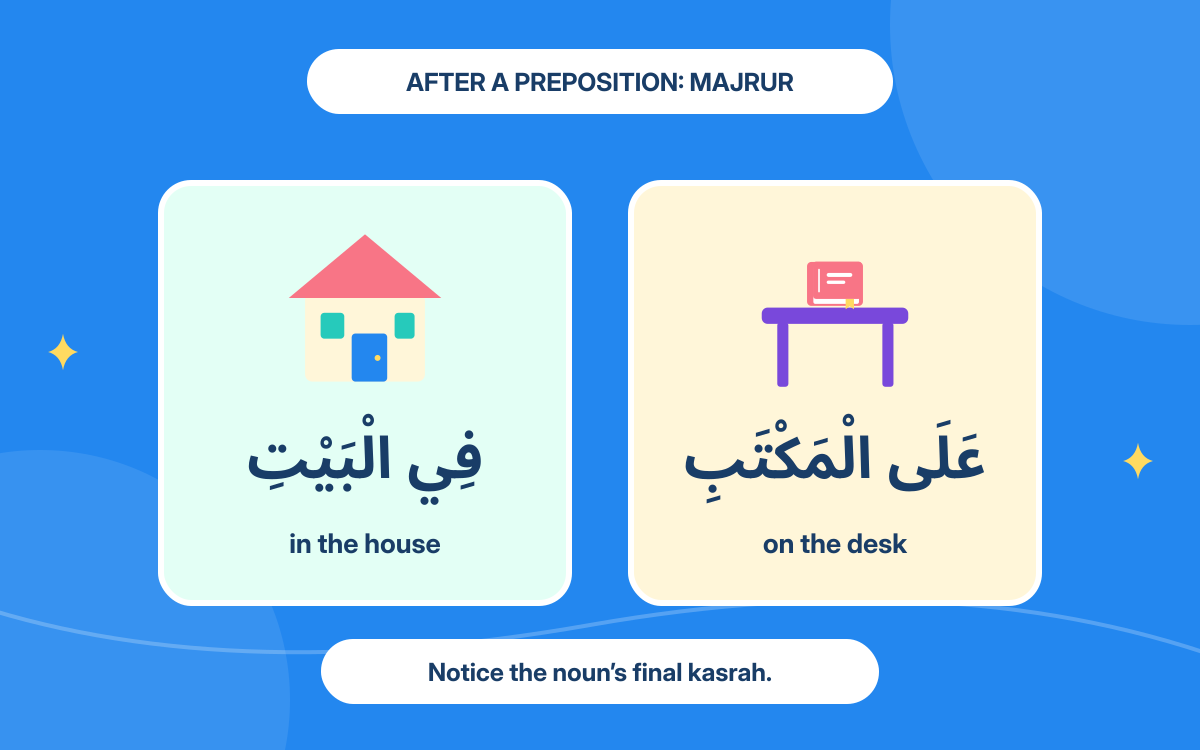
Min is a preposition. The following noun is genitive, just as after fi or bi. A regular definite noun has final kasrah, i.
هَذَا الْكِتَابُ أَكْبَرُ مِنَ الدَّفْتَرِ
hadha lkitabu akbaru mina ddaftari
This book is bigger than the notebook.
Write الدَّفْتَرِ with i, not u or a. Before the definite article, min is pronounced mina to join the words smoothly. The comparison word akbaru is the nominative predicate here and has no tanween.
03Keep this comparison form for different subjects
In this construction, the comparison word stays in its singular masculine shape, even when the subject is feminine, dual or plural. Its case still depends on its grammatical role.
هِيَ أَطْوَلُ مِنْهُ
hiya atwalu minhu
She is taller than him.
Atwalu means taller. Do not change it to the ordinary feminine adjective tawilah, tall. Likewise, هُمْ أَطْوَلُ مِنَّا means they are taller than us. These examples use a nominative predicate.
04Attach a pronoun to min
Use minka for than you to a man, and minki to a woman. Minni means than me; minna means than us. The nun has shaddah in minni and minna.
أَنَا أَقْصَرُ مِنْكَ
ana aqsaru minka
I am shorter than you. — to one man
Aqsaru means shorter. Write مِنِّي and مِنَّا with the doubled nun; minhu, than him, keeps a single nun. The suffix names the person used as the comparison standard.
05Use the same order for better
أَفْضَلُ means better in a comparison with min. Put the subject first, then afdal, then min and the comparison standard.
هَذَا أَفْضَلُ مِنْ ذَلِكَ
hadha afdalu min dhalika
This is better than that.
Hadha and dhalika have fixed forms. Min still gives the following demonstrative a genitive position even though no ending changes. The Latin reading aids simplify sounds and vowel length; the Arabic displays formal connected endings.
What to remember
- Put the comparison word before min: akbaru min means bigger than; afdalu min means better than.
- The noun or attached pronoun after min is genitive; ordinary noun endings show this case.
- With min, the comparison word keeps its singular masculine shape for subjects of different genders and numbers.
Your reference shelf
Open a guide whenever you need it.
Review comparison words and min endingsFour comparison words and useful attached pronouns
| Arabic | Reading aid | Meaning with min |
|---|---|---|
| أَكْبَرُ | akbaru | Bigger |
| أَطْوَلُ | atwalu | Taller / longer |
| أَقْصَرُ | aqsaru | Shorter |
| أَفْضَلُ | afdalu | Better |
| Arabic | Reading aid | Meaning |
|---|---|---|
| مِنِّي | minni | Than me |
| مِنْكَ | minka | Than you — one man |
| مِنْكِ | minki | Than you — one woman |
| مِنْهُ | minhu | Than him |
| مِنَّا | minna | Than us |
This guide uses the comparison construction with min. A comparison word can occur without an explicit min phrase when the comparison is understood; min is not required in every use of every elative. Other constructions, including a definite adjective with al, have their own agreement rules.
Genitive does not always mean visible kasrah: a bare diptote noun can have fathah, and a pronoun or demonstrative keeps its fixed form. The examples deliberately use regular definite nouns to make the basic case clear.
Sources & further learning
References for the language explanations and learning guidance.