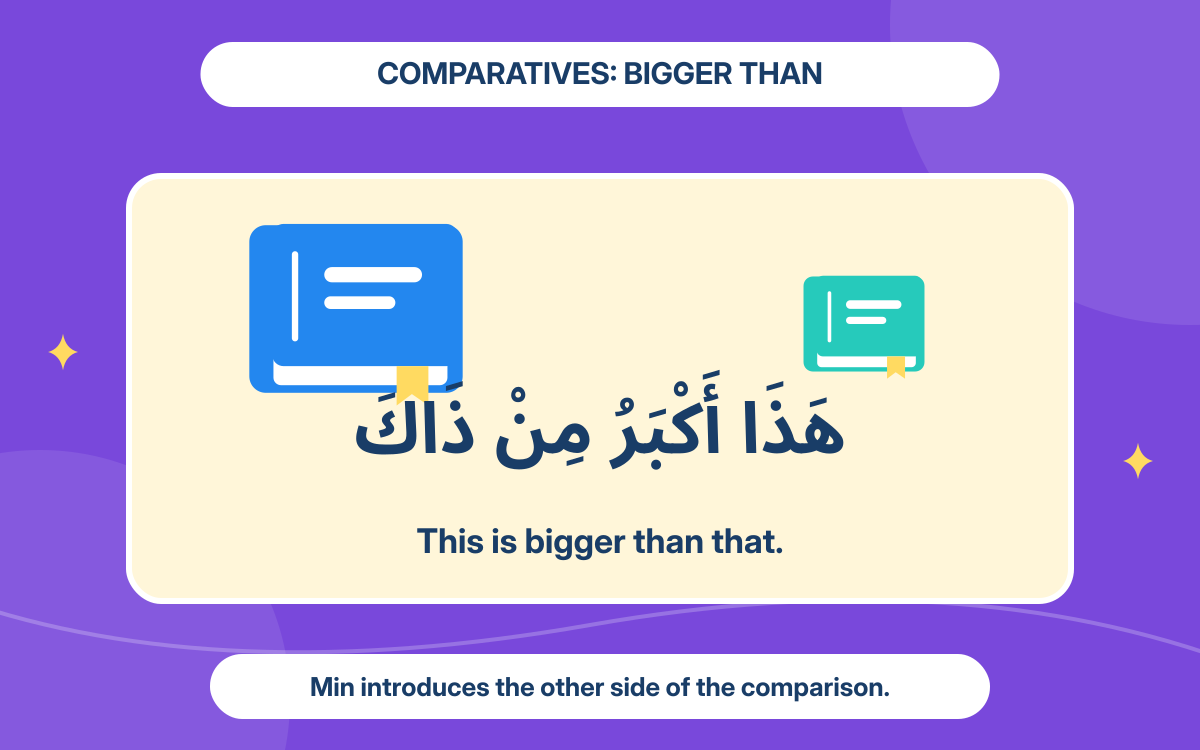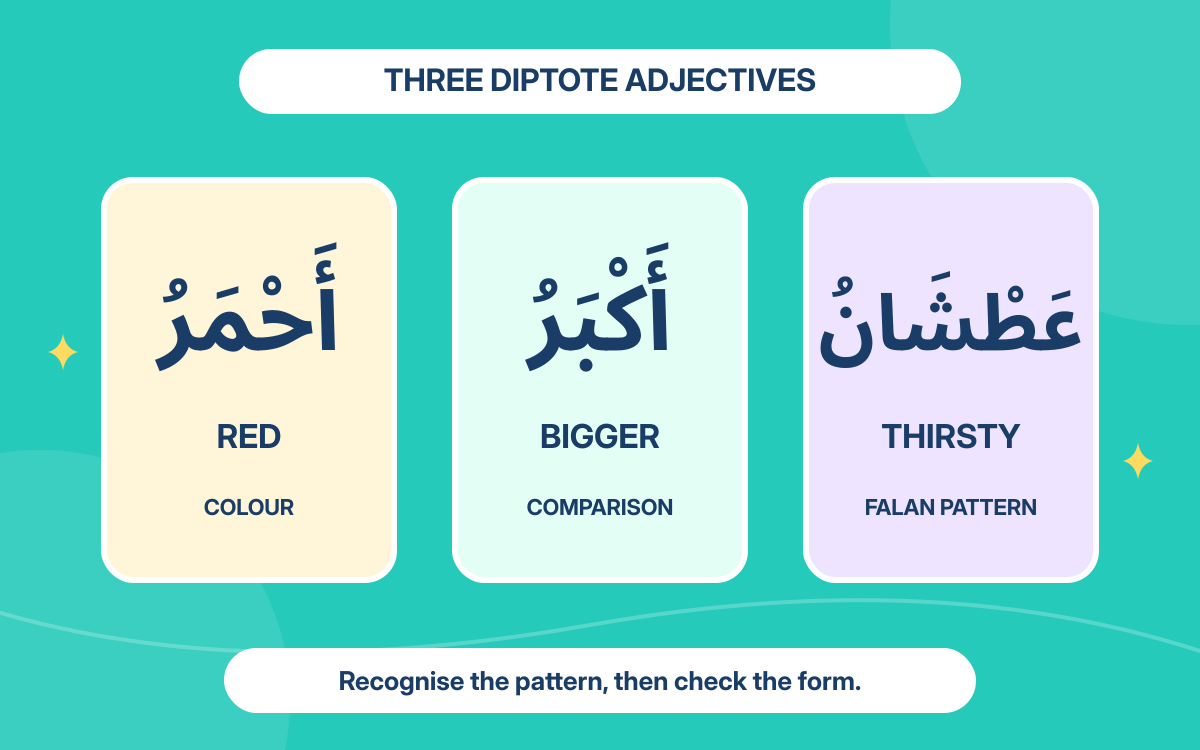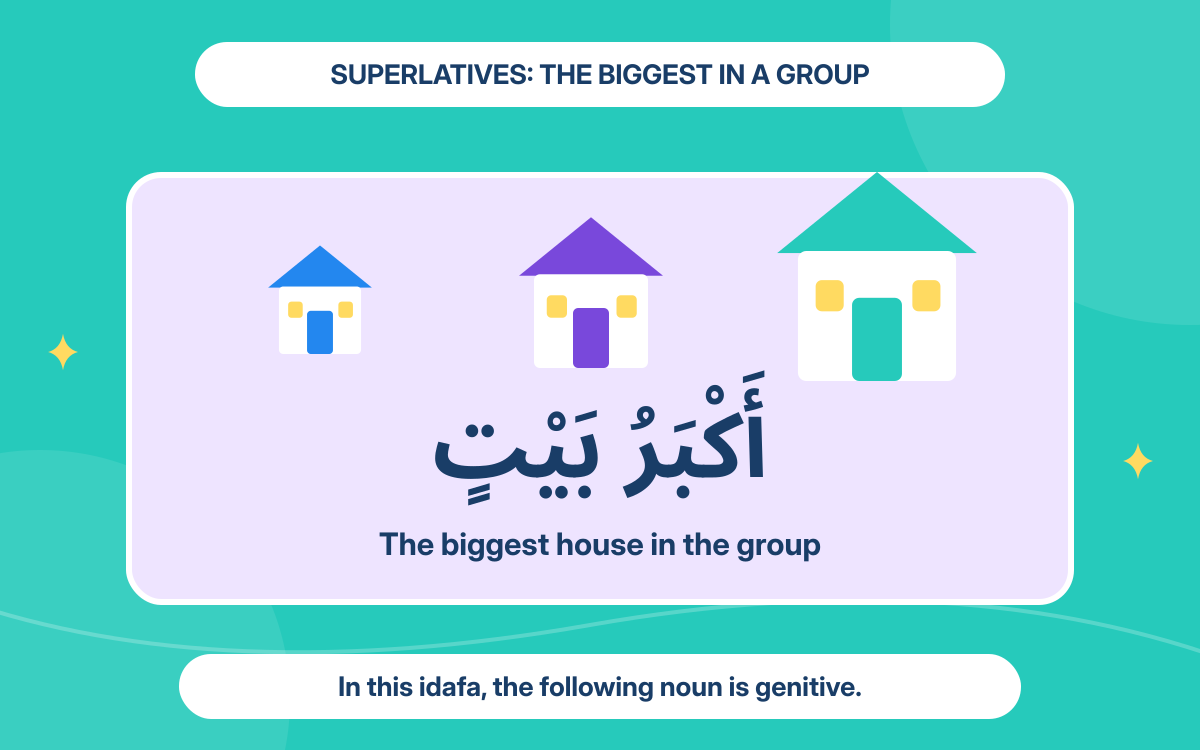
To identify the best member of a group, Arabic can join a comparison word directly to an indefinite noun. This is an idafa. The group or setting makes the superlative meaning clear: the best student in the class, or the biggest house in the village.
01Name the highest rank in a group
Imagine ranking every student in a class. Afdalu talibin identifies the best student. Afdal comes first and is joined directly to talib; there is no min between them.
حَامِدٌ أَفْضَلُ طَالِبٍ فِي الْفَصْلِ
Hamidun afdalu talibin fi lfasli
Hamid is the best student in the class.
Afdal is mudaf, the first term of the idafa. Talib is mudaf ilayh, its second term. The words in the class identify the comparison group.
02Keep the following noun indefinite and genitive
For the construction taught here, the second term is an indefinite singular noun. A regular noun therefore ends in kasrah with tanween, in.
هَذَا أَكْبَرُ بَيْتٍ فِي الْقَرْيَةِ
hadha akbaru baytin fi lqaryati
This is the biggest house in the village.
Baytin names a house, compared with the village’s other houses. Do not add al to either word in this pattern. English uses the in this translation, but that does not make baytin grammatically definite in Arabic.
03Give the first term its sentence ending
The two words have different jobs. The second term stays genitive; the first term takes the case required by its role in the sentence. As a predicate here, atwal is nominative.
هُوَ أَطْوَلُ طَالِبٍ فِي الْفَصْلِ
huwa atwalu talibin fi lfasli
He is the tallest student in the class.
Write atwalu with one dammah, u, and talibin with genitive tanween. The first term of an idafa never takes tanween. Here atwal also belongs to the diptote comparison family.
04Use kasrah when the first term follows fi
A preposition makes the first term genitive. Because akbar itself is mudaf, its genitive sign is kasrah, even though it is a diptote.
أَنَا فِي أَكْبَرِ بَيْتٍ فِي الْقَرْيَةِ
ana fi akbari baytin fi lqaryati
I am in the biggest house in the village.
The first fi gives akbar genitive case: akbari. Baytin is genitive because it is the second term of the idafa. Each ending has its own grammatical cause.
05Name one female student with the same first form
With this indefinite-noun idafa, the comparison word keeps its singular masculine shape. Use a feminine noun when ranking one female student among the class’s female students.
هِيَ أَفْضَلُ طَالِبَةٍ فِي الْفَصْلِ
hiya afdalu talibatin fi lfasli
She is the best female student in the class.
Keep afdal; change the category noun to talibah. Its genitive form is talibatin. These examples show formal connected endings. The plain Latin reading aids simplify Arabic sounds and vowel length.
What to remember
- For a superlative within a clear group, join the comparison word directly to an indefinite singular category noun.
- The second term is genitive; the first term has no al or tanween in this pattern and takes its case from the sentence.
- Keep afdal in the same shape for one female student; after a preposition, a comparison word that is itself mudaf uses genitive kasrah.
Your reference shelf
Open a guide whenever you need it.
Compare three related constructionsThan, top rank in a group, and an ordinary adjective
| Arabic | Meaning | Construction |
|---|---|---|
| أَكْبَرُ مِنَ الْمَكْتَبِ | Bigger than the office | Comparison word + min |
| أَكْبَرُ بَيْتٍ فِي الْقَرْيَةِ | The biggest house in the village | Comparison word as mudaf + indefinite singular noun, with a stated comparison group |
| بَيْتٌ كَبِيرٌ | A big house | Noun followed by an ordinary adjective |
The phrase akbaru baytin is an idafa, not a noun followed by its adjective. The superlative meaning in this guide comes from ranking members of a clear comparison group. Do not translate every isolated genitive construction as a superlative simply because a noun follows another word.
An idafa with an indefinite second term does not acquire grammatical definiteness from that term. Other elative patterns use al or a definite second term and have their own agreement rules. This guide stays with one person or thing and an indefinite singular category noun; the category noun follows the gender of that person or thing.
In fi akbari baytin, the diptote itself is mudaf. That is what restores its genitive kasrah. Being merely somewhere inside an idafa is not enough.
Sources & further learning
References for the language explanations and learning guidance.