

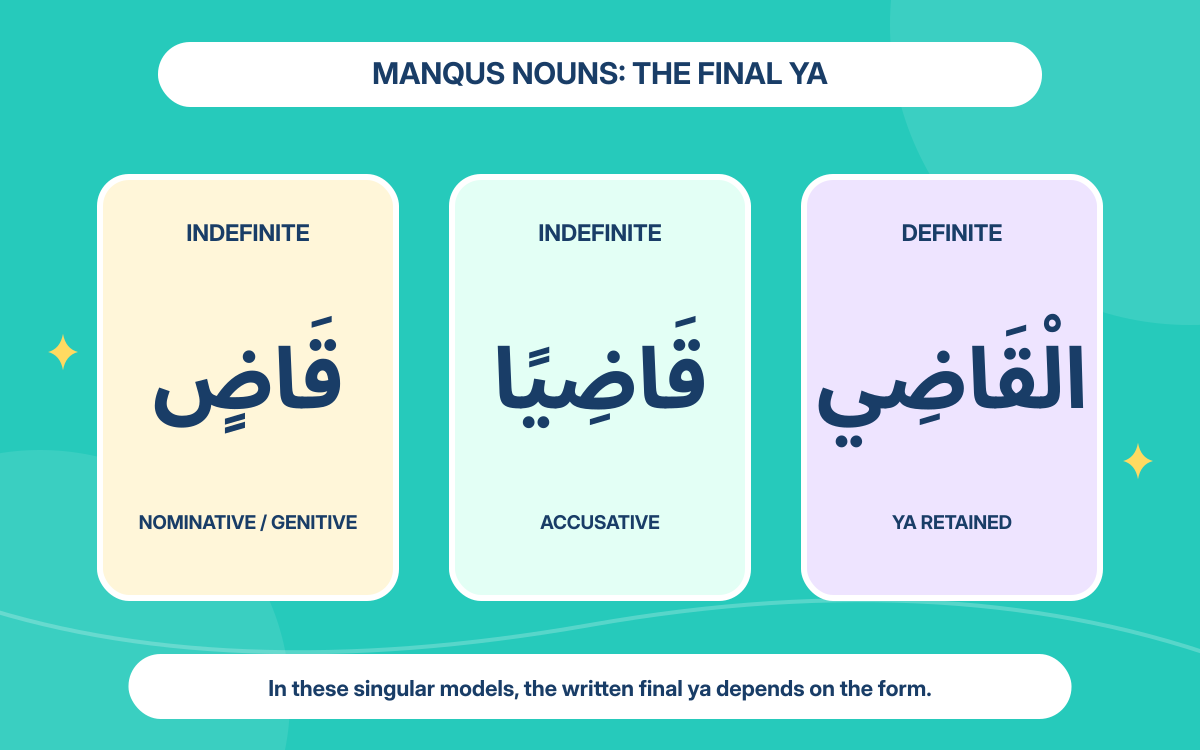
Ghalin means expensive, and qadin means a judge. Their final written in can appear in a nominative sentence as well as a genitive phrase. Learn why the final ya sometimes disappears, when it returns and how the sentence still tells you the case.
01Meet a final ya that can disappear
A manqus word has a fixed final ya preceded by kasrah. The Arabic noun category includes adjectives such as “expensive.” Compare الْقَاضِي (alqadi, the judge) and الْغَالِي (alghali, the expensive one). This is a specific pattern, not a rule for every word ending in ya.
هَذَا قَاضٍ.
hadha qadin
This is a judge.
هَذَا الْقَلَمُ غَالٍ.
hadha lqalamu ghalin
This pen is expensive.
Here qadin and ghalin are indefinite nominative predicates. Their ya is omitted, and the preceding letter has kasratan. The visible in does not make these predicates genitive.
02Recognise the same indefinite form after bi
Without al and without being the first term of an idafa, a singular manqus word loses its ya in both nominative and genitive cases.
مَرَرْتُ بِقَاضٍ.
marartu biqadin
I passed by a judge.
بِقَلَمٍ غَالٍ
biqalamin ghalin
With an expensive pen
Bi makes qadin genitive. In the second phrase, ghalin describes qalamin and agrees with its genitive case. Compare the nominative ghalin in the first section: the spelling matches, but the grammatical role differs.
03Keep ya in the indefinite accusative
The accusative has a visible fathah on ya. With an ordinary indefinite manqus word, it also has tanween: qadiyan or ghaliyan.
رَأَيْتُ قَاضِيًا.
raaytu qadiyan
I saw a judge.
اشْتَرَيْتُ قَلَمًا غَالِيًا.
ishtaraytu qalaman ghaliyan
I bought an expensive pen.
Qadiyan is a direct object. Ghaliyan describes the accusative object qalaman. Do not replace either accusative form with qadin or ghalin.
04Retain ya with al
With al, keep the final ya and remove tanween. Nominative and genitive case signs are estimated: they are understood from the role, rather than pronounced as an added u or i. Accusative fathah is visible.
الْقَاضِي عَادِلٌ.
alqadi adilun
The judge is fair.
مَرَرْتُ بِالْقَاضِي.
marartu bilqadi
I passed by the judge.
رَأَيْتُ الْقَاضِيَ.
raaytu lqadiya
I saw the judge.
Alqadi is nominative in the first sentence and genitive in the second. Alqadiya is accusative in the third. The retained ya does not erase grammatical case.
05Retain ya before an idafa complement
A manqus word also keeps ya when it is mudaf, the first term of an idafa. It has no tanween; its complement is genitive.
جَاءَ قَاضِي الْمَدِينَةِ.
jaa qadi lmadinati
The city’s judge came.
Qadi is the nominative doer of jaa, “came,” with an estimated dammah. Almadinati is the genitive complement. With a direct object, write رَأَيْتُ قَاضِيَ الْمَدِينَةِ (raaytu qadiya lmadinati), “I saw the city’s judge,” showing accusative fathah on ya. Our plain readings simplify vowel length and sounds; the Arabic marks carry the formal detail.
What to remember
- An indefinite singular manqus word omits ya in nominative and genitive forms: qadin or ghalin.
- In the indefinite accusative, retain ya and visible tanween: qadiyan or ghaliyan.
- With al or as mudaf, keep ya without tanween; nominative and genitive signs are estimated, while accusative fathah is visible.
Your reference shelf
Open a guide whenever you need it.
Compare the judge across three casesIndefinite, definite and idafa forms together
| Case | Indefinite | With al | First term of idafa |
|---|---|---|---|
| Nominative | قَاضٍ qadin | الْقَاضِي alqadi | قَاضِي الْمَدِينَةِ qadi lmadinati |
| Accusative | قَاضِيًا qadiyan | الْقَاضِيَ alqadiya | قَاضِيَ الْمَدِينَةِ qadiya lmadinati |
| Genitive | قَاضٍ qadin | الْقَاضِي alqadi | قَاضِي الْمَدِينَةِ qadi lmadinati |
The in in qadin is not a visible genitive case sign: both nominative and genitive case signs are estimated on the omitted ya. The feminine adjective غَالِيَةٌ (ghaliyatun), “expensive,” ends in ta marbutah and keeps its internal ya: هَذِهِ السَّاعَةُ غَالِيَةٌ (hadhihi ssaatu ghaliyatun), “This watch is expensive.” The singular pattern here does not teach dual or plural endings.
Sources & further learning
References for the language explanations and learning guidance.





