To ask for another book or another bag, choose the right form of “another.” Akhar describes a masculine singular noun; ukhra describes a feminine singular noun. Their case behaviour differs from ordinary adjectives, so a familiar tanween pattern will not always work.
01Choose another by the noun’s gender
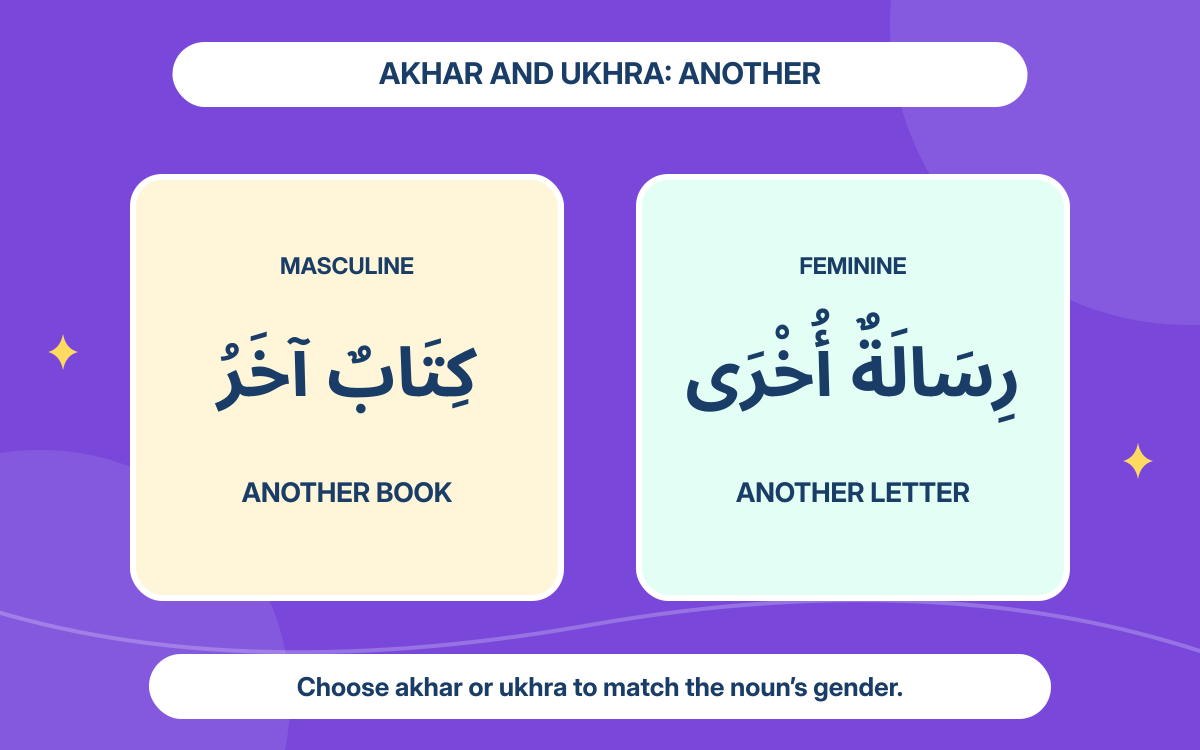
آخَرُ (akharu) means “another” or “other” with a masculine singular noun. Its feminine partner is أُخْرَى (ukhra). Put the description after the noun.
عِنْدِي كِتَابٌ آخَرُ.
indi kitabun akharu
I have another book.
عِنْدِي حَقِيبَةٌ أُخْرَى.
indi haqibatun ukhra
I have another bag.
Kitab is masculine; haqibah is feminine. Both nouns are nominative in these sentences. Their descriptions agree in case and gender, though ukhra does not display a changing final case vowel.
Do not confuse آخَر (akhar), “another,” with آخِر (akhir), “last.” The vowel on kha changes the meaning.
02Use akhara with an accusative object
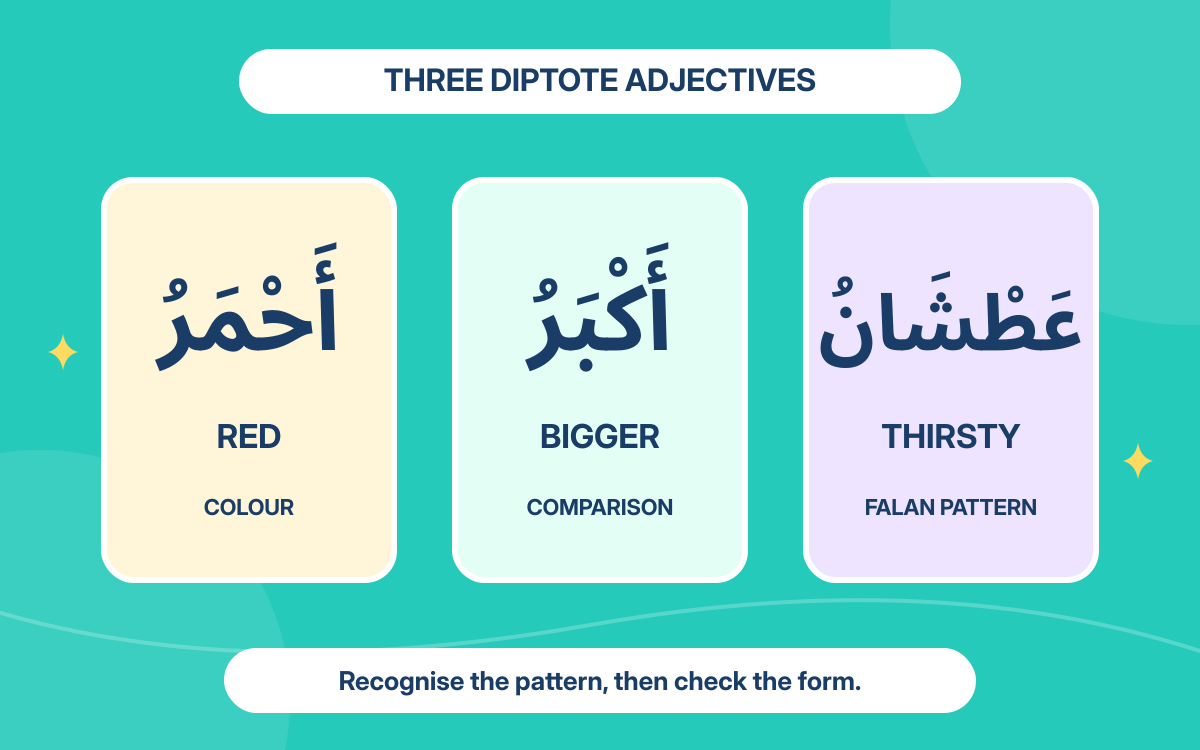
Akhar is a diptote: it takes no tanween. In these indefinite singular models, nominative akharu becomes accusative akhara.
أُرِيدُ كِتَابًا آخَرَ.
uridu kitaban akhara
I want another book.
Kitaban is the direct object of uridu, “I want.” Akhara describes it in the accusative. The regular noun has tanween; the diptote adjective has one fathah. The different visible endings do not prevent case agreement, and missing tanween does not make akhar definite.
03Recognise genitive akhara after a noun
Without al and without being mudaf itself, diptote akhar uses fathah for genitive too. It still agrees with its noun’s case.
فِي بَيْتٍ آخَرَ
fi baytin akhara
In another house
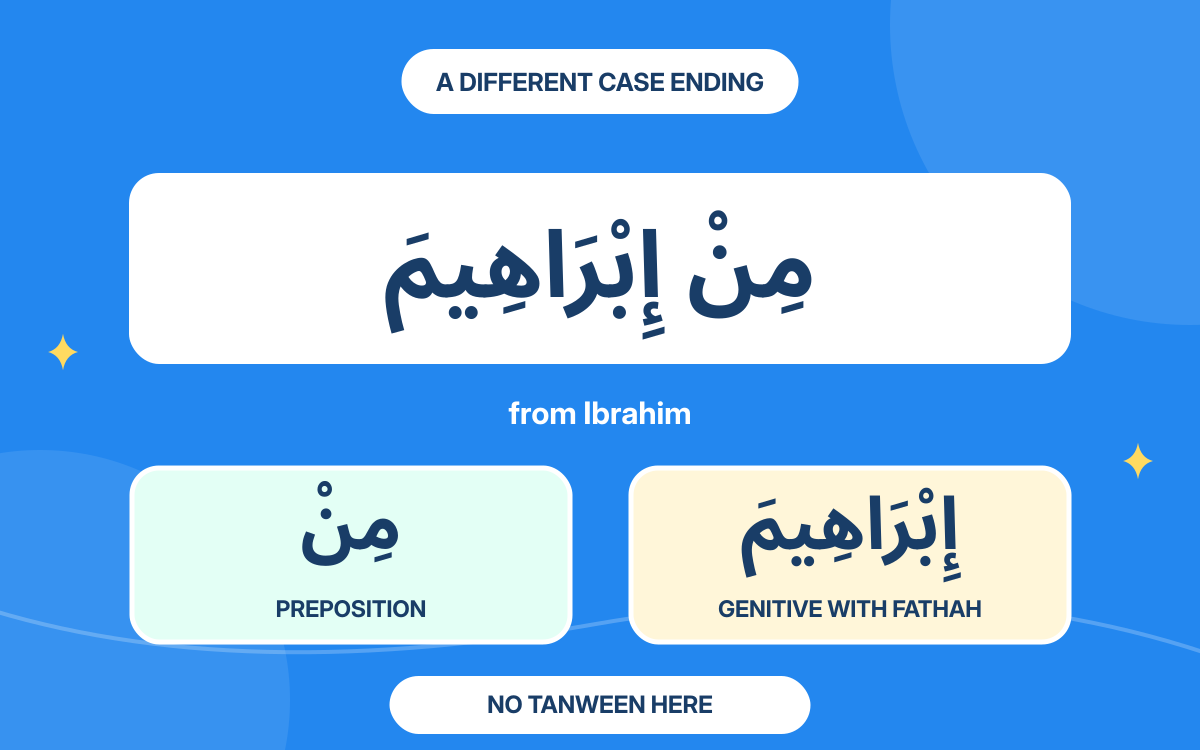
Fi makes baytin genitive. Akhara is also genitive, marked by fathah instead of kasrah. Do not call it accusative just because you see a. If akhar itself has al or is mudaf, its genitive sign becomes kasrah; see the optional reference.
04Keep ukhra across the three cases
Ukhra is also a diptote. It ends in a long alif written as ى, so its case signs are estimated rather than pronounced as added short endings.
قَرَأْتُ صَفْحَةً أُخْرَى.
qaratu safhatan ukhra
I read another page.
فِي صَفْحَةٍ أُخْرَى
fi safhatin ukhra
On another page
The first ukhra is accusative, describing the object. The second is genitive, describing the noun after fi. The written form stays ukhra, with no tanween. An unchanged spelling does not mean the word has no grammatical case.
05Distinguish akhar from akhir
The vowel under or over kha changes the word’s meaning: آخَر (akhar) is “another”; آخِر (akhir) is “last,” the opposite of first.
هَذَا دَرْسٌ آخَرُ.
hadha darsun akharu
This is another lesson.
هَذَا هُوَ الدَّرْسُ الْآخِرُ.
hadha huwa ddarsu lakhiru
This is the last lesson.
Read the internal vowel, not just the matching unvowelled letters. Akhir is a different word and does not inherit akhar’s diptote rule. Our plain reading aids simplify sounds and vowel length; the marked Arabic carries the formal details.
What to remember
- Use akhar for a masculine singular noun and ukhra for a feminine singular noun.
- Indefinite akhar is a diptote: akharu is nominative; akhara can be accusative or genitive. Ukhra has estimated case signs.
- Akhar, another, differs from akhir, last. Their internal vowels and inflection are different.
Your reference shelf
Open a guide whenever you need it.
Compare singular another across casesVisible akhar endings, estimated ukhra endings and the al exception
| Case | Masculine model | Feminine model |
|---|---|---|
| Nominative | عِنْدِي كِتَابٌ آخَرُ | عِنْدِي حَقِيبَةٌ أُخْرَى |
| Accusative | أُرِيدُ كِتَابًا آخَرَ | قَرَأْتُ صَفْحَةً أُخْرَى |
| Genitive | فِي بَيْتٍ آخَرَ | فِي صَفْحَةٍ أُخْرَى |
A diptote’s genitive sign returns to kasrah when the word itself has al or is mudaf. Compare مِنَ الْكِتَابِ الْآخَرِ, “from the other book”: alakhari has al and is genitive. Merely describing another noun does not make akhar mudaf. Ukhra retains its final alif; its grammatical case sign is estimated. This guide focuses on singular nouns.
Sources & further learning
References for the language explanations and learning guidance.
- Cairo Arabic Academy: akhar, akhir and ukhra in the dictionary
- Al Jazeera Learning Arabic: akhar as a genitive diptote
- Al Jazeera Learning Arabic: diptote genitive and its exceptions
- Al Jazeera Learning Arabic: declinable words with estimated case signs
- Al Jazeera Learning Arabic: feminine alif and diptotes