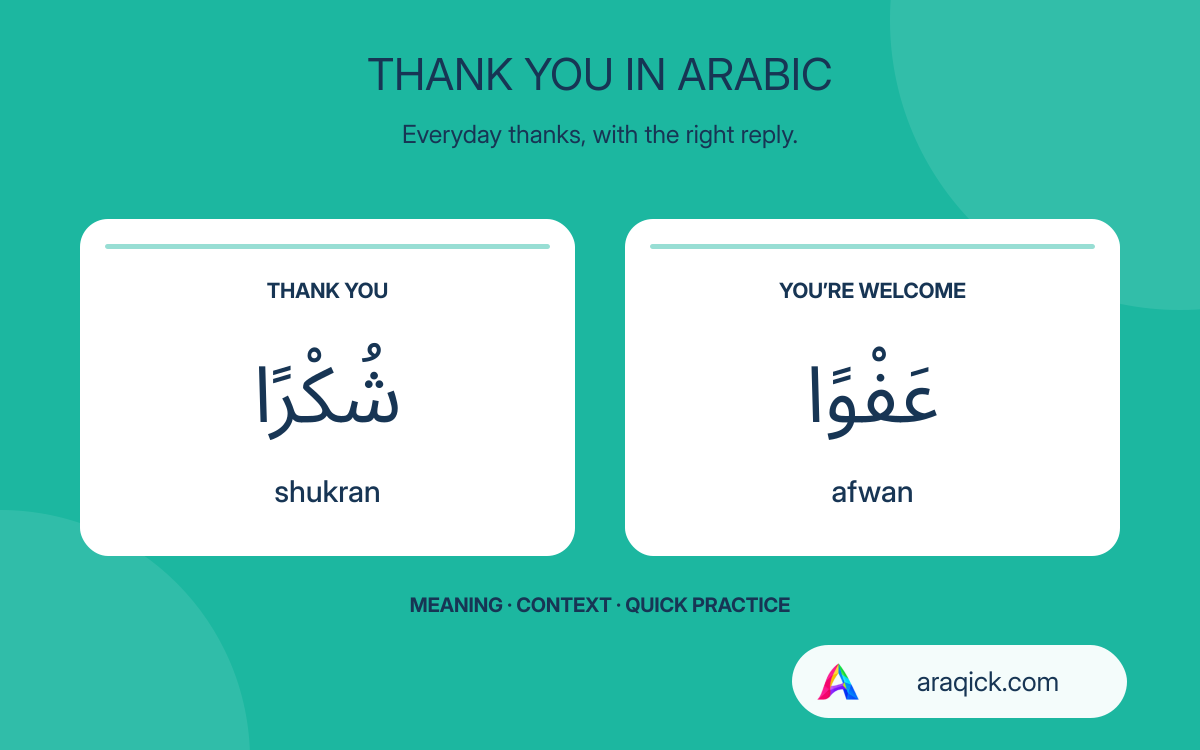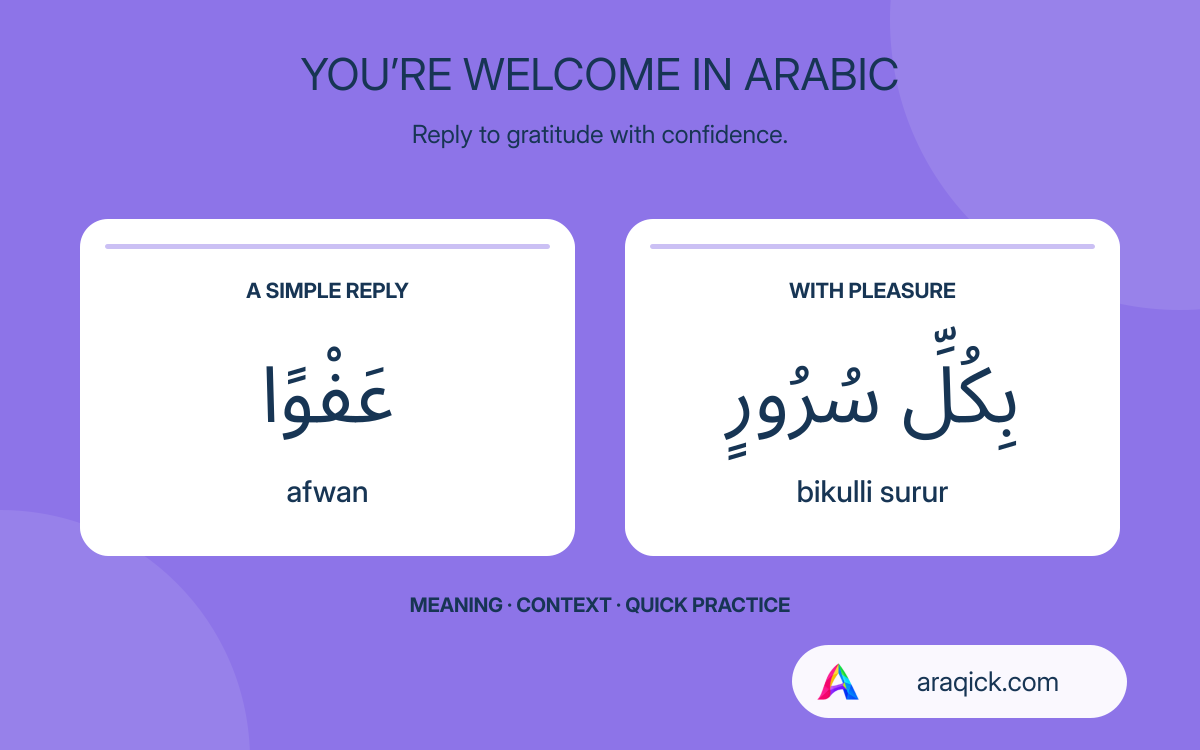
A simple Arabic reply to “thank you” is عَفْوًا (afwan), “you’re welcome.” You may also hear الْعَفْو (al-afw). Other responses include “with pleasure” and regional expressions such as Lebanese tikram and walaw. Choose a reply to the gratitude you heard; welcoming an arriving guest is a different situation.
01Give a simple reply with afwan
When someone thanks you for a small favour, afwan is a useful answer. It reassures them that you were willing to help. It does not require a masculine or feminine ending for the person you address.
Modern Standard Arabic
شُكْرًا. — عَفْوًا.
shukran. — afwan.
Thank you. — You’re welcome.
Practise the two turns together. Recognising the previous turn often matters more than translating one word alone.
02Recognise al-afw
Modern Standard Arabic
الْعَفْو
al-afw
You’re welcome; don’t mention it.
This response belongs to the same word family as afwan. Its literal connection is with pardon or forgiveness, but its conversational job after thanks is to acknowledge appreciation.
Do not translate it as a request to forgive a serious mistake when the other person has simply thanked you. The context supplies the intended meaning.
03Say with pleasure
Modern Standard Arabic
بِكُلِّ سُرُورٍ
bikulli surur
With pleasure.
This standard expression makes your willingness explicit. Imagine you helped a visitor find the classroom, and they thank you: “with pleasure” fits that helpful exchange.
You can also return the thanks when both people contributed. That is a different response choice: you are recognising their help rather than merely repeating a memorised translation of “welcome.”
04Hear tikram in Lebanese Arabic
Lebanese speakers commonly use تكرم (tikram) to a man, تكرمي (tikrame) to a woman, and تكرموا (tikramo) to a group. These show willingness or courteous acknowledgement; English “you’re welcome” is often a useful functional translation.
Keep the regional pronunciation with the expression. The listener forms belong to this spoken pattern, so do not replace them automatically with endings from a different variety.
05Understand friendly reassurance
Lebanese Arabic · replying to thanks
ولو!
walaw!
Of course; it’s no trouble.
Walaw can reassure a friend that their request was no burden. The same interjection may express other reactions elsewhere, so learn the exchange and tone together.
A casual response to a friend is not automatically the best choice in every formal email. If the relationship or variety is unfamiliar, a short standard reply is easier to control.
06Afwan also appears in other situations
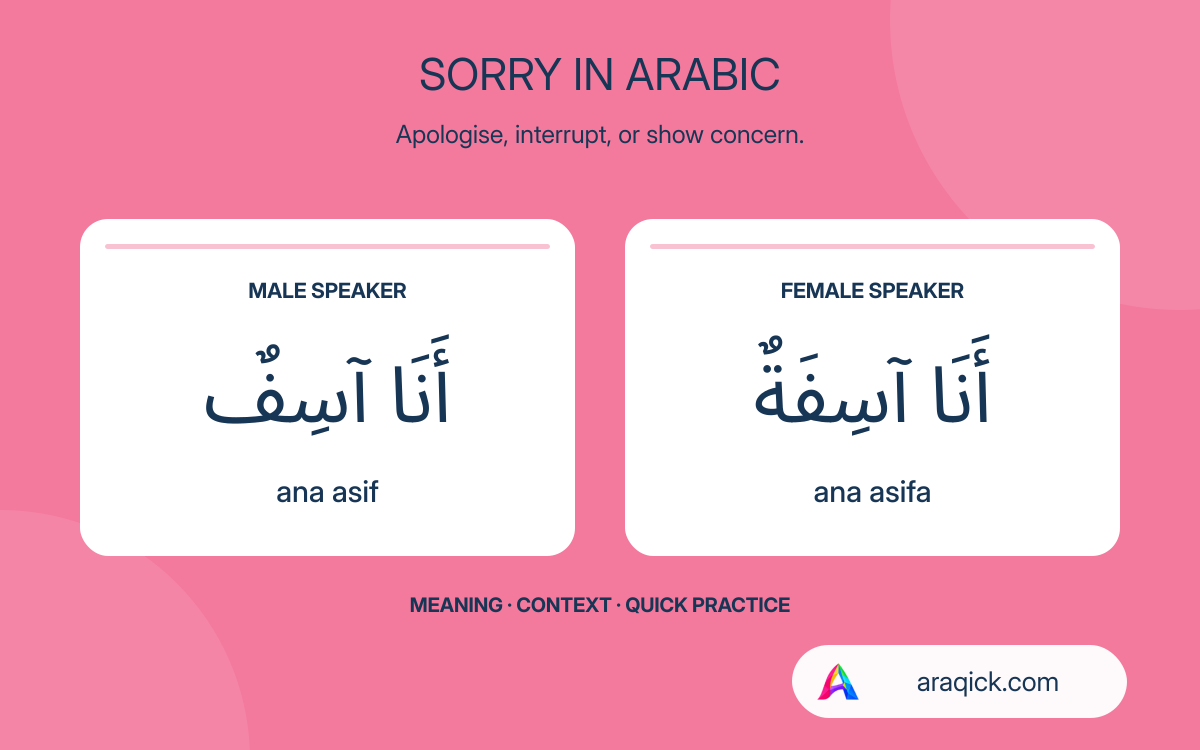
Afwan can also mean “excuse me” or “pardon?” A person asking you to repeat something is not necessarily saying “you’re welcome.” Listen for whether the preceding event was thanks, an interruption, or something not heard clearly.
Similarly, أَهْلًا وَسَهْلًا welcomes a guest. Lebanese ahlan can also answer thanks, but that local use does not make every guest greeting interchangeable with afwan in standard Arabic.
See apologies and excuse me for other contexts.
07Choose a reply you can use confidently
Write a short exchange about a shared task. If only you helped, answer the thanks with afwan or “with pleasure.” If the other person also helped, return a specific thank-you. For Lebanese conversation practice, try tikram with the correct listener.
Then change the scenario: a guest arrives, or a stranger asks you to repeat a word. Your reply should change with the situation. Our greetings guide helps with arrivals.
What to remember
- Afwan and al-afw can acknowledge gratitude without changing for listener gender.
- Tikram and walaw are useful Lebanese responses with their own forms and tone.
- Use the previous turn to distinguish thanks, an interruption and welcoming a guest.
Your reference shelf
Open a guide whenever you need it.
Replies to thanksA small set of options with clear regional and listener labels.
| Arabic | Reading aid | Setting |
|---|---|---|
| عَفْوًا | afwan | Simple, widely understood acknowledgement |
| الْعَفْو | al-afw | Don’t mention it |
| بِكُلِّ سُرُورٍ | bikulli surur | With pleasure; standard |
| تكرم / تكرمي / تكرموا | tikram / tikrame / tikramo | Lebanese; man / woman / group |
| ولو | walaw | Lebanese friendly reassurance |
| شكراً إلك | shukran ilak | Lebanese; returning thanks to a man |
Let the context decideOne expression may do different jobs; these are situational examples.
| What happens | Expression | Likely function |
|---|---|---|
| Someone thanks you | عَفْوًا | You’re welcome |
| You need to interrupt politely | عَفْوًا | Excuse me |
| You have not heard a word | عَفْوًا؟ | Pardon? Please repeat |
| A guest arrives | أَهْلًا وَسَهْلًا | Welcome; a hospitality greeting |
Sources & further learning
References for the language explanations and learning guidance.