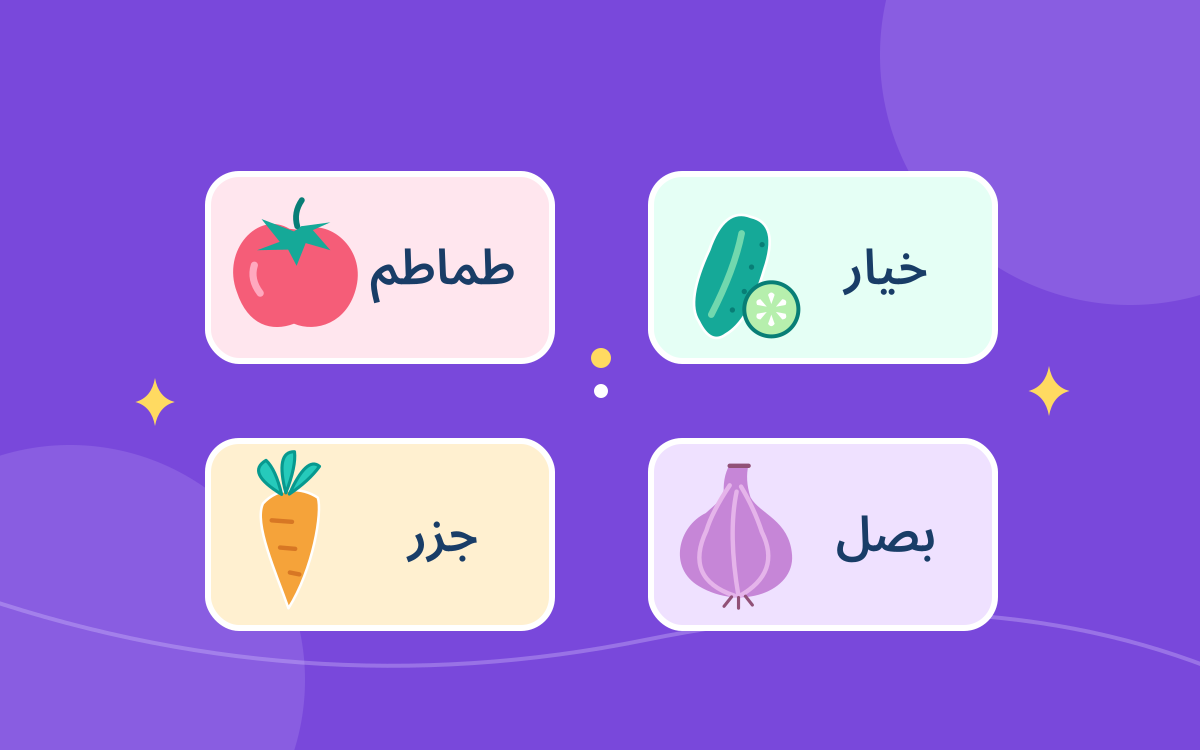
Tomatoes are tamatim, cucumbers are khiyar, and carrots are jazar. These are useful ingredient names for recognising a shopping list or a simple recipe. Learn ten standard Arabic labels in small groups, then see how jazar changes when you mean one carrot.
01Start with tomatoes and cucumbers
tamatim
Tomatoes
khiyar
Cucumbers
The cards name the ingredients. They do not specify a number, weight or portion. A shopping list needs another detail if you want an exact quantity.
Practise both directions: read tamatim and recall tomatoes, then see the English word cucumbers and try to remember khiyar.
02Add carrots and potatoes
jazar
Carrots
batatis
Potatoes
Jazar is carrots; batatis is potatoes. For jazar, the basic word names carrots collectively rather than counting one piece. We will practise its single-piece form below.
You may also hear بَطَاطَا batata for potato, depending on the region. This guide uses batatis consistently in the cards and questions.
Link each name to the ingredient itself.
03Keep onions and garlic apart
basal
Onions
thum
Garlic
Basal means onions, while thum means garlic. A recipe may use both, so recognising one does not replace learning the other.
- Onions: basal.
- Garlic: thum.
- Neither label gives the quantity by itself.
Read the Arabic first and check the English only afterward. If the two names get mixed up, practise just this pair before returning to the full list.
04Complete the ten-name set
fulful
Peppers
khass
Lettuce
sabanikh
Spinach
badhinjan
Eggplant
Khass is lettuce, sabanikh is spinach, and badhinjan is eggplant, also called aubergine in English. Fulful is pepper; context tells you whether someone means vegetable peppers or pepper as a spice.
For sweet peppers, you can be more specific: فُلْفُل حُلْو fulful hulw. Hulw means sweet here.
Keep the complete labels visible until the four new meanings feel familiar.
05Name a single carrot
jazar
Carrots — ingredient
jazara
One carrot
Jazara adds ة to jazar and names a single carrot. Learn this pair together; adding the same letter is not a universal rule for all ten words.
هَذِهِ جَزَرَة
hadhihi jazara
This is a carrot.
Hadhihi means this with a feminine noun. Jazara is feminine, so it fits this pattern. The sentence identifies one carrot without adding a separate word for is.
Choose the ingredient label for a general list and the single-piece form when that is what you mean.
What to remember
- Ingredient names tell you what is on the list; quantity needs its own detail.
- This guide uses batatis for potatoes, while batata is another term you may meet.
- Jazar names carrots collectively; jazara names one carrot. Learn single-piece forms as individual pairs.
Your reference shelf
Open a guide whenever you need it.
All ten vegetable namesKeep the ingredient labels together
| Ingredient | Arabic | Plain reading aid |
|---|---|---|
| Tomatoes | طَمَاطِم | tamatim |
| Cucumbers | خِيَار | khiyar |
| Carrots | جَزَر | jazar |
| Potatoes | بَطَاطِس | batatis |
| Onions | بَصَل | basal |
| Garlic | ثُوم | thum |
| Peppers | فُلْفُل | fulful |
| Lettuce | خَسّ | khass |
| Spinach | سَبَانِخ | sabanikh |
| Eggplant | بَاذِنْجَان | badhinjan |
Food names vary across Arabic-speaking regions. The cards use one consistent set. For pepper, the longer phrase فُلْفُل حُلْو means sweet pepper; the context matters when distinguishing vegetables from a spice. The single-piece form practised here is جَزَرَة, one carrot.
Sources & further learning
References for the language explanations and learning guidance.