Tuffah names apples as a fruit category, while tuffaha names one apple. That small ending matters when you move from recognising fruit to counting a piece. Start with ten common Modern Standard Arabic fruit names, then practise the difference with apples and bananas.
01Start with apples and bananas
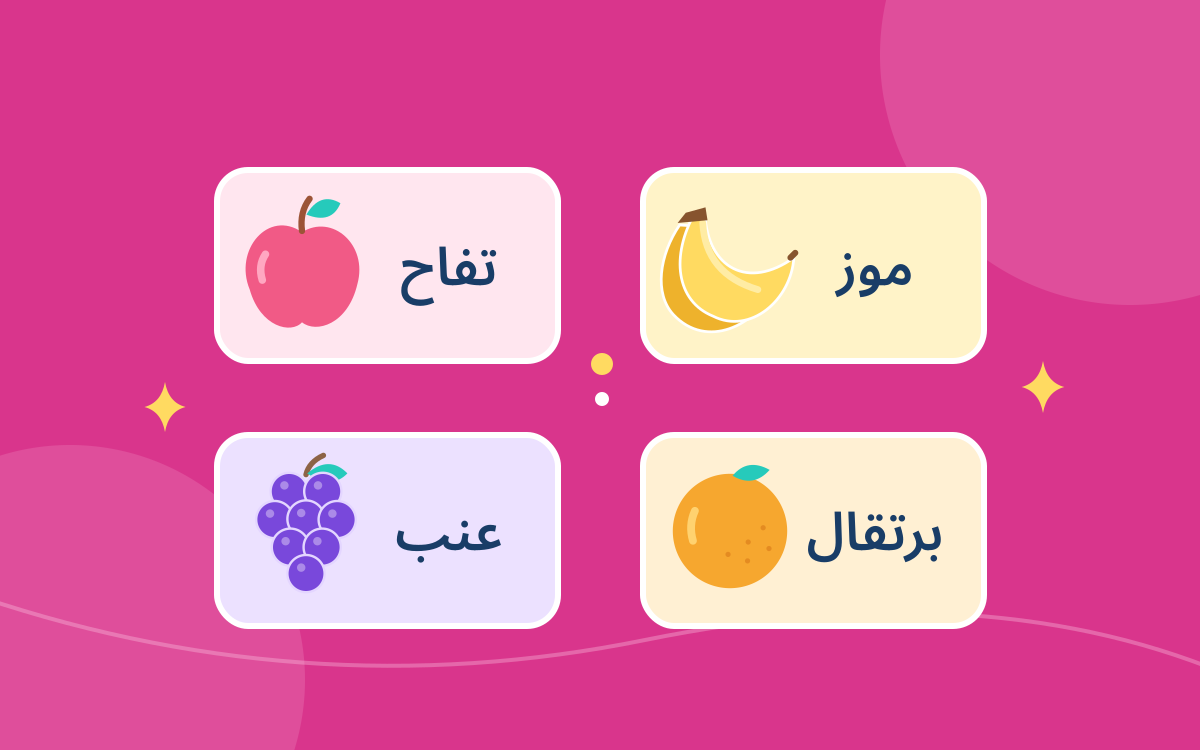
tuffah
Apples — fruit category
mawz
Bananas — fruit category
These labels tell you the kind of fruit. They do not specify one piece or an exact quantity. Tuffah is the apple category; mawz is the banana category.
The pictures help you recognise the fruit. Read the Arabic label as a category name before trying to count anything.
02Learn oranges and lemons together
burtuqal
Oranges
laymun
Lemons
Burtuqal means oranges; laymun means lemons. Both belong in the citrus group, but they are separate Arabic words. A list that says laymun is asking you to recognise lemons, not just any citrus fruit.
- Burtuqal: oranges.
- Laymun: lemons.
- Keep the whole word beside its fruit when reviewing.
Learn the labels even if you already know a word used in a regional dialect. This guide keeps the same standard vocabulary throughout the practice.
03Add four more fruit names
inab
Grapes
tamr
Dates
khawkh
Peaches
mishmish
Apricots
Inab is grapes; tamr is dates. Khawkh means peaches, and mishmish means apricots in the standard vocabulary used here.
Peaches and apricots can look similar, so use the word rather than a colour clue alone. Read one card at a time and picture the fruit you know. Regional names may differ; keeping a single set helps you recognise each target word in these questions.
04Finish the ten-word set
bittikh
Watermelon — fruit category
rumman
Pomegranates
Bittikh is watermelon; rumman is pomegranates. The watermelon slice illustrates the kind of fruit. The label does not mean one slice or tell you the weight of a serving.
You now have ten category words. Grouping them into familiar pairs makes a quick review easier: apples and bananas, oranges and lemons, then the remaining fruits. Cover the English line and see which names you can recall.
05Name one apple or one banana
tuffaha
One apple
mawza
One banana
For these two words, adding ة makes a single-piece form: tuffah becomes tuffaha, and mawz becomes mawza. Learn each pair together instead of treating this as a rule for every food noun.
هَذِهِ تُفَّاحَة
hadhihi tuffaha
This is an apple.
Hadhihi means this with a feminine noun. Tuffaha and mawza are feminine, so the same short pattern works with either one.
When you mean a single piece, choose the single-piece word. When naming the fruit generally, use the category label.
What to remember
- The ten main labels name fruit categories; they do not supply an exact quantity.
- Tuffah and mawz name apples and bananas generally; tuffaha and mawza name one piece.
- Use hadhihi with the feminine single-piece nouns in this lesson: hadhihi tuffaha.
Your reference shelf
Open a guide whenever you need it.
All ten fruit-category namesReview the complete set without quantity claims
| Fruit category | Arabic | Plain reading aid |
|---|---|---|
| Apples | تُفَّاح | tuffah |
| Bananas | مَوْز | mawz |
| Oranges | بُرْتُقَال | burtuqal |
| Lemons | لَيْمُون | laymun |
| Grapes | عِنَب | inab |
| Dates | تَمْر | tamr |
| Peaches | خَوْخ | khawkh |
| Apricots | مِشْمِش | mishmish |
| Watermelon | بِطِّيخ | bittikh |
| Pomegranates | رُمَّان | rumman |
The single-piece forms practised here are تُفَّاحَة tuffaha and مَوْزَة mawza. They are separate from the category labels in the table. Learn other single-piece forms individually when you need them; do not add an ending automatically to every food word.
Sources & further learning
References for the language explanations and learning guidance.