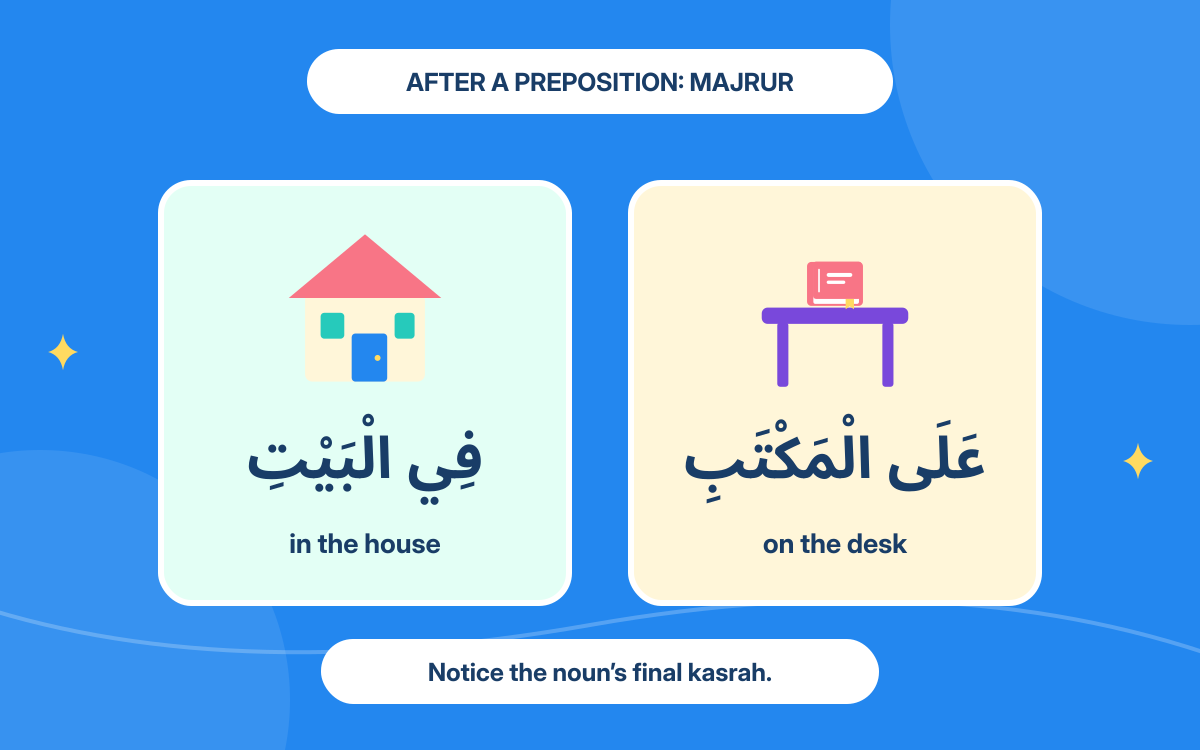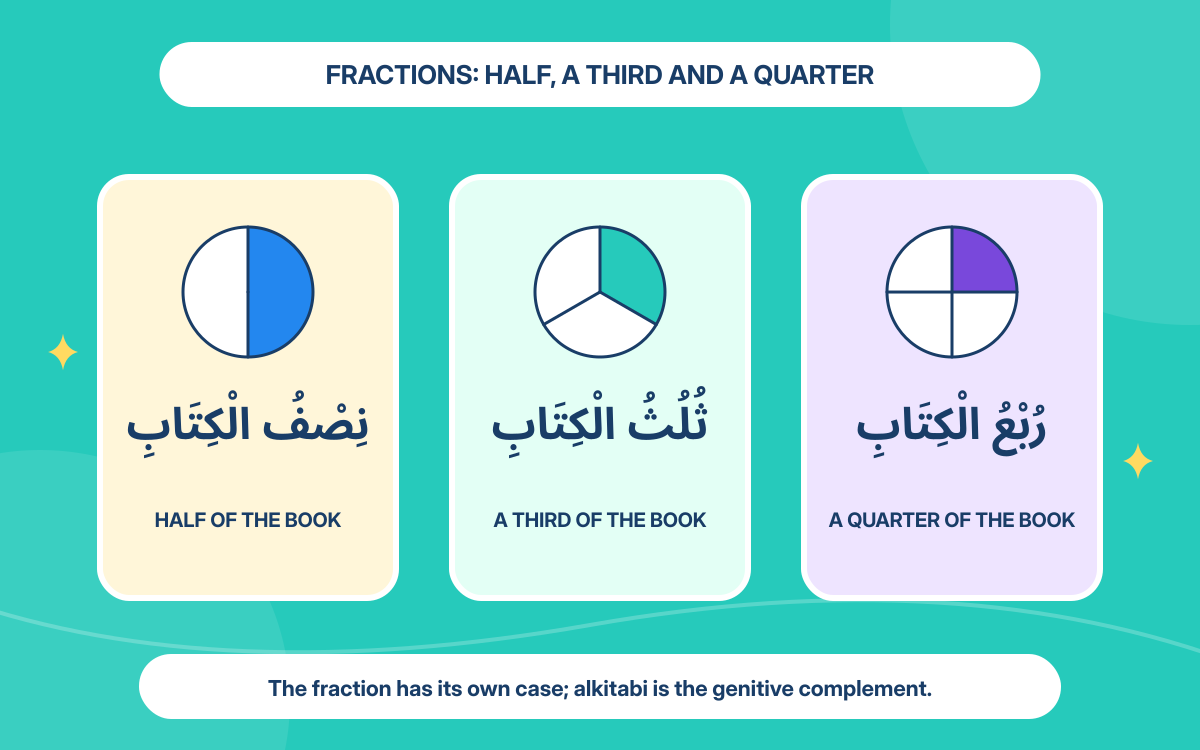
Half past an hour is useful, but fractions can describe many other quantities. To say half of a book or a quarter of a cake, use a fraction noun followed by the thing divided. These phrases follow the familiar idafa pattern, with two separate case jobs.
01Learn three fraction nouns
Each of these fractions names one part of a whole divided into equal parts. Half is one of two parts, a third is one of three, and a quarter is one of four.
نِصْفٌ · ثُلُثٌ · رُبْعٌ
nisfun · thuluthun · rubun
A half · a third · a quarter
These are nouns. The u and n endings here belong to their standalone indefinite nominative forms. Keep the two internal u vowels of thuluth separate from its final case ending.
02Add the whole in the genitive
Put the fraction first and the whole after it. Together they form an idafa: the fraction has no ال or tanween, and the following noun is genitive.
نِصْفُ الْكِتَابِ
nisfu lkitabi
Half of the book
There is no separate Arabic word for “of” between these nouns. Alkitabi identifies the particular book, making this whole phrase definite. Compare standalone nisfun with nisfu inside this nominative idafa.
03Let the fraction’s own case change
The first noun’s ending follows its job in the sentence. The noun naming the whole stays genitive.
هَذَا نِصْفُ الْكِتَابِ
hadha nisfu lkitabi
This is half of the book
قَرَأْتُ نِصْفَ الْكِتَابِ
qaratu nisfa lkitabi
I read half of the book
فِي نِصْفِ الْكِتَابِ
fi nisfi lkitabi
In half of the book
Nisfu is nominative as a predicate, nisfa is accusative as the object, and nisfi is genitive after fi. Alkitabi ends in i in every example. The fraction is not permanently accusative or genitive.
04Keep the fraction noun’s identity
The same fraction words work with masculine or feminine wholes. They remain fraction nouns; do not add a feminine adjective ending merely because the whole is feminine.
رُبْعُ الْكَعْكَةِ
rubu lkaakati
A quarter of the cake
ثُلُثُ الْكِتَابِ
thuluthu lkitabi
A third of the book
Kaaka, “cake,” is feminine; kitab, “book,” is masculine. Both are genitive here. Rubu and thuluthu name the portions rather than describing the whole as ordinary agreeing adjectives.
05Read a portion, not a clock time
A quarter of a cake means one of four equal parts of that cake. It does not identify a quarter past an hour. The clock lesson uses these words in a different setting.
قَرَأْتُ نِصْفَ الْكِتَابِ
qaratu nisfa lkitabi
I read half of the book
Check the fraction’s meaning, then its own case, then the genitive noun naming the whole. Our examples keep full formal endings in connected reading. The simple Latin aids do not mark vowel length or every Arabic sound distinction.
What to remember
- نِصْفٌ, ثُلُثٌ and رُبْعٌ mean a half, a third and a quarter.
- In the fraction idafa, the fraction has no ال or tanween and the following whole is genitive.
- The fraction noun’s own case changes with its sentence role; the whole stays genitive.
Your reference shelf
Open a guide whenever you need it.
Three portions of the same bookKeep the vocabulary and the two case jobs visible
| Portion | Arabic | Connected reading |
|---|---|---|
| Half | نِصْفُ الْكِتَابِ | nisfu lkitabi |
| A third | ثُلُثُ الْكِتَابِ | thuluthu lkitabi |
| A quarter | رُبْعُ الْكِتَابِ | rubu lkitabi |
Each first word is nominative in this comparison. In an object phrase it takes a; after a governing preposition it takes i. The book remains genitive in all three constructions.
The phrase names a portion of the book as a whole. A real context tells you whether that portion is measured by pages, text or another suitable measure. This article introduces these three singular fraction nouns; larger fractions and mixed numbers need further patterns.
Sources & further learning
References for the language explanations and learning guidance.
- Dr. V. Abdur Rahim: Madinah Book 2 English Key, Lesson 7, fraction vocabulary, p. 25
- Madinah Arabic: idafa and its two case roles
- Madinah Arabic: noun case changes with grammatical role
- Madinah Arabic: quarter as a masculine noun
- Birzeit University Qabas: half as a masculine noun and one of two equal parts