The seven Arabic day names are al ahad, al ithnayn, ath thulatha, al arbia, al khamis, al jumua, and as sabt. Start by recognising Monday and Tuesday, then use the names to say what day it is and when a lesson happens.
01Read two calendar cards
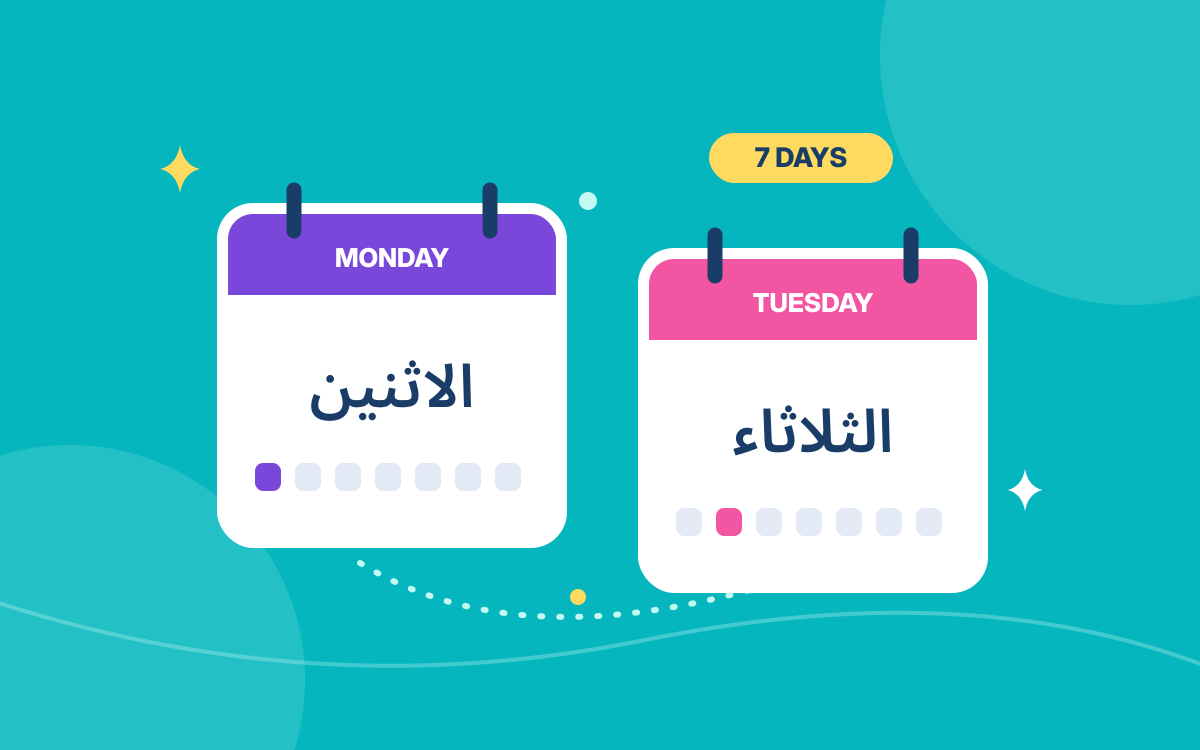
الِاثْنَيْن
al ithnayn
Monday
الثُّلَاثَاء
ath thulatha
Tuesday
- The cards say Monday and Tuesday. These are standard Arabic names, useful on calendars and schedules.
- يَوْم yawm means day. You may also see it before a day name, as in يَوْم الِاثْنَيْن for Monday.
- Recognise the whole word first. The small reading aids use plain letters and cannot represent every Arabic sound exactly.
02Find your way through the week
| Day | Arabic | Say it |
|---|---|---|
| Sunday | الْأَحَد | al ahad |
| Monday | الِاثْنَيْن | al ithnayn |
| Tuesday | الثُّلَاثَاء | ath thulatha |
| Wednesday | الْأَرْبِعَاء | al arbia |
| Thursday | الْخَمِيس | al khamis |
| Friday | الْجُمُعَة | al jumua |
| Saturday | السَّبْت | as sabt |
The table starts at Sunday as a learning sequence. It does not tell you which day is a workday, a weekend, or the first day displayed on every calendar.
- Read the sequence once, then locate a day without starting from the top.
- Tuesday and Wednesday can look long at first. Notice their shapes and practise finding them among the shorter names.
- In ath thulatha and as sabt, the pronunciation of the definite article blends with the following consonant. The Arabic spelling still includes ال.
03Say today and tomorrow
الْيَوْم
al yawm
today
غَدًا
ghadan
tomorrow
أَمْس
ams
yesterday
الْيَوْم الِاثْنَيْن
al yawm al ithnayn
Today is Monday.
غَدًا الثُّلَاثَاء
ghadan ath thulatha
Tomorrow is Tuesday.
These are practice examples, not a live calendar. If today were Monday, tomorrow would be Tuesday and yesterday would be Sunday. The day names stay the same; the time words change your point of reference.
04Put a lesson on the calendar
الدَّرْس يَوْم الْخَمِيس
ad dars yawm al khamis
The lesson is on Thursday.
- الدَّرْس ad dars means the lesson.
- يَوْم الْخَمِيس yawm al khamis tells you the day. In this sentence it means on Thursday.
- Keep the pattern and swap the day: the lesson can be on Monday, Friday, or any day you choose.
Our beginner readings leave most final grammatical endings out. You may hear these endings in careful formal speech. For now, concentrate on recognising the day and understanding the plan.
05Ask which day it is
مَا الْيَوْم؟
ma al yawm
What day is it?
A short reply can simply be the day name: al jumua means Friday. For a fuller reply, use the today pattern above. You do not need a separate present-tense word for “is” in that example.
- Practise with a chosen calendar day rather than guessing from the current date.
- Find the day before it and the day after it. Saturday is followed by Sunday.
- Finally, put one real study session on your calendar and say its day in Arabic.
What to remember
- Learn the seven day names as a cycle, then practise recognising them out of order.
- Al yawm means today, ghadan tomorrow, and ams yesterday.
- Use a day in a real plan: ad dars yawm al khamis means the lesson is on Thursday.
Sources & further learning
References for the language explanations and learning guidance.