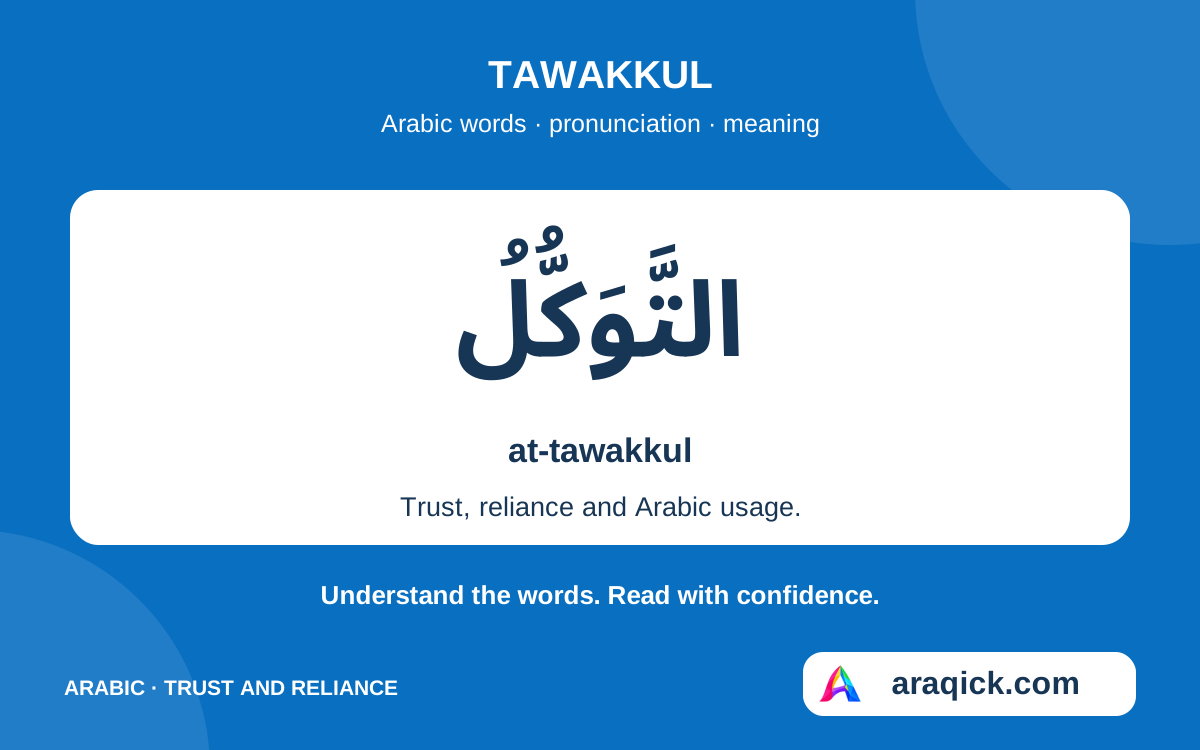
Tawakkul, تَوَكُّلٌ, means trust or reliance. In Islamic usage it usually means placing one’s trust in Allah. The word describes an attitude of dependence on God, rather than the prediction that a particular plan must succeed. Its related verb appears in Quran 3:159 alongside consultation and a decision to act.
01Tawakkul means trust and reliance
The English words “trust” and “reliance” both help explain tawakkul. Trust emphasises confidence; reliance emphasises depending on someone. In Islamic discussion, tawakkul brings these ideas together in relation to Allah. Translating the noun as “giving up” misses that relationship and can suggest something quite different.
Keep the noun separate from a person or an instruction. Tawakkul names reliance itself. A sentence may instead say who relies, whom they rely on, or tell someone to rely. Those differences become clearer when you recognise the verb and the accompanying preposition.
02Spell and pronounce tawakkul
The Arabic spelling is تَوَكُّل. Read it in three parts: ta-wak-kul. The shaddah above kaf makes a doubled k; keep the two k sounds joined with a slightly longer closure. The a and u vowels are short, so tawakkul does not contain a long uu.
The fully marked standalone noun تَوَكُّلٌ can be read tawakkulun when its ending is pronounced. At a pause, tawakkul is the usual reading. Roman spellings such as tawakul may hide the doubled consonant; use the Arabic letters to check it.
03Find the root w-k-l
Tawakkul belongs to the root و ك ل, written w-k-l in plain letters. The related verb تَوَكَّلَ, tawakkala, is a Form V verb meaning “he put his trust” or “he relied.” Tawakkul is its verbal noun, naming that action or attitude.
The initial t is part of the derived pattern, not one of the three root letters. وَكِيلٌ, wakiil at a pause, is another member of the family, with meanings such as trustee or one entrusted with affairs according to context. Our Arabic roots guide explains how patterns organise related meanings.
04Read the context of Quran 3:159
Quran 3:159 addresses the Prophet about gentleness, pardon, seeking forgiveness and consulting others. The instruction to place trust in Allah follows the mention of reaching a decision. That sequence matters: the verse places consultation, resolve and reliance together, rather than defining reliance as refusing to consider or do anything.
The short expression فَتَوَكَّلْ عَلَى اللَّهِ means, in our translation, “then place your trust in Allah.” Read the full verse to understand its setting. A translation communicates meaning; a tafsir gives attributed explanation beyond the isolated phrase.
05Recognise verbs and the preposition ala
The verb commonly connects to its object of reliance through عَلَى, alaa when read by itself. تَوَكَّلْتُ, tawakkaltu, means “I placed my trust”; تَوَكَّلْنَا, tawakkalnaa, means “we placed our trust.” The endings change the person while keeping the basic action recognisable.
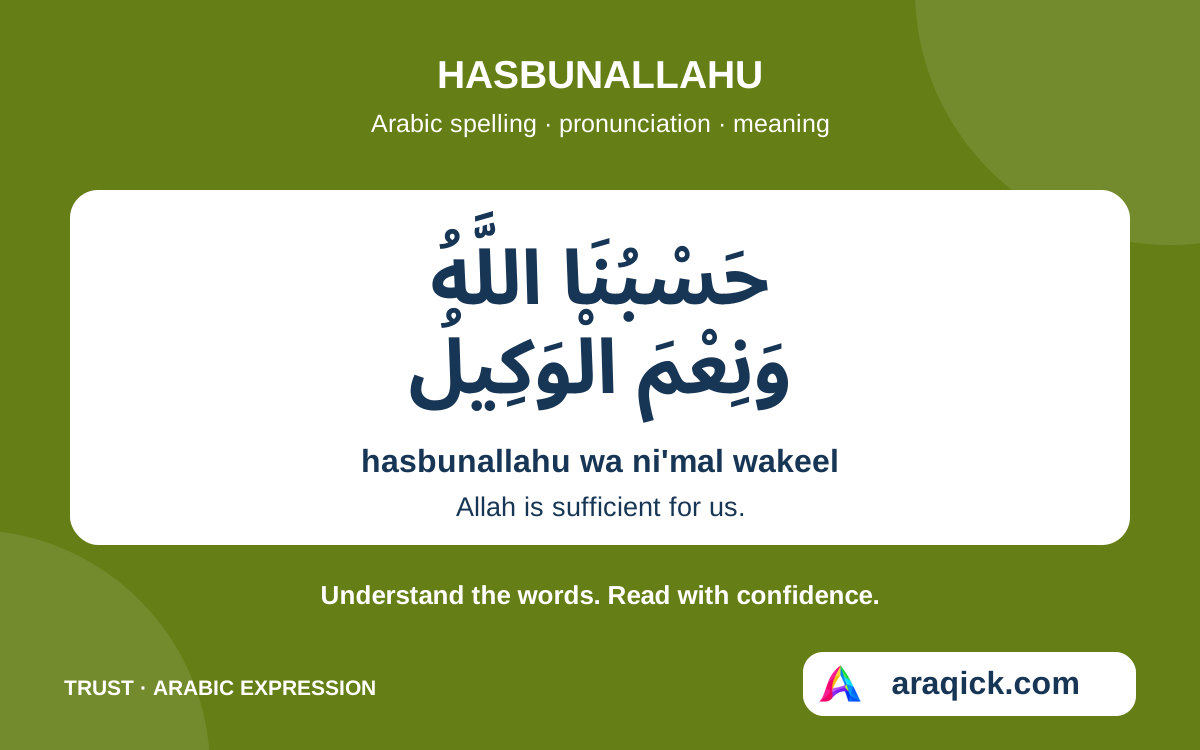
An ordinary practice sentence is تَوَكَّلْتُ عَلَى اللَّهِ, “I have placed my trust in Allah.” It illustrates grammar here, rather than a prescribed reply for every situation. Compare the related word wakil in Hasbunallahu wa ni’mal wakeel, while preserving the different wording of each expression.
06Connect the meaning with a real situation
Imagine a learner who prepares carefully for an Arabic assessment and still cannot control every result. Describing reliance on Allah concerns where the learner places trust, alongside the preparation. It does not turn the word tawakkul into a promise of a particular score or remove the need to prepare.
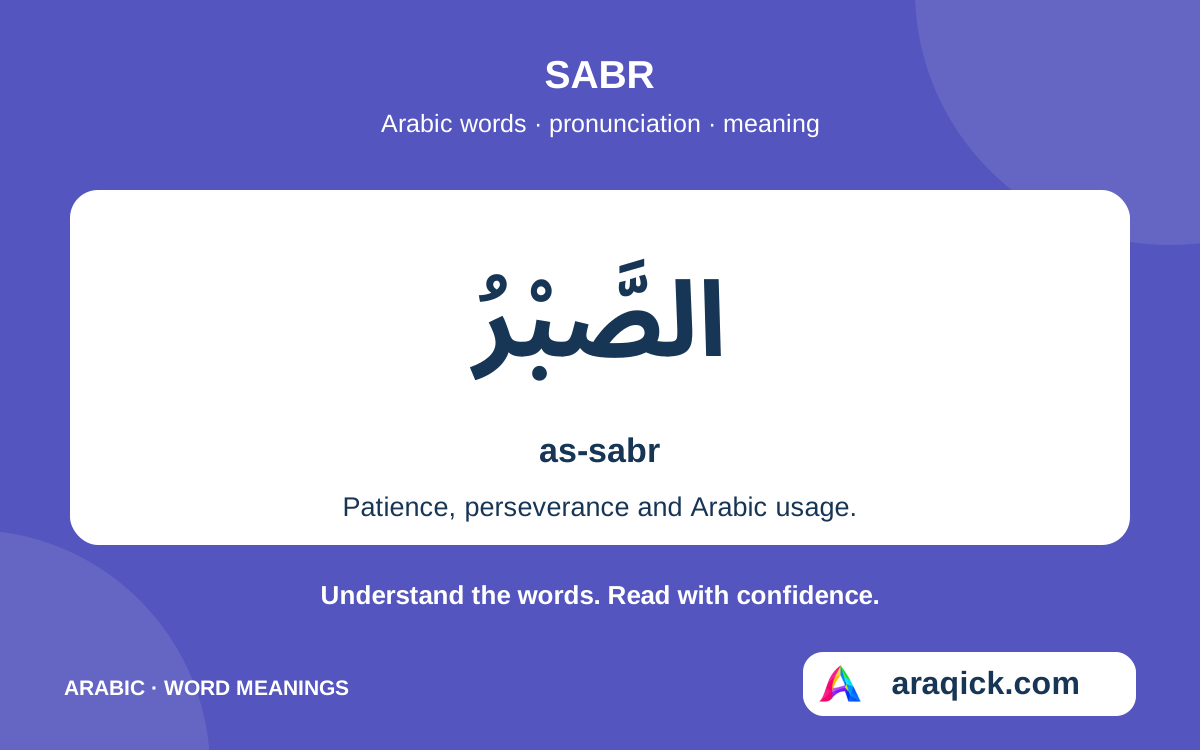
For vocabulary practice, identify three things: the noun naming reliance, the verb identifying who relies, and the phrase identifying the object of reliance. Then compare tawakkul with sabr, patience and perseverance. They can appear in related situations but are distinct Arabic words.
What to remember
- Tawakkul means trust or reliance, especially reliance on Allah in Islamic usage.
- Its root is w-k-l; the Form V verb tawakkala and noun tawakkul share a doubled kaf.
- Quran 3:159 places consultation, resolve and reliance together.
Your reference shelf
Open a guide whenever you need it.
The tawakkul word familyCompare the noun, verbs and person description; pause readings omit optional final noun endings.
| Arabic | Plain-letter reading | Meaning or use |
|---|---|---|
| تَوَكُّلٌ | tawakkul | Trust; reliance — noun |
| تَوَكَّلَ | tawakkala | He placed his trust — past verb |
| يَتَوَكَّلُ | yatawakkalu | He places his trust — present verb, full ending |
| تَوَكَّلْتُ | tawakkaltu | I placed my trust |
| تَوَكَّلْنَا | tawakkalnaa | We placed our trust |
| مُتَوَكِّلٌ | mutawakkil | One who relies — pause reading |
| وَكِيلٌ | wakiil | Trustee; one entrusted with affairs, according to context |
Double letters in these readings mark a long vowel or a held consonant: ii in wakiil is long, while kk in tawakkul is a doubled consonant.
Reliance in short Arabic phrasesThe first line is a Quranic excerpt; the remaining lines are language examples, not required replies.
| Arabic | Plain-letter reading | Meaning or use |
|---|---|---|
| فَتَوَكَّلْ عَلَى اللَّهِ | fatawakkal alallaah | Then place your trust in Allah — Quran 3:159, paused at the end |
| تَوَكَّلْتُ عَلَى اللَّهِ | tawakkaltu alallaah | I have placed my trust in Allah — practice sentence |
| هُوَ يَتَوَكَّلُ عَلَى اللَّهِ | huwa yatawakkalu alallaah | He places his trust in Allah — practice sentence |
In connected speech, the final long vowel of ala is shortened before the following unpronounced joining hamzah. The readings alallaah represent that connection; the final case vowel of Allah is omitted at the pause.
Sources & further learning
References for the language explanations and learning guidance.