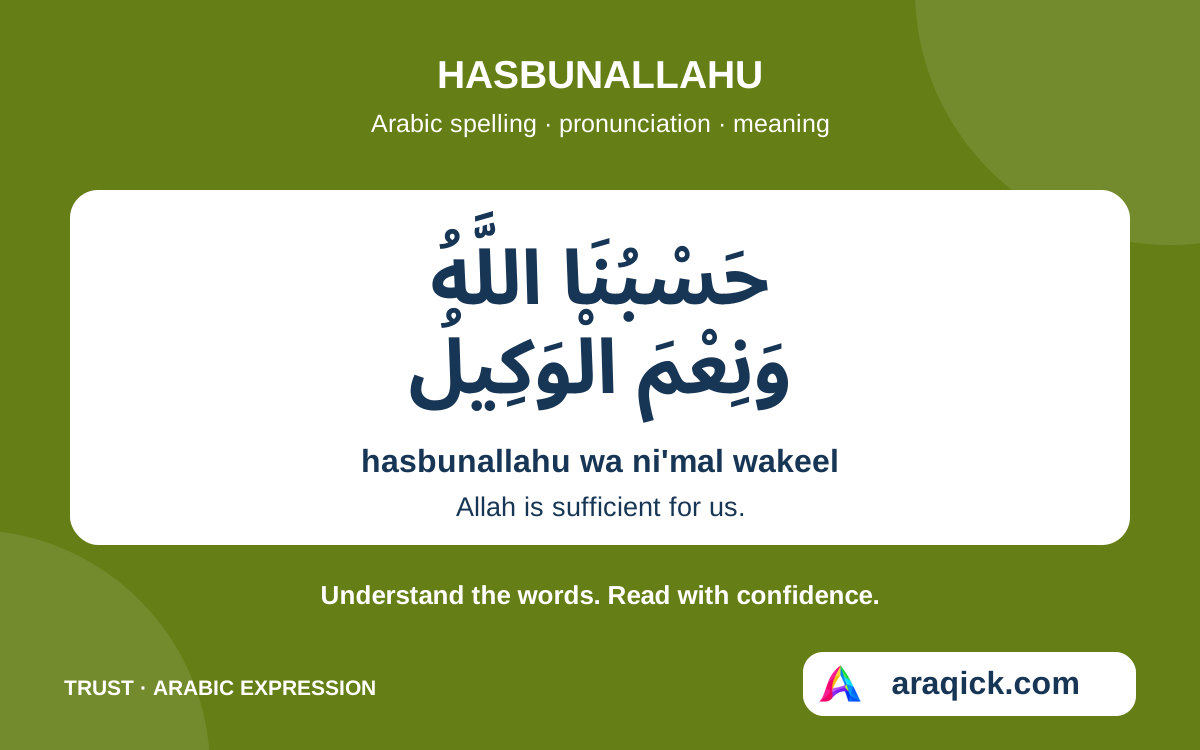
Hasbunallahu wa ni’mal wakeel is حَسْبُنَا اللَّهُ وَنِعْمَ الْوَكِيلُ, meaning “Allah is sufficient for us, and He is the finest One to entrust our affairs to.” It expresses reliance on God. The wording occurs in Quran 3:173; “Protector” and “Disposer of affairs” are common ways to convey the final word in English.
01What does the expression mean?
The first half says that Allah is sufficient for the speakers. The second praises Him as the One to whom affairs are entrusted. English translations choose different words for this role because no single English label carries every shade of the Arabic.
حَسْبُنَا اللَّهُ وَنِعْمَ الْوَكِيلُ
hasbunallahu wa nimal wakil
Allah is sufficient for us, and an excellent Guardian is He.
Read the whole expression as a statement of trust. It is not a greeting or a promise that a particular event will happen exactly as the speaker wishes.
02Read the words in two halves
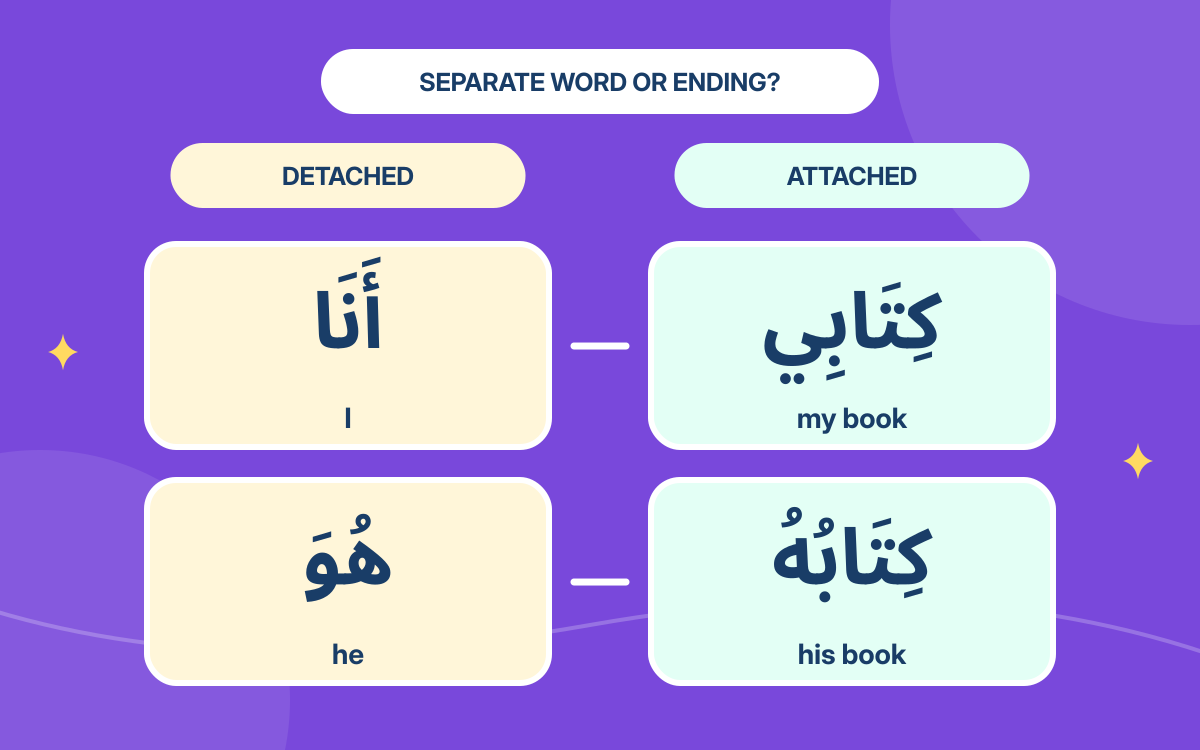
حَسْبُنَا contains the ending نَا, meaning “us” or “our” according to its position. Here it contributes “for us.” اللَّهُ identifies who is sufficient. The conjunction وَ links the two halves with “and.”
The praise construction نِعْمَ means “excellent is” or “what an excellent…” It is not the ordinary word نَعَمْ (naam), “yes.” The vowel marks help distinguish them. Learn the complete second half, وَنِعْمَ الْوَكِيلُ, rather than treating every English translation as a literal word-for-word match.
03Pronunciation and spelling
Practise slowly: hasbuna | Allahu | wa nima | alwakil. In connected speech this becomes hasbunallahu wa nimal wakil. The long vowel in wakil is sometimes written wakeel. Both English spellings can point to the same Arabic word.
The letter ع in nima is a throat sound. Plain transliteration leaves some sound detail unmarked, so use the Arabic alongside it. At a pause, the final short u of الْوَكِيلُ is normally not pronounced. Pausing there does not change the written expression.
04Where does the phrase appear?
Quran 3:173 describes believers receiving a warning about forces gathering against them. Their response includes this statement of reliance. This is the verse containing the wording; the phrase alone is not the entire verse.
Sahih al-Bukhari 4563 also records Ibn Abbas relating this expression to Ibrahim and to Muhammad, peace and blessings be upon them. Keep the source and the meaning together when sharing it. A reference to the phrase does not by itself establish a prescribed number of repetitions or a guaranteed worldly result.
05Hasbuna and hasbi are different
The approved expression uses “us.” A related singular form is حَسْبِيَ اللَّهُ (hasbiyallahu), “Allah is sufficient for me.” The change is in the pronoun; it is not a new spelling of the same plural word. Our detached and attached pronouns guide explains how short endings carry meaning.
Recognising these endings helps you understand what you read without silently changing a quotation. When citing Quran 3:173, preserve its wording rather than replacing the plural with the singular.
06Understand the situation as well as the words
A person may use the expression while feeling afraid, facing uncertainty or entrusting a difficult matter to God. The expression communicates the speaker’s reliance; it does not give the listener all the facts about the situation. Listen to any request or explanation that follows.
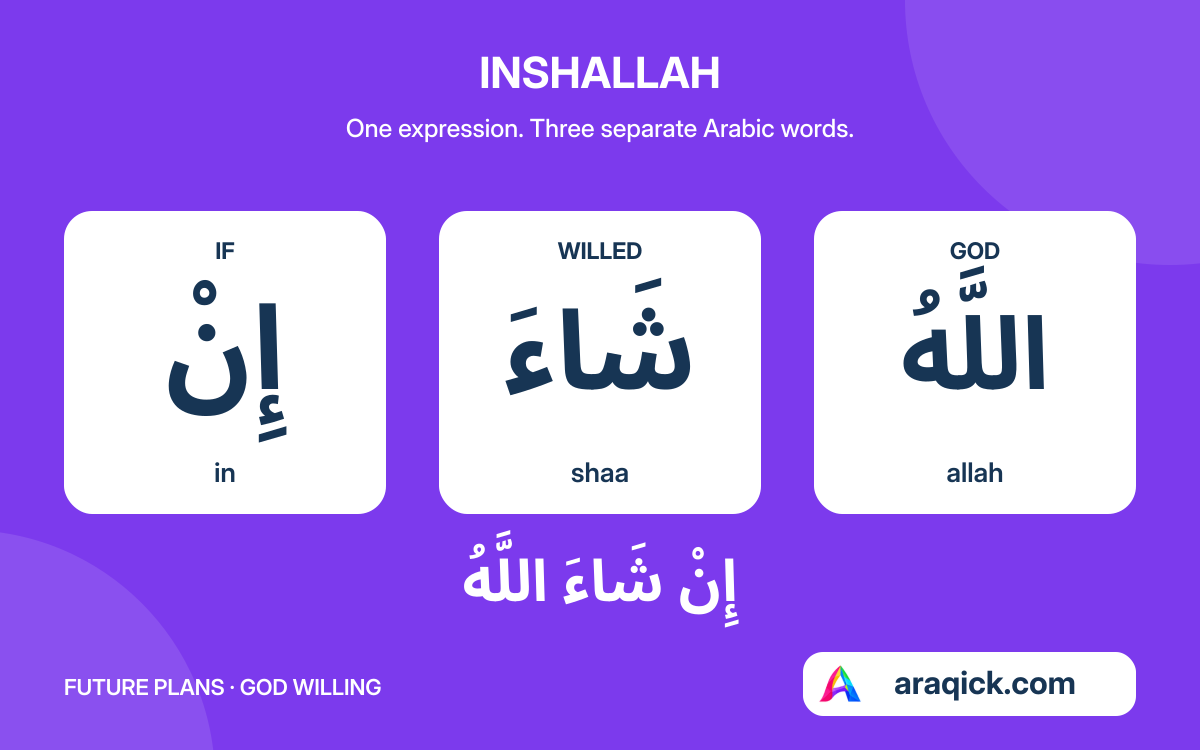
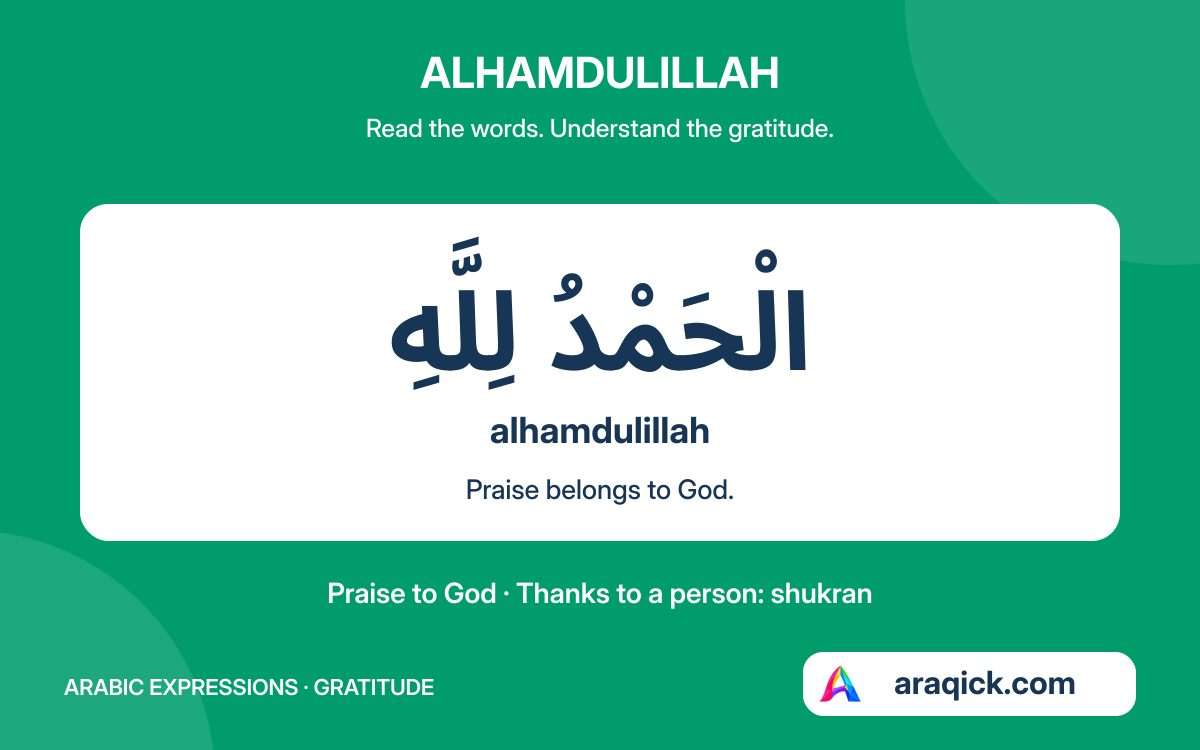
There is no single everyday reply built into its grammar. Choose a response that fits the conversation. Compare inshallah, which relates an intention or hope to God’s will, and alhamdulillah, which expresses praise. Their purposes overlap in religious conversation, but their meanings remain distinct.
What to remember
- The phrase expresses sufficiency in Allah and reliance on Him.
- Hasbuna includes us; the related hasbi form includes me.
- Quran 3:173 contains the expression; preserve its wording when quoting it.
Your reference shelf
Open a guide whenever you need it.
The expression, word by wordSee how sufficiency and praise form one expression.
| Arabic | Reading | Meaning or use |
|---|---|---|
| حَسْبُنَا | hasbuna | Sufficient for us |
| اللَّهُ | Allahu | Allah; God |
| وَ | wa | And |
| نِعْمَ | nima | Excellent is; a construction of praise |
| الْوَكِيلُ | alwakil | The One entrusted with affairs; Guardian |
Pronouns and a useful vowel contrastSmall endings and vowels can change meaning.
| Arabic | Reading | Meaning or use |
|---|---|---|
| حَسْبُنَا اللَّهُ | hasbunallahu | Allah is sufficient for us |
| حَسْبِيَ اللَّهُ | hasbiyallahu | Allah is sufficient for me |
| نِعْمَ | nima | Excellent is |
| نَعَمْ | naam | Yes |
Sources & further learning
References for the language explanations and learning guidance.