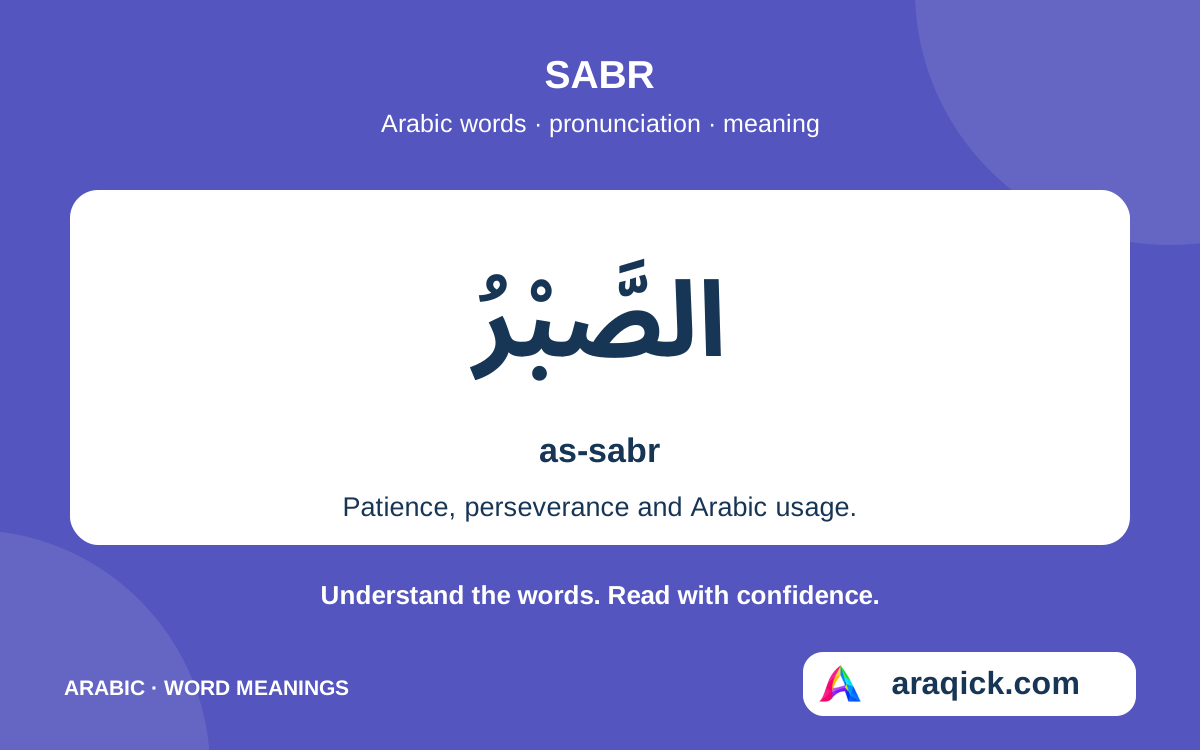
صَبْرٌ (sabr) means patience, endurance or steadfastness, depending on context. It can describe persevering through hardship, remaining committed to something good or exercising self-restraint. In Islamic usage, it is an active quality of responding well, rather than a word that simply means silence or doing nothing.
01What does sabr mean beyond patience?
English patience can suggest waiting calmly, but sabr also covers enduring difficulty and keeping up worthwhile effort. Perseverance or steadfastness may therefore fit a sentence better. A learner continuing careful practice can show patience even while taking practical action.
The word names a quality; it does not specify every action that a situation requires. Calling something sabr does not, by itself, mean that a person must stay silent. Read what the speaker is asking someone to endure, continue or restrain. This question turns an abstract translation into a more precise understanding of the sentence.
02How is sabr written and pronounced?
The three letters are ص (sad), ب (ba) and ر (ra). In صَبْرٌ, fatha gives the short a after sad, while sukun shows that ba has no following vowel. At a pause, read sabr as one syllable without inserting an extra a between b and r.
Sad is an emphatic consonant, different from the lighter sin س. Plain English s cannot show that contrast fully. A fully connected form may include a case ending, such as sabrun. That ending is part of the grammar of the sentence, not a fourth root letter.
03Which words belong to the same root?
The root is ص ب ر, commonly represented as s-b-r in plain letters. صَبَرَ (sabara) means he was patient or endured. يَصْبِرُ (yasbiru) means he is patient or endures. صَابِرٌ (saabir) describes a patient or steadfast person.
Compare sabr, the quality, with saabir, the person described by that quality. The long aa in saabir helps identify a different pattern. A root links these words, but does not erase the difference between a noun, a verb and a describing form. Our root and dictionary guide explains this distinction.
04Where does sabr appear in the Quran?
Quran 2:153 connects seeking help with patience and prayer. The word appears in بِالصَّبْرِ (bissabri), with the prefix bi and the definite article. The doubled sad sound comes from the article joining a sun letter; the underlying root remains sad, ba and ra.
Quran 3:200 addresses believers with commands connected to patience and perseverance, including اصْبِرُوا (isbiruu) and صَابِرُوا (saabiruu). These are action words, not names for passive waiting alone. Our Quranic Arabic plan shows how to study a short form within its complete verse.
05How can you use the word in a sentence?
تَعَلُّمُ الْعَرَبِيَّةِ يَحْتَاجُ إِلَى صَبْرٍ.
taallumu alarabiyyati yahtaaju ilaa sabr
Learning Arabic needs patience.
This original learning example uses sabr as the quality needed for an ongoing task. The final noun follows ila, so the fully marked form ends in kasratayn. At a pause, the reading returns to sabr. The sentence is an illustration, not a quotation from scripture.
A second useful form is اِصْبِرْ (isbir), meaning be patient, addressed to one male. Compare it with the plural command isbiruu in the previous section. Small changes can signal who is being addressed.
06How should you choose an English translation?
Ask three questions: what difficulty or commitment is involved, what action is described, and who is speaking? Patience may suit a delay; endurance may suit hardship; perseverance may suit sustained effort. Self-restraint can capture controlling an impulsive response. One English word will not fit every setting equally well.
In a bereavement context, read an expression of patience alongside the actual words of consolation, such as those discussed in our Inna Lillahi guide. Avoid treating sabr as a promise of a particular immediate outcome. Its meaning concerns steadfast conduct, while each passage supplies its own further message.
What to remember
- Sabr can express patience, endurance, steadfastness and self-restraint.
- Its root is sad-ba-ra; sabr, sabara and saabir have different grammatical roles.
- Read the context before choosing an English equivalent or inferring an outcome.
Your reference shelf
Open a guide whenever you need it.
Sabr and its related formsRecognise the quality, the person and the action.
| Arabic | Reading | Meaning or role |
|---|---|---|
| صَبْرٌ | sabr | Patience; endurance; steadfastness |
| صَبَرَ | sabara | He was patient; he endured |
| يَصْبِرُ | yasbiru | He is patient; he endures |
| صَابِرٌ | saabir | A patient or steadfast person; masculine |
| صَابِرَةٌ | saabirah | A patient or steadfast person; feminine |
| صَابِرُونَ | saabiruun | Patient or steadfast people; masculine nominative plural |
| اِصْبِرْ | isbir | Be patient; addressed to one male |
| اِصْبِرُوا | isbiruu | Be patient; addressed to a masculine or mixed plural group |
Read sabr in a larger constructionThese forms show how prefixes, endings and patterns affect reading.
| Arabic | Reading | What changes |
|---|---|---|
| بِالصَّبْرِ | bissabri | Bi plus the article; lam assimilates to sad; Quran 2:153 |
| صَابِرُوا | saabiruu | A plural command linked with perseverance; Quran 3:200 |
| إِلَى صَبْرٍ | ilaa sabr | Needs a larger sentence; sabr has a genitive ending after ila |
| صَبْرٌ جَمِيلٌ | sabrun jamiil | Beautiful patience; a noun and a describing adjective |
Sources & further learning
References for the language explanations and learning guidance.