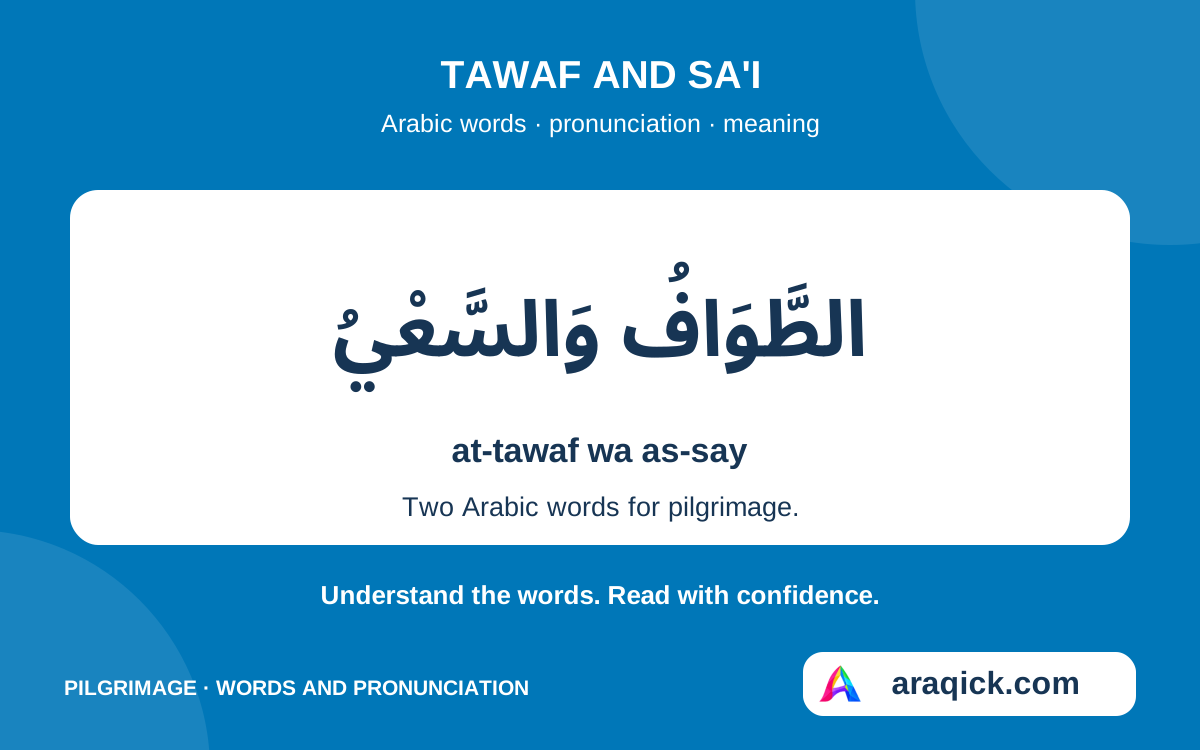
Tawaf, طَوَافٌ, means going around and, in pilgrimage, circumambulating the Kaaba. Sai, سَعْيٌ, means effort or striving and, in Hajj and Umrah, names the movement between Safa and Marwah. These related pilgrimage terms describe different actions.
01Tawaf and sai name different actions
Tawaf names going around the Kaaba in the pilgrimage setting. Sai names the movement between Safa and Marwah. A useful first distinction is “around” versus “between”: the terms point to different actions and locations, even when a guide discusses them together.
Both occur in the vocabulary of Hajj and Umrah. Neither word is another name for the entire pilgrimage. Compare them with the Arabic names Hajj and Umrah so that a part of the journey does not become confused with the journey as a whole.
02Tawaf belongs to the t-w-f word family
The root letters of طَوَافٌ are ط و ف. Related forms include طَافَ, taafa, “he went around,” and يَطُوفُ, yatuufu, “he goes around.” These verb forms help connect the action noun to a recognisable word family.
The same root can describe circulation outside the pilgrimage setting. A root supplies connections, while the surrounding words identify the particular meaning. In Quran 22:29, the reference to the Ancient House gives the circling action its pilgrimage context. Do not translate every form from this root as a technical ritual name.
03Sai can also mean effort or striving
The noun سَعْيٌ belongs to the root س ع ي. The related verb سَعَى, sa'aa with a throat consonant between the two a sounds, can mean striving, proceeding or moving with purpose according to context. The final aa in this verb is written with alif maqsura.
In pilgrimage vocabulary, sai has the specific Safa–Marwah reference. Elsewhere it can mean effort or striving: Quran 53:40 uses a related noun form for a person’s striving. Reading the whole sentence prevents a pilgrimage meaning from being inserted into every occurrence.
04Keep the long vowel and ayn distinct
Read tawaf approximately as ta-waaf: the second a is long, while the first is short. The initial ط is an emphatic t sound. A fully inflected standalone reading of طَوَافٌ is tawaafun; at a pause, the final un is dropped.
Sai, saee and sa'i are common English spellings. The Arabic pause form سَعْي is more precisely shown here as sa'y: a short a, the throat consonant ayn, then y. The apostrophe marks ayn rather than an extra vowel. Plain-letter spelling is a reminder; listening to Arabic helps establish the actual sound.
05Let the named places guide your reading
Quran 2:158 names الصَّفَا and الْمَرْوَة, Safa and Marwah. Its verb comes from the t-w-f family, showing why a root cannot be assigned only one route or technical label. The objects and places mentioned in the verse matter.
Jabir’s pilgrimage report in Sahih Muslim 1218a separately describes circling the House and going between Safa and Marwah. For language study, keep those references separate. Learn the names and their relationships before reading detailed practical instructions with a teacher or reliable pilgrimage guide.
06Use around and between as memory cues
An original vocabulary example is الطَّوَافُ حَوْلَ الْكَعْبَةِ, “tawaf is around the Kaaba.” Compare السَّعْيُ بَيْنَ الصَّفَا وَالْمَرْوَةِ, “sai is between Safa and Marwah.” These are learning sentences, not quoted recitations.
Notice حَوْلَ, hawla, “around,” and بَيْنَ, bayna, “between.” They make useful meaning checks. Continue with practical Arabic for Hajj and Umrah and ihram and miqat vocabulary to recognise a place, a state and an action without mixing their roles.
What to remember
- Tawaf and sai name different actions: around the Kaaba and between Safa and Marwah.
- Sai also means effort or striving outside its pilgrimage use.
- Use root letters together with the surrounding sentence, not as a complete translation.
Your reference shelf
Open a guide whenever you need it.
Tawaf and sai word familiesCompare the action noun with related verbs; noun readings here use the pause form.
| Arabic | Plain-letter reading | Meaning or use |
|---|---|---|
| طَوَافٌ | tawaaf | Circumambulation; tawaf in the pilgrimage context |
| طَافَ | taafa | He went around |
| يَطُوفُ | yatuufu | He goes around |
| سَعْيٌ | sa'y | Effort or striving; sai in the pilgrimage context |
| سَعَى | sa'aa | He strove or proceeded; meaning depends on context |
Places and relationship wordsUse the route and the surrounding words to identify the intended action.
| Arabic | Plain-letter reading | Meaning or use |
|---|---|---|
| الْكَعْبَةُ | al-ka'bah | The Kaaba; final h is a pause reading |
| الصَّفَا | assafaa | Safa |
| الْمَرْوَةُ | almarwah | Marwah; final h is a pause reading |
| حَوْلَ | hawla | Around |
| بَيْنَ | bayna | Between |
Sources & further learning
References for the language explanations and learning guidance.