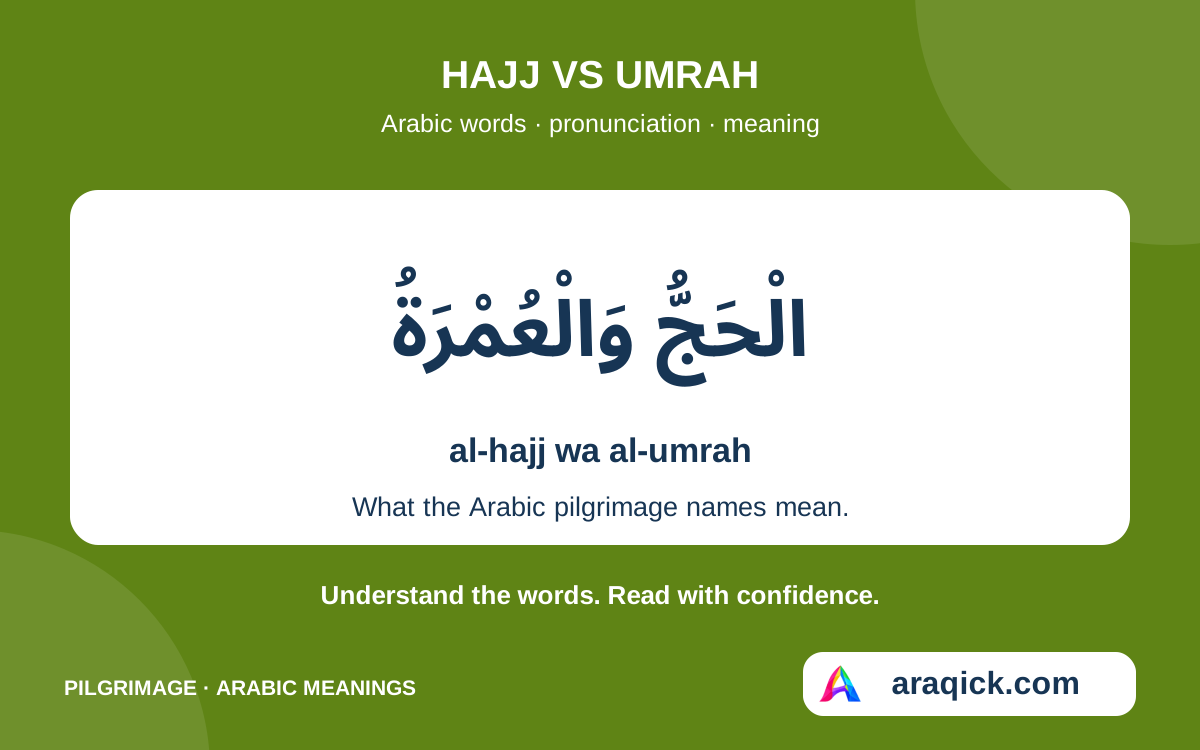
Hajj, حَجٌّ, names the Islamic pilgrimage associated with an appointed season. Umrah, عُمْرَةٌ, names a distinct pilgrimage to Makkah, often translated as “minor pilgrimage.” Both involve worship connected with the Sacred House, but their Arabic names are not interchangeable. Learning their spelling, word families and context helps you understand what a speaker actually means.
01Two names identify two distinct pilgrimages
English “pilgrimage” is a broad translation that can hide a useful distinction. In Islamic Arabic, الْحَجُّ refers to Hajj and الْعُمْرَةُ to Umrah. Adding al makes the nouns definite; it does not turn one pilgrimage into the other.
Quran 2:196 names both in the same passage. That pairing is a good reason to learn them separately rather than treating Umrah as another spelling of Hajj. “Major” and “minor” are explanatory English labels, not extra Arabic words inside the two names.
02Hajj belongs to the h-j-j word family
The root letters are ح ج ج. The classical dictionary Lisan al-Arab connects the word with setting out toward or visiting a destination, and its specialised use with pilgrimage to the Sacred House. In a pilgrimage lesson, translate the complete word according to that religious context.
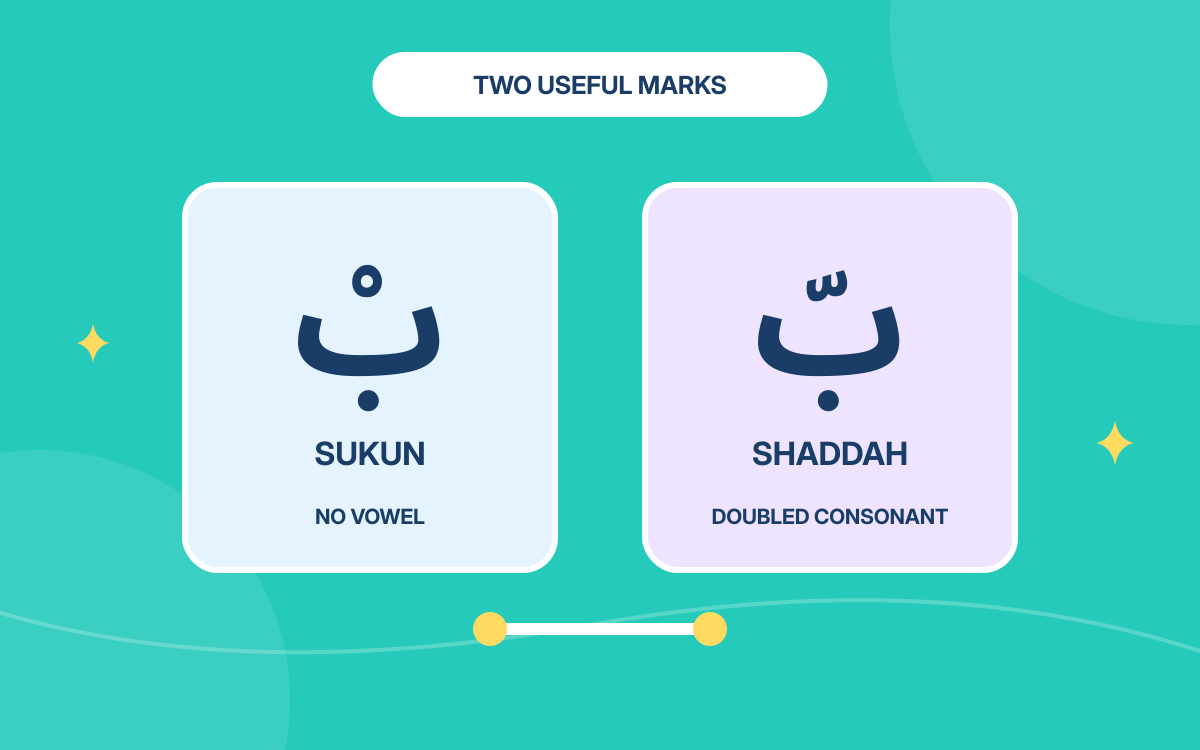
The related verb حَجَّ, hajja, means “he performed Hajj.” Notice the shaddah on jim: it marks a doubled consonant. Hajj is a compact word with a short a, not a long “haa.” Review sukun and shaddah to understand what that small mark changes.
03Umrah begins with ayn
Umrah belongs to the root family ع م ر. Its pilgrimage sense concerns a visit to the Sacred House; the same root also produces words connected with inhabiting, maintaining and lifespan. Those related meanings do not make every word in the family a synonym for Umrah.
The verb اِعْتَمَرَ, itamara in our simplified reading, means “he performed Umrah.” The initial sound in umrah is ayn, an Arabic throat consonant. Plain English letters only approximate it. Compare the actual Arabic forms, then use a reliable recording to hear the sound rather than adding a long “oo.”
04The season is part of the distinction
Quran 2:197 places Hajj in recognised months. Its central rites belong to a particular annual season, whereas Umrah is not defined by that same Hajj season. A visit to Makkah is therefore not automatically Hajj simply because it involves pilgrimage.
This language distinction is separate from practical access arrangements. Travel dates and permissions need their own current guidance. For the calendar vocabulary behind the season, see the twelve Hijri months. Learn the month names as Arabic words before trying to interpret a calendar or itinerary.
05The pilgrim and the pilgrimage have different forms
حَاجٌّ, haajj, names a person performing Hajj; حُجَّاجٌ, hujjaaj, is a common plural. The long aa in haajj distinguishes its sound from the short a in hajj. A woman performing Hajj can be described as حَاجَّةٌ, haajjah.
مُعْتَمِرٌ, mutamir in simplified letters, names a man performing Umrah, and مُعْتَمِرَةٌ names a woman. These forms identify people, while hajj and umrah identify pilgrimages. Root letters help you connect the family; the word pattern tells you which member you are reading.
06Use a short phrase to check your understanding
رِحْلَةُ الْعُمْرَةِ means “the Umrah journey.” Read it approximately rihlatu-lumrah, retaining the u that joins the two nouns. This is an ordinary descriptive phrase, not a prescribed recitation. A familiar word changes its grammatical ending when it enters a phrase.
When you meet new vocabulary, ask whether it names a pilgrimage, a pilgrim, a state or an action. Ihram and miqat add the state and boundary vocabulary; the Talbiyah guide explains a recognised recitation. Keep those meanings distinct while building a connected vocabulary.
What to remember
- Hajj and Umrah are distinct pilgrimage names, not interchangeable spellings.
- Hajj has a doubled j; Umrah begins with the throat consonant ayn.
- Haajj names a pilgrim, while hajj names the pilgrimage.
Your reference shelf
Open a guide whenever you need it.
Pilgrimage names, verbs and peopleCompare standalone dictionary forms. Final grammatical endings are normally omitted when pausing. Nouns use pause readings; verbs retain their dictionary-form endings.
| Arabic | Plain-letter reading | Meaning |
|---|---|---|
| حَجٌّ | hajj | Hajj; the pilgrimage |
| عُمْرَةٌ | umrah | Umrah; the distinct pilgrimage |
| حَجَّ | hajja | He performed Hajj |
| اِعْتَمَرَ | itamara | He performed Umrah; simplified reading of ayn |
| حَاجٌّ | haajj | A male Hajj pilgrim |
| حَاجَّةٌ | haajjah | A female Hajj pilgrim |
| حُجَّاجٌ | hujjaaj | Hajj pilgrims |
| مُعْتَمِرٌ | mutamir | A male Umrah pilgrim; simplified reading of ayn |
| مُعْتَمِرَةٌ | mutamirah | A female Umrah pilgrim; simplified reading of ayn |
Keep these distinctions clearA quick language comparison, with descriptive phrases rather than a sequence of ritual instructions.
| Comparison | Hajj | Umrah |
|---|---|---|
| Arabic name | الْحَجُّ | الْعُمْرَةُ |
| Root letters | ح ج ج | ع م ر |
| Initial sound | Haa: a breathy Arabic throat consonant | Ayn: a different Arabic throat consonant |
| Time context | An appointed annual season | A distinct pilgrimage not defined by that Hajj season |
| Person word | حَاجٌّ | مُعْتَمِرٌ |
Sources & further learning
References for the language explanations and learning guidance.