Useful Arabic for Hajj and Umrah includes asking where a place is, explaining that you need help and identifying your group or hotel. The expandable phrase table below contains exactly 20 complete practical utterances, with Arabic, plain-letter pronunciation and English meanings. These are original Modern Standard Arabic examples for everyday communication, rather than prescribed pilgrimage recitations.
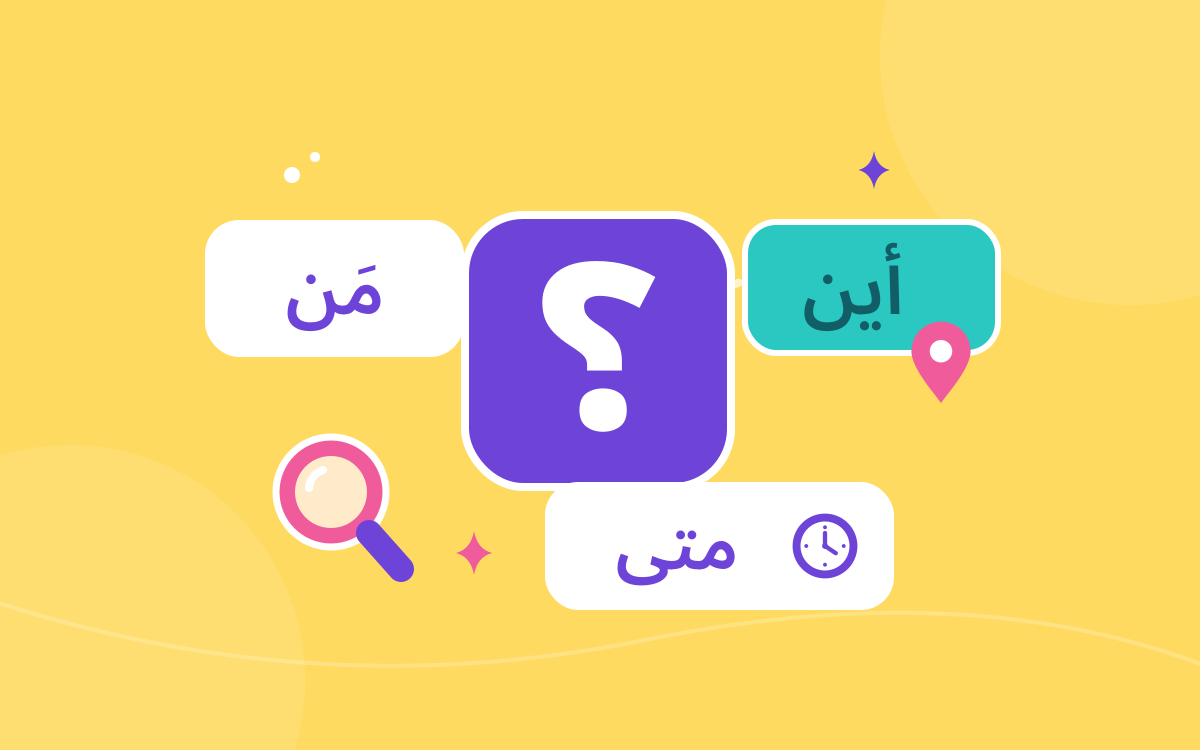
01Start with three useful question words
أَيْنَ, ayna, asks “where?” It introduces many phrases in the table because locating a mosque, entrance or bus stop is a common communication task. مَا, maa, asks “what?” in the question about the prayer direction. هَلْ, hal, introduces a yes-or-no question, such as asking whether this bus goes to a particular hotel.
Identify the question word before memorising the whole sentence. Then connect it with the place or information you need. Our Arabic question words guide explains how these small words change the question being asked.
02Distinguish a mosque, the Haram and the qiblah
الْمَسْجِدُ, al-masjid, means “the mosque.” الْحَرَمُ, al-haram, refers to the sanctuary; in a local pilgrimage conversation it can refer to the sacred mosque or its precincts. Make the intended place clear from your location or a map. Haram here has short a vowels; it is not the identical word to haraam, “forbidden.”
الْقِبْلَةُ, al-qiblah, names the prayer direction, rather than a hotel, gate or transport stop. Quran 2:144 connects the prayer direction with the Sacred Mosque. Asking about qiblah and asking how to reach a building are therefore different communication tasks.
03Show which hotel or bus you mean
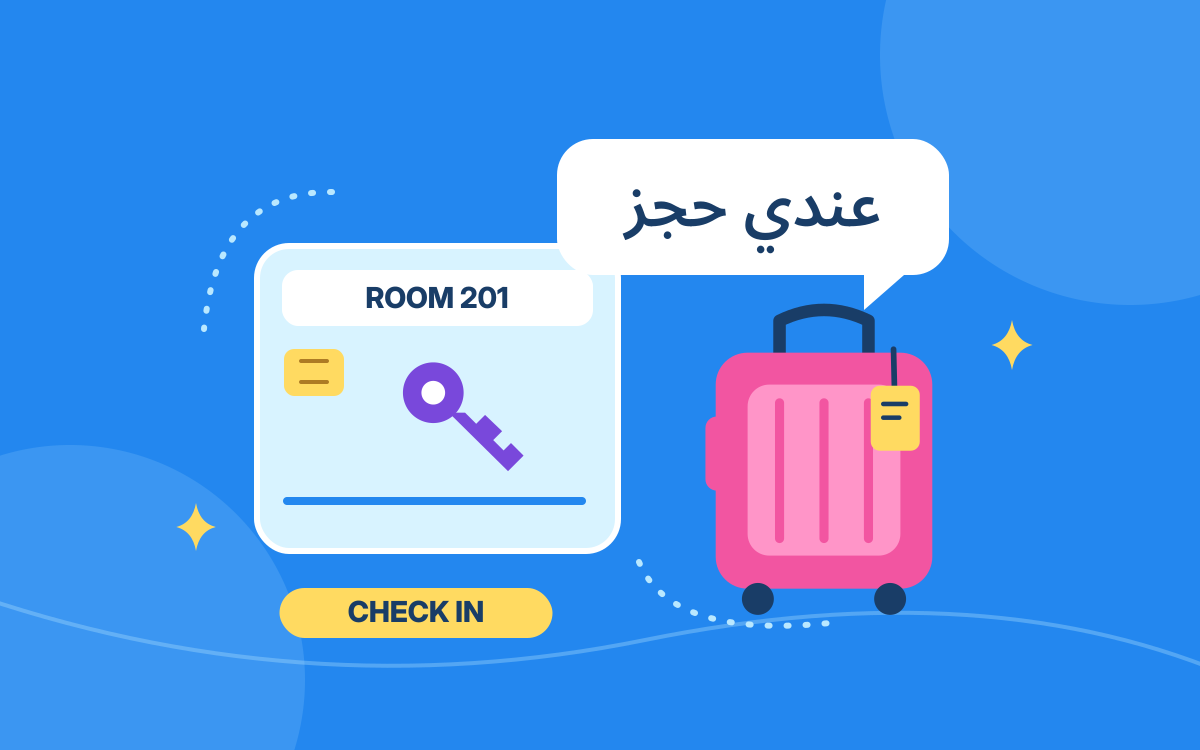
In the hotel phrases, “this hotel” works when you show a name, address or picture. هَذَا, haadhaa, accompanies the masculine noun for hotel, while هَذِهِ, haadhihi, accompanies the feminine noun for bus. The choice follows the Arabic noun’s grammatical gender, not the gender of the person speaking.
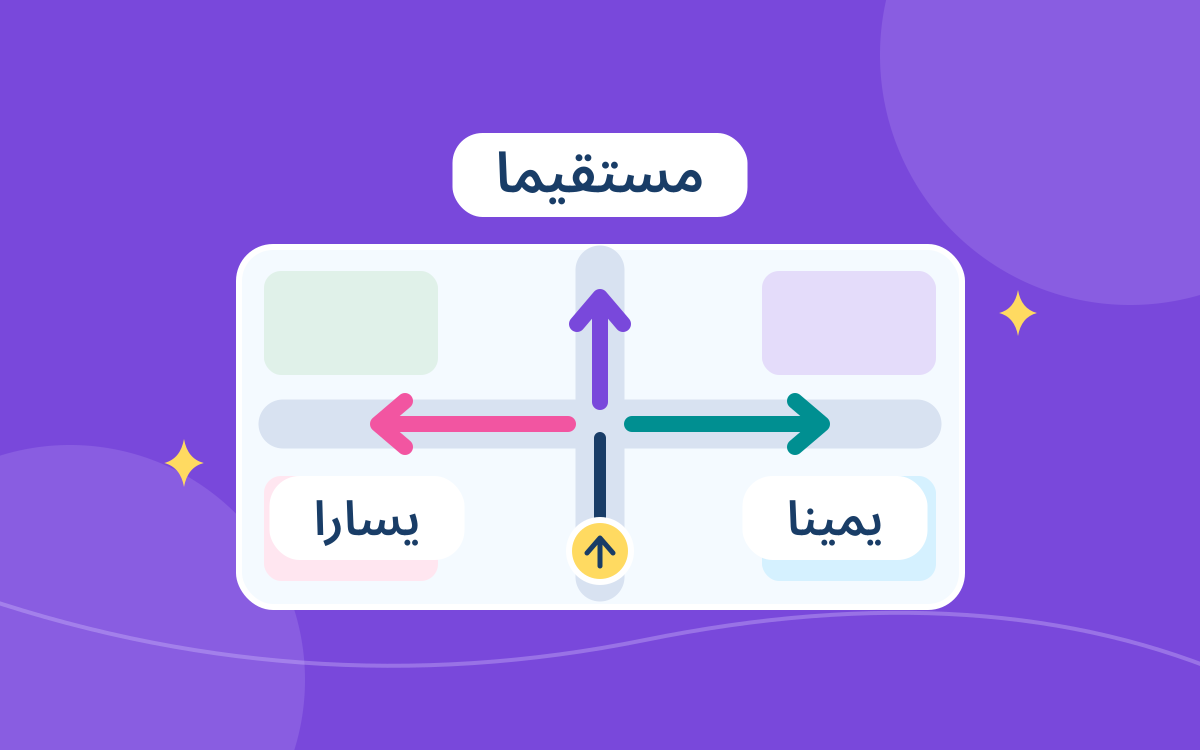
The bus-destination question asks whether a particular bus goes to that hotel. It does not ask for a departure time or guarantee the route. Keep the destination visible while speaking. For more everyday vocabulary, continue with Arabic hotel phrases or left, right and straight ahead.
04Explain who you are with and what is missing
أَنَا, anaa, means “I,” and مَعَ, ma'a, means “with.” Together they help you identify the group you belong to. A male or female speaker can use the same sentence in the table. The demonstrative haadhihi agrees with the feminine noun “group,” rather than describing the speaker.
The ending ii means “my” in majmuu'atii, “my group,” and haqiibatii, “my bag.” Compare saying that you cannot find your group with saying that you have lost your bag: the people and object are different. Pointing to your group’s name or showing a bag’s picture can clarify your message.
05State a need and keep requests clear
أَحْتَاجُ إِلَى, ahtaaju ilaa, means “I need” before the relevant noun or action noun. The table uses it for assistance and charging a phone. These first-person forms work for speakers of any gender. They avoid requiring you to choose a masculine or feminine command when approaching someone.
عَفْوًا, afwan, can politely attract attention as “excuse me” before a question. Use a calm tone and one request at a time. The drinking-water question asks whether water for drinking is available here; it does not describe the price, opening hours or any particular supplier.
06Practise complete phrases, then listen for the reply
The readings show connected words within each utterance and a pause at its end. Double vowels aa, ii and uu indicate length. An apostrophe flags a throat consonant or a break made by hamza; neither is fully explained by English spelling alone. Arabic case vowels inside connected phrases remain audible even when the final word is paused.
Choose three phrases for one situation, read them aloud, then practise recognising likely reply words such as entrance or hotel. If the reply is too fast, use the final phrase to request slower speech. For possessive endings, revisit Arabic pronouns and my endings.
What to remember
- Ayna asks where; hal starts a yes-or-no question.
- A hotel, the local sanctuary and the qiblah are different things to ask about.
- The 20 phrases are practical language examples, with first-person and impersonal forms usable without changing for the traveller’s gender.
Your reference shelf
Open a guide whenever you need it.
20 complete practical Arabic phrases for pilgrimsOriginal Modern Standard Arabic examples, with our own English meanings. Readings pause at the end of each utterance. Show the relevant hotel address or group details where needed.
| No. | Situation | Arabic phrase | Plain-letter reading | English meaning |
|---|---|---|---|---|
| 1 | Greeting | السَّلَامُ عَلَيْكُمْ | as-salaamu alaykum | Peace be upon you. |
| 2 | Mosque | عَفْوًا، أَيْنَ الْمَسْجِدُ؟ | afwan, ayna-lmasjid | Excuse me, where is the mosque? |
| 3 | Sanctuary | أَيْنَ الْحَرَمُ؟ | ayna-lharam | Where is the sanctuary? |
| 4 | Hotel | أَيْنَ هَذَا الْفُنْدُقُ؟ | ayna haadha-lfunduq | Where is this hotel? |
| 5 | Bus stop | أَيْنَ مَوْقِفُ الْحَافِلَاتِ؟ | ayna mawqifu-lhaafilaat | Where is the bus stop? |
| 6 | Entrance | أَيْنَ الْمَدْخَلُ؟ | ayna-lmadkhal | Where is the entrance? |
| 7 | Exit | أَيْنَ الْمَخْرَجُ؟ | ayna-lmakhraj | Where is the exit? |
| 8 | Toilets | أَيْنَ دَوْرَةُ الْمِيَاهِ؟ | ayna dawratu-lmiyaah | Where are the toilets? |
| 9 | Prayer direction | مَا اتِّجَاهُ الْقِبْلَةِ؟ | ma-ttijaahu-lqiblah | What is the direction of the qiblah? |
| 10 | Your group | أَنَا مَعَ هَذِهِ الْمَجْمُوعَةِ. | anaa ma'a haadhihi-lmajmuu'ah | I am with this group. |
| 11 | Separated from group | لَا أَجِدُ مَجْمُوعَتِي. | laa ajidu majmuu'atii | I cannot find my group. |
| 12 | Lost bag | فَقَدْتُ حَقِيبَتِي. | faqadtu haqiibatii | I have lost my bag. |
| 13 | Lost property office | أَيْنَ مَكْتَبُ الْمَفْقُودَاتِ؟ | ayna maktabu-lmafquudaat | Where is the lost property office? |
| 14 | Help | أَحْتَاجُ إِلَى مُسَاعَدَةٍ. | ahtaaju ilaa musaa'adah | I need help. |
| 15 | Drinking water | هَلْ هُنَا مَاءٌ لِلشُّرْبِ؟ | hal hunaa maa'un lishshurb | Is there drinking water here? |
| 16 | Phone charging | أَحْتَاجُ إِلَى شَحْنِ هَاتِفِي. | ahtaaju ilaa shahni haatifii | I need to charge my phone. |
| 17 | Bus destination | هَلْ هَذِهِ الْحَافِلَةُ تَذْهَبُ إِلَى هَذَا الْفُنْدُقِ؟ | hal haadhihi-lhaafilatu tadhhabu ilaa haadha-lfunduq | Does this bus go to this hotel? |
| 18 | Distance | كَمْ يَبْعُدُ الْفُنْدُقُ عَنْ هُنَا؟ | kam yab'udu-lfunduqu an hunaa | How far is the hotel from here? |
| 19 | Limited Arabic | لَا أَفْهَمُ الْعَرَبِيَّةَ جَيِّدًا. | laa afhamu-larabiyyata jayyidaa | I do not understand Arabic well. |
| 20 | Slower speech | هَلْ يُمْكِنُ التَّحَدُّثُ بِبُطْءٍ؟ | hal yumkinu-ttahadduthu bibut' | Could we speak slowly? |
Small words that make the phrases easier to rememberThese are word-level reminders from the complete phrases, not additional prescribed formulas.
| Arabic | Plain-letter reading | Use in the phrase table |
|---|---|---|
| أَيْنَ | ayna | Where; introduces a location question |
| مَا | maa | What; asks about the direction |
| هَلْ | hal | Introduces a yes-or-no question |
| هَذَا | haadhaa | This; used with the masculine hotel noun |
| هَذِهِ | haadhihi | This; used with the feminine bus and group nouns |
| أَنَا | anaa | I; does not change for the speaker’s gender |
| مَعَ | ma'a | With |
| ـِي | ii | My; attached possessive ending |
| هُنَا | hunaa | Here |
| عَفْوًا | afwan | Excuse me; polite attention-getter in this context |
Sources & further learning
References for the language explanations and learning guidance.