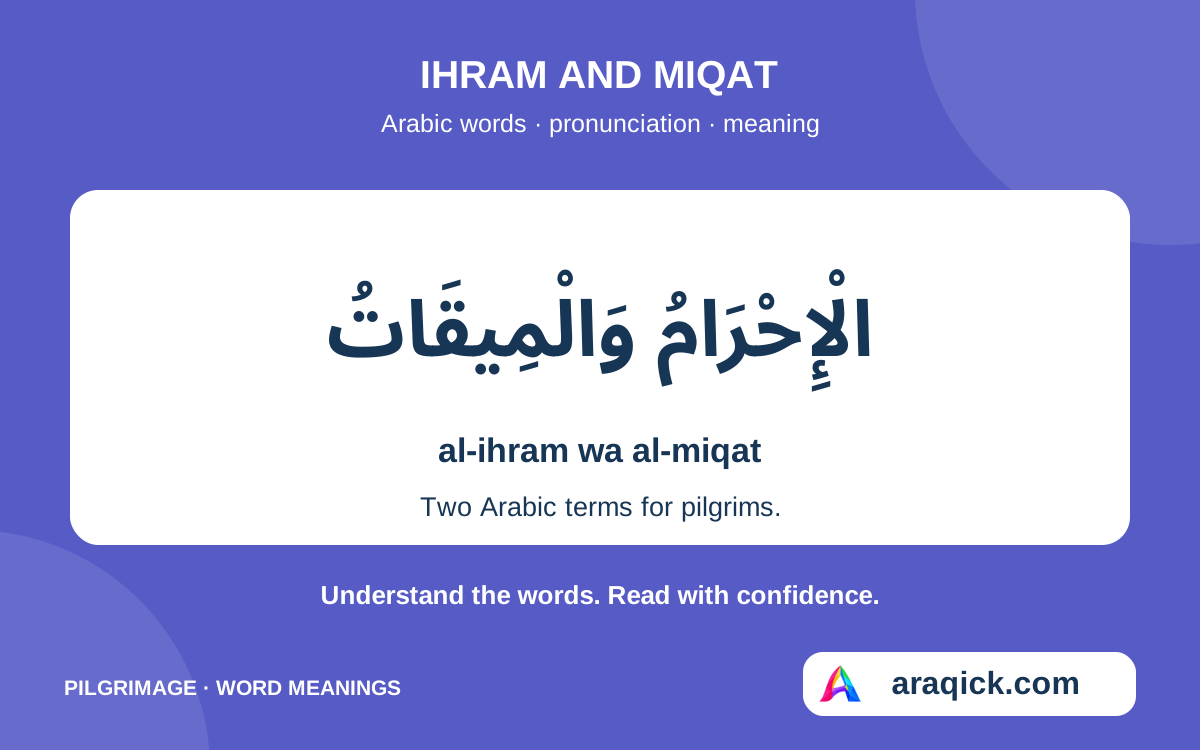
Ihram, إِحْرَامٌ, is the consecrated state entered for Hajj or Umrah. Miqat, مِيقَاتٌ, means an appointed time or place; in pilgrimage language it commonly refers to a designated boundary associated with entering ihram. Ihram names a state, while miqat names an appointment or boundary. Neither word is simply another name for the pilgrimage itself.
01Ihram names a consecrated state
In pilgrimage vocabulary, ihram describes a person’s consecrated state for Hajj or Umrah, with the observances attached to it. English speakers also use “ihram” informally for the familiar garments. That everyday shorthand should not replace the core meaning.
A photograph of white cloth therefore does not explain the whole word. A learner should recognise the difference between entering a state and putting on clothing. The Arabic phrase for the clothing, لِبَاسُ الْإِحْرَامِ, explicitly adds libaas, “dress” or “clothing.” The reference table helps keep the noun and its descriptive phrase apart.
02Read the hamza and the word pattern
The correct fully marked spelling is إِحْرَامٌ: hamza below the initial alif carries a short i. In ih-raam, the aa is long, and haa is the Arabic throat consonant ح. The initial hamza is pronounced; it is not a connecting hamza that disappears after another word.
Its root letters are ح ر م, a family associated with sacredness and restriction. The related مُحْرِمٌ, muhrim, describes a person in ihram. Compare مَحْرَمٌ, mahram, a different family-related term. Their root letters overlap, but their vowels and meanings differ. Our Arabic roots guide explains why a root alone cannot identify a word’s exact meaning.
03Miqat can involve time or place
Miqat is not limited to a building beside a road. The root family و ق ت concerns time, including وَقْتٌ, waqt, “time.” Miqat can mean an appointed time, an appointment or an appointed place, depending on its context.
Quran 2:189 uses the plural مَوَاقِيتُ when discussing lunar phases and reckoning time, including pilgrimage time. This is a useful reminder that the word family extends beyond geographical boundaries. Read the surrounding sentence before choosing an English equivalent; “boundary” fits some pilgrimage contexts but not every occurrence.
04Pilgrimage usage includes designated boundaries
Sahih al-Bukhari 1524 records designated places associated with Hajj and Umrah: Dhu al-Hulayfah, al-Juhfah, Qarn al-Manazil and Yalamlam. These names illustrate the geographical use of miqat. They are not four different translations of the word.
The report connects its named boundaries with people and those passing through them with pilgrimage intentions. It does not support treating one location as every traveller’s universal starting point. Use this list to recognise vocabulary in a lesson; route-specific practical questions need the relevant guidance. For the pilgrimage names themselves, read Hajj versus Umrah.
05Mawaqit is the plural of miqat
Read miqat as mii-qaat: both ii and aa are long. Its plural is مَوَاقِيتُ, mawaaqiit at a pause. Notice that the pattern changes inside the word; the plural is not made by simply adding an English s.
This is a broken plural, a useful type to recognise when reading Arabic signs and lesson headings. The standalone table form mawaaqiitu has a final grammatical vowel, but no tanwin. Learn the pair as miqat–mawaqit, then revisit Arabic singular and plural patterns to compare it with other word families.
06Ask a question without confusing the nouns
أَيْنَ الْمِيقَاتُ؟ means “Where is the miqat?” The question word ayna asks about place. Here the setting makes the geographical meaning natural. In a calendar discussion, the same word family may instead concern an appointed time.
Practise sorting ihram, muhrim and miqat into “state,” “person” and “appointed time or place.” Then add libaas al-ihram for the clothing phrase. This small vocabulary exercise makes a longer pilgrimage lesson easier to follow. For ordinary requests and directions, explore twenty useful Arabic phrases for pilgrims.
What to remember
- Ihram names a consecrated state; libaas al-ihram explicitly names the clothing.
- Miqat can refer to an appointed time or place, including pilgrimage boundaries.
- Mawaqit is the plural of miqat, while muhrim describes a person in ihram.
Your reference shelf
Open a guide whenever you need it.
State, person, clothing and appointmentReadings omit final grammatical endings at a pause. Doubled vowels show long vowels; plain letters only approximate Arabic throat sounds.
| Arabic | Plain-letter reading | Meaning |
|---|---|---|
| إِحْرَامٌ | ihraam | The consecrated pilgrimage state |
| مُحْرِمٌ | muhrim | A male person in ihram |
| مُحْرِمَةٌ | muhrimah | A female person in ihram |
| لِبَاسُ الْإِحْرَامِ | libaasu-l-ihraam | The clothing of ihram; keep the connecting u |
| مِيقَاتٌ | miiqaat | An appointed time or place; a pilgrimage boundary in context |
| مَوَاقِيتُ | mawaaqiit | Appointed times or places; plural of miqat |
| وَقْتٌ | waqt | Time |
| أَيْنَ الْمِيقَاتُ؟ | ayna-lmiiqaat | Where is the miqat? |
Recognise four place names in Bukhari 1524These are names cited in the report, presented as vocabulary rather than an exhaustive modern route guide. Forms are shown as standalone labels.
| Arabic name | Plain-letter reading | What to recognise |
|---|---|---|
| ذُو الْحُلَيْفَةِ | dhu-lhulayfah | A compound place name; its first word changes form within sentences |
| الْجُحْفَةُ | aljuhfah | A place name with the definite article |
| قَرْنُ الْمَنَازِلِ | qarnu-lmanaazil | A compound place name; keep the internal u |
| يَلَمْلَمُ | yalamlam | A place name, not a general word for pilgrimage |
Sources & further learning
References for the language explanations and learning guidance.