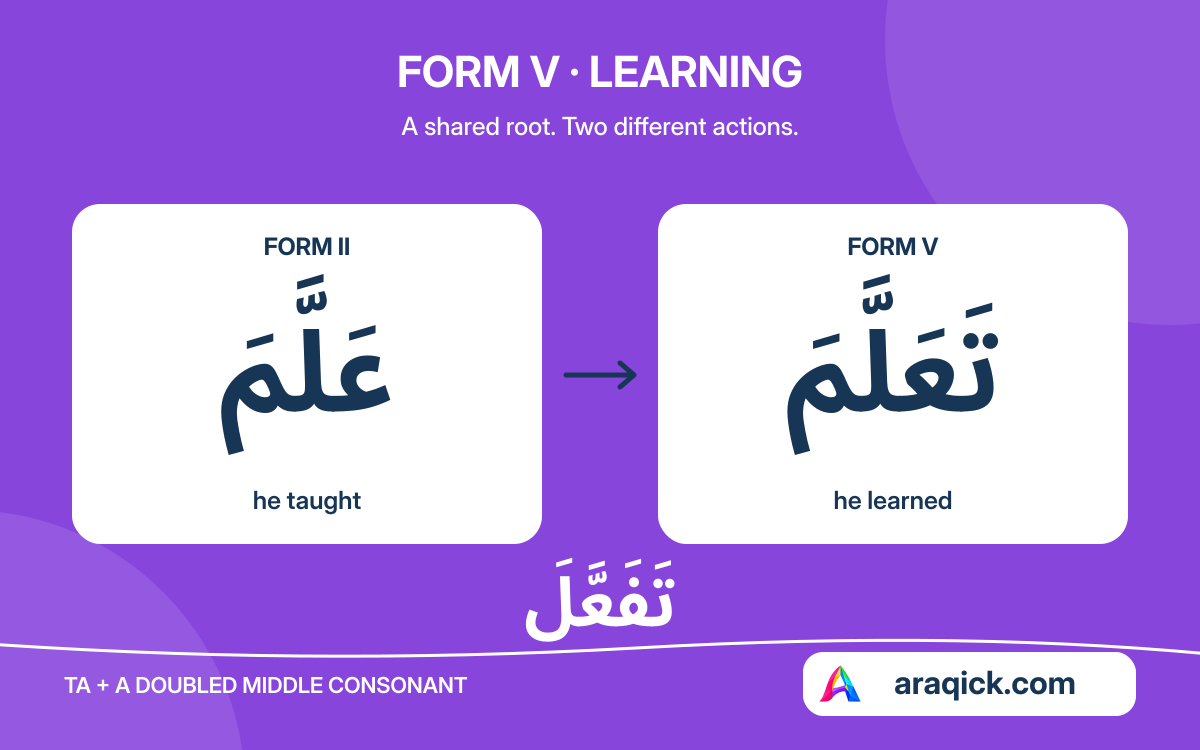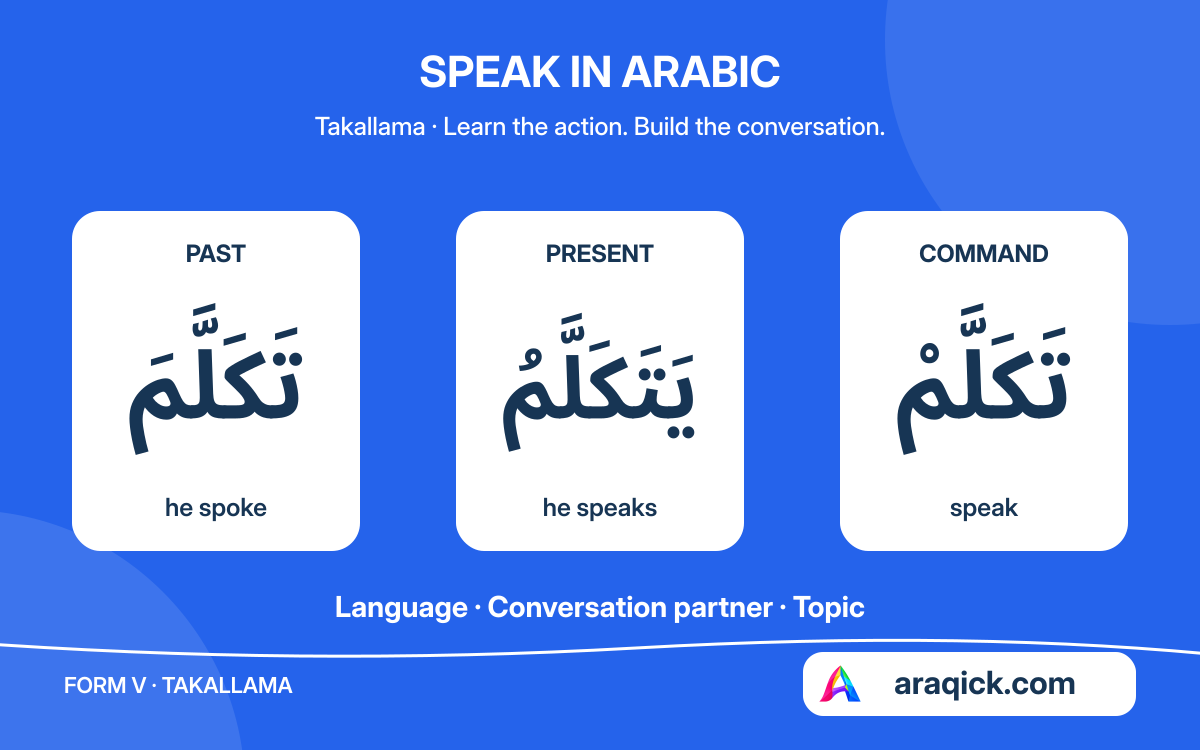
Takallama means he spoke or talked. It is a Form V verb from the root ك ل م, with an initial ta and a doubled middle consonant. Learn the action first, then add the language you speak, the person you speak with or the subject you speak about.
01Start with the act of speaking
تَكَلَّمَ الْمُدَرِّسُ بِهُدُوءٍ
takallama almudarrisu bihuduin
The teacher spoke calmly.
The teacher is the person speaking. Bihuduin adds how he spoke; the verb does not require a quoted sentence. For I spoke, use تَكَلَّمْتُ (takallamtu). Notice the sukun on m before the ending tu.
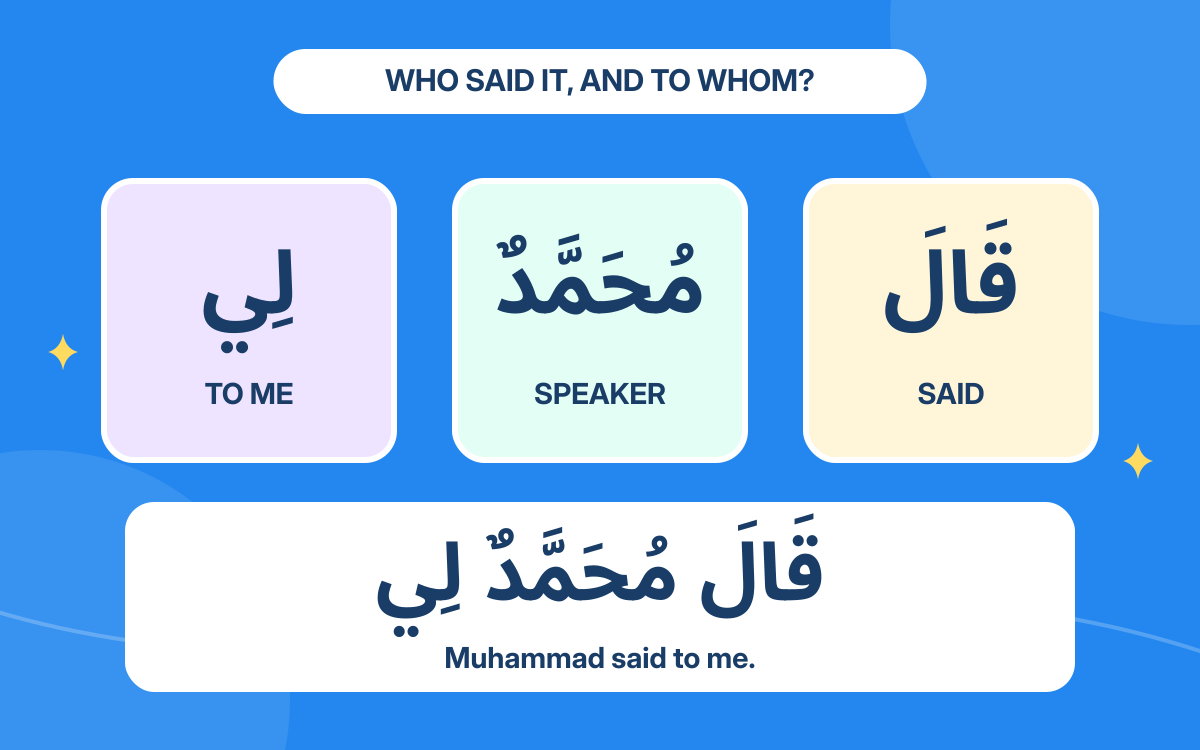
Takallama describes speaking as an activity. When you want to report someone’s exact words, compare qala, he said. The two verbs can fit different sentence frames.
02Say which language you speak
أَتَكَلَّمُ بِالْعَرَبِيَّةِ فِي الْمَتْجَرِ
atakallamu bilarabiyyati fi almatjari
I speak Arabic in the shop.
Atakallamu is I speak. The prefix a identifies the speaker; the ta after it belongs to the Form V stem. Bilarabiyyati means in Arabic, with a genitive ending after bi.
Arabic can also name the language as a direct object of takallama. Keep the bi construction as one useful model, rather than treating the English phrase speak Arabic as a word-for-word rule.
03Separate your partner from your topic
تَكَلَّمْتُ مَعَ زَمِيلِي عَنِ الْمَشْرُوعِ
takallamtu maa zamili ani almashrui
I spoke with my colleague about the project.
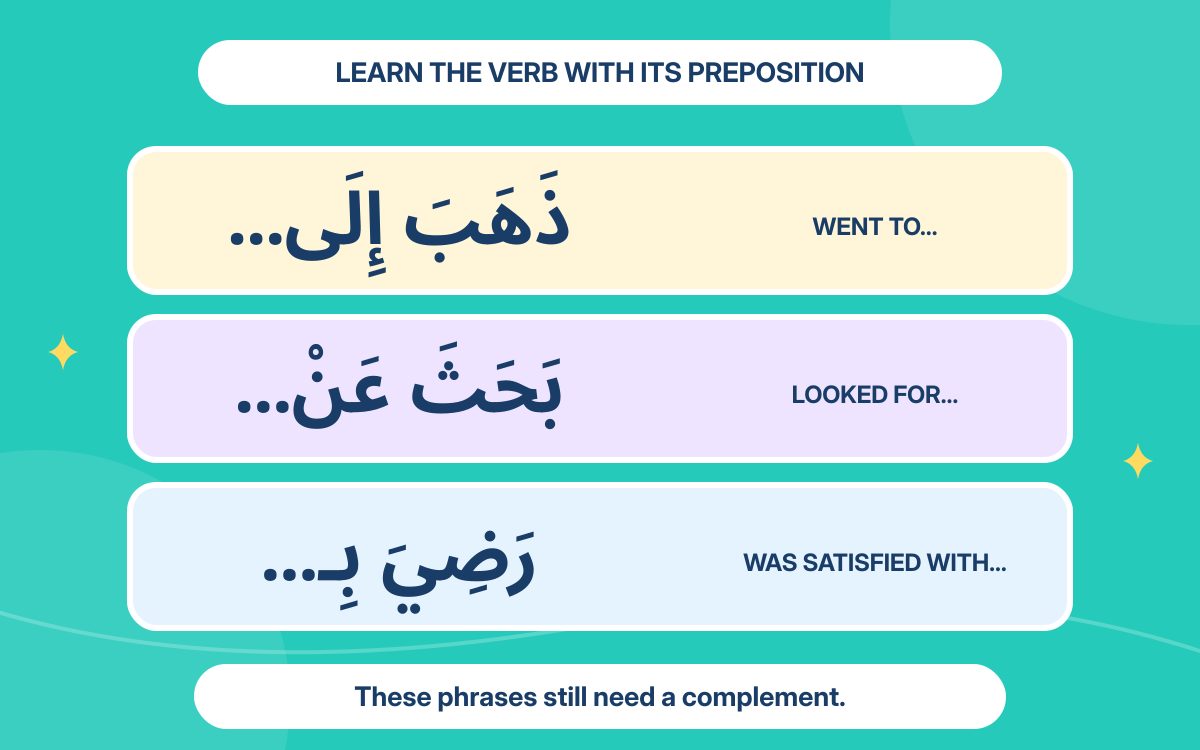
Maa zamili identifies the conversation partner. An almashrui introduces the topic. These phrases answer different questions, so choosing one does not automatically replace the other.
Build the sentence in three parts: speaking, partner, topic. The linking vowel in ani helps pronunciation before the definite noun. Review verbs and their following phrases when a literal English translation feels misleading.
04Ask someone to speak slowly
تَكَلَّمْ بِبُطْءٍ مِنْ فَضْلِكَ
takallam bibutin min fadlika
Speak slowly, please. — to one man
Takallam is the command to one man. It has no present-tense prefix and ends in sukun. The command to one woman is تَكَلَّمِي; to a male or mixed group, use تَكَلَّمُوا.
For do not speak, لَا تَتَكَلَّمْ uses prohibitive la with the you present form in the jussive. Here the two initial ta sounds have separate jobs; do not remove both.
05Recognize the activity and the speaker
التَّكَلُّمُ بِوُضُوحٍ مُفِيدٌ
attakallumu biwuduhin mufidun
Speaking clearly is useful.
The action noun تَكَلُّمٌ names speaking without a person or tense. The active participle مُتَكَلِّمٌ can name a speaker. Compare the vowel on the doubled l: u in takallum, i in mutakallim.
Use the Form V overview to connect these forms. The reading aids use plain letters; check the vowelled Arabic for exact consonants and vowel length.
What to remember
- Takallama–yatakallamu means speak or talk.
- Use bi for a language model, maa for a partner and an for a topic.
- Takallam is a command; takallum names the activity.
Your reference shelf
Open a guide whenever you need it.
Speak: past and presentComplete person forms; the present column is indicative
| Person | Past | Present |
|---|---|---|
| He | تَكَلَّمَ | يَتَكَلَّمُ |
| They: two men | تَكَلَّمَا | يَتَكَلَّمَانِ |
| They: male or mixed group | تَكَلَّمُوا | يَتَكَلَّمُونَ |
| She | تَكَلَّمَتْ | تَتَكَلَّمُ |
| They: two women | تَكَلَّمَتَا | تَتَكَلَّمَانِ |
| They: female group | تَكَلَّمْنَ | يَتَكَلَّمْنَ |
| You: one man | تَكَلَّمْتَ | تَتَكَلَّمُ |
| You: two people | تَكَلَّمْتُمَا | تَتَكَلَّمَانِ |
| You: male or mixed group | تَكَلَّمْتُمْ | تَتَكَلَّمُونَ |
| You: one woman | تَكَلَّمْتِ | تَتَكَلَّمِينَ |
| You: female group | تَكَلَّمْتُنَّ | تَتَكَلَّمْنَ |
| I | تَكَلَّمْتُ | أَتَكَلَّمُ |
| We | تَكَلَّمْنَا | نَتَكَلَّمُ |
The dual you form serves two listeners of either gender. The present column gives ordinary indicative forms; mood particles can change the endings.
Speak: commands and word familyChoose the listener, then distinguish verbs from nouns
| Use | Arabic | Meaning |
|---|---|---|
| One man | تَكَلَّمْ | Command: speak |
| One woman | تَكَلَّمِي | Command: speak |
| Two people | تَكَلَّمَا | Command: speak |
| Male or mixed group | تَكَلَّمُوا | Command: speak |
| Female group | تَكَلَّمْنَ | Command: speak |
| Action noun | تَكَلُّمٌ | speaking |
| Active participle | مُتَكَلِّمٌ | speaker |
The dual command serves two listeners of either gender. A final alif after group waw is silent. Noun endings shown here are nominative; their case can change in a sentence.
Sources & further learning
References for the language explanations and learning guidance.