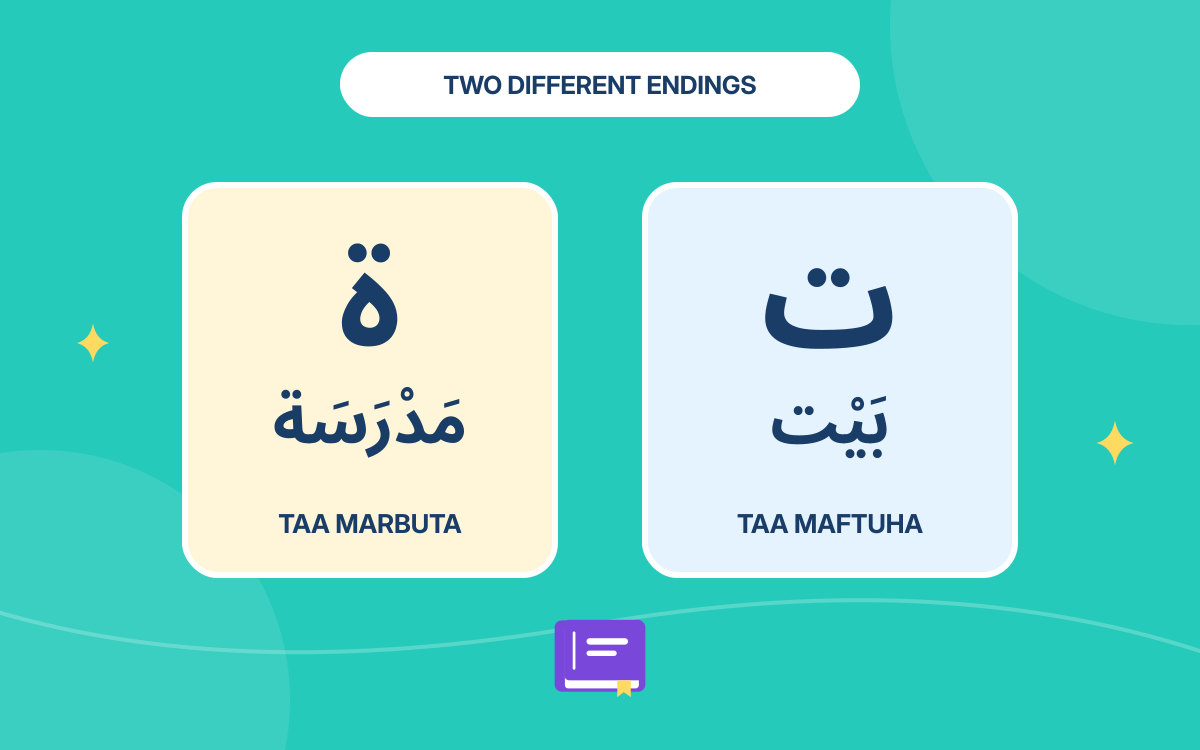
Arabic has a rounded taa ending, ة, and an open taa, ت. They can both sound like t, but they do not behave the same way when you stop speaking. Compare a bag, حَقِيبَة, with a house, بَيْت, then practise spelling useful words correctly.
01Look at the final letter
haqiba
bag: ends in ة
bayt
house: ends in ت
Taa marbuta is the rounded ending with two dots: ة، ـة. Taa maftuha is the open form: ت، ـت. Keep the dots visible. They distinguish taa marbuta from ه, the separate letter haa.
02Compare full and paused reading
In careful Standard Arabic, taa marbuta is t when you pronounce a grammatical ending after it. When you stop at the word, it is read as h after its preceding vowel. Our simplified paused label ends in a; in careful reading, a light h follows it.
حَقِيبَةٌ
haqibatun → haqiba
a bag: full ending → pause
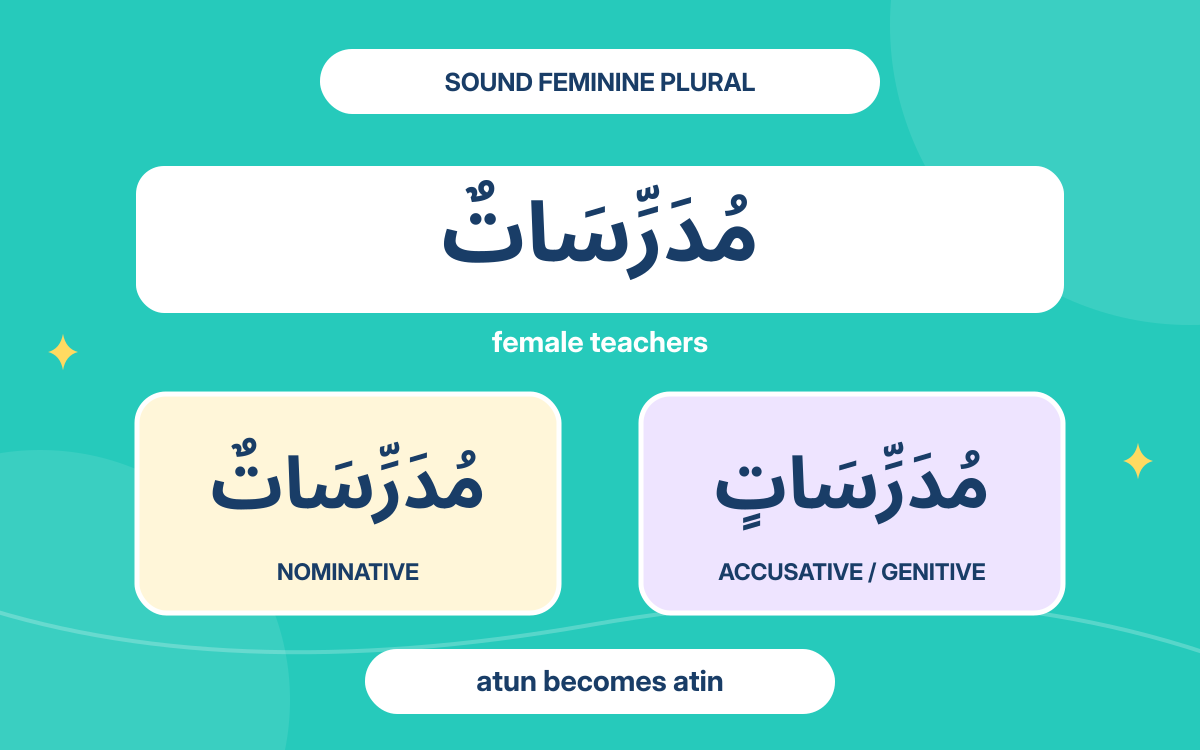
With open taa, the t stays when you stop. Compare بَيْتٌ baytun → bayt. The final un disappears at the pause, but the t does not. These examples compare reading styles, not different objects.
03Add my to a rounded ending
حَقِيبَتِي
haqibati
my bag
When a possessive suffix attaches, taa marbuta is written as open taa. Start with حَقِيبَة, then write حَقِيبَتِي for my bag. The final long i means my, and the t is pronounced before it. The first i in haqiba is also long.
Try the same change with مَدْرَسَة madrasa, school: مَدْرَسَتِي madrasati means my school. Do not leave a rounded ة stranded inside the new word. Its spelling opens so the suffix can attach.
04Use the ending as a clue
Taa marbuta often marks a feminine noun or adjective, but the shape is not a complete gender rule. حَقِيبَة is feminine; the male name حَمْزَة Hamzah still refers to a man.
Open taa does not automatically mean masculine either. بِنْت bint means girl and is feminine, despite its final ت. Learn grammatical gender with the word rather than deciding from one letter alone.
Spelling practice asks which ending belongs to a known word. Gender practice asks how that word agrees with other words. Those questions are related, but they are not identical.
05Keep the spelling when you pause
- حَقِيبَة stays written with two dots when pronounced haqiba at a stop.
- بَيْت keeps its t sound in bayt.
- حَقِيبَتِي uses open taa before the attached i.
Do not rewrite taa marbuta as haa just because you hear an h at a pause. The written ending identifies the word across its different readings.
In casual speech, taa marbuta may sound like a final a without a clear h, and grammatical endings are often omitted. This guide labels careful full and paused readings explicitly. A following word by itself does not mean you must invent an un ending; that ending depends on grammar.
What to remember
- Rounded ة and open ت have distinct spellings; preserve the two dots.
- In the careful reading taught here, ة is t with an ending and h at a pause; ت keeps t.
- Before an attached possessive suffix, ة becomes ت: حَقِيبَتِي, my bag.
Your reference shelf
Open a guide whenever you need it.
Read, pause and attach: the complete comparisonCompare bag, house, school and two gender reminders
| Arabic | Reading aid | Notice |
|---|---|---|
| حَقِيبَةٌ | haqibatun | Full ending: a bag. |
| حَقِيبَة | haqiba | Paused word: bag. |
| حَقِيبَتِي | haqibati | Attached suffix: my bag. |
| بَيْتٌ | baytun | Full ending: a house. |
| بَيْت | bayt | Paused word: house; t stays. |
| مَدْرَسَتِي | madrasati | Attached suffix: my school. |
| حَمْزَة | hamzah | A male personal name ending in ة. |
| بِنْت | bint | Girl: feminine, ending in ت. |
A noun followed by another noun in a possession phrase also pronounces taa marbuta as t, without changing the rounded spelling when it remains the end of its word. For example, حَقِيبَةُ سَارَةَ haqibatu sara means Sarah’s bag in a reading with the first noun’s full ending and a pause at the end. The dedicated idafa lesson will explain this construction.
The final un in the full examples is tanween. At a pause, forms ending in taa marbuta use the paused h reading even when their grammatical ending differs. Our plain labels use final a, leaving the light h of careful paused reading unmarked. Long vowels are also simplified: the i in haqiba and the final i in haqibati are long.
Sources & further learning
References for the language explanations and learning guidance.