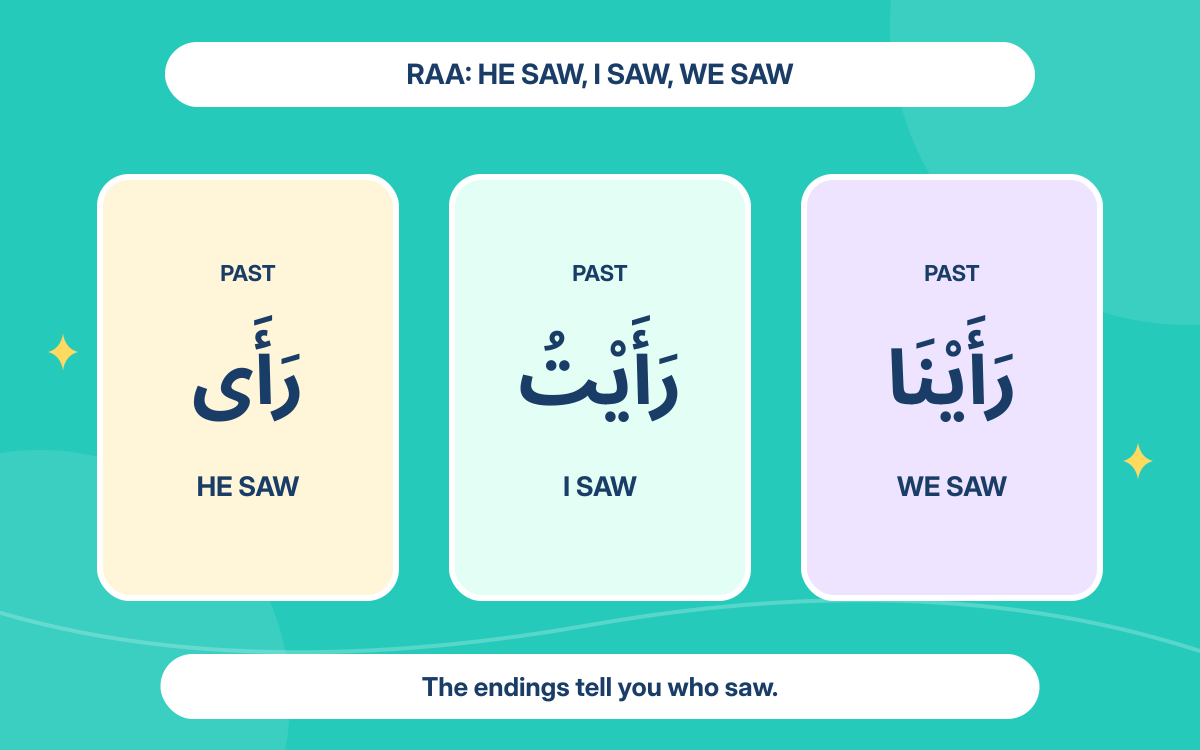
Raa means “he saw,” but “I saw” is raaytu. The final weak letter changes its visible shape when the subject changes. Learn a few useful past forms together, then distinguish the person who saw from the person or thing that was seen.
01Start with he saw
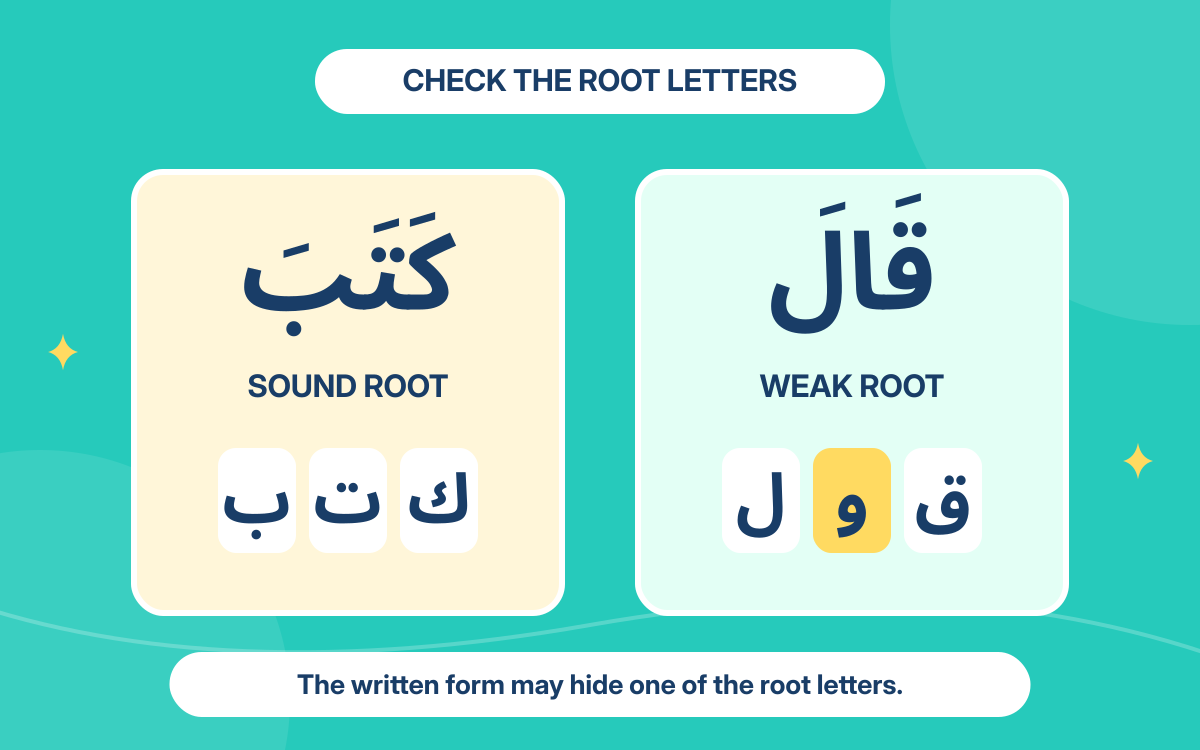
رَأَى means “he saw.” Its final ى, alif maqsura, represents a long a here; it is not pronounced as a final y. The root is ر ء ي: ra, hamza and ya. Ya is the final weak radical; hamza is the middle consonant.
رَأَى كِتَابًا
raa kitaban
He saw a book.
In this visual meaning, the thing seen is an object. Kitaban has the accusative ending. These plain reading aids simplify sounds and do not show every vowel length.
02Read I and you from the final vowel
Before these subject endings, the stem becomes رَأَيْ. Keep its ay sound, then read the ending: تُ for I, تَ for one male you, and تِ for one female you.
رَأَيْتُ كِتَابًا
raaytu kitaban
I saw a book.
رَأَيْتَ كِتَابًا / رَأَيْتِ كِتَابًا
raayta kitaban / raayti kitaban
You saw a book: one male / one female.
The ending identifies the subject, so a separate “I” or “you” pronoun is optional.
03Keep ya in we saw
For “we saw,” add the subject ending نَا to the same رَأَيْ stem. Ya is visible in this form too.
رَأَيْنَا كِتَابًا
raayna kitaban
We saw a book.
The final na identifies the people who saw. It is a subject ending here, not an object meaning “us.” Read an ending’s role within its whole verb.
04Learn she saw separately
“She saw” is رَأَتْ. The long final a of raa disappears before this feminine past marker. Do not insert ya into this form.
رَأَتْ كِتَابًا
raat kitaban
She saw a book.
Compare the final ta with sukun in raat with the subject ending tu in raaytu. These are different forms with different subjects. Learn this verb’s actual changes rather than assuming every final-weak verb works identically.
05Separate I from him
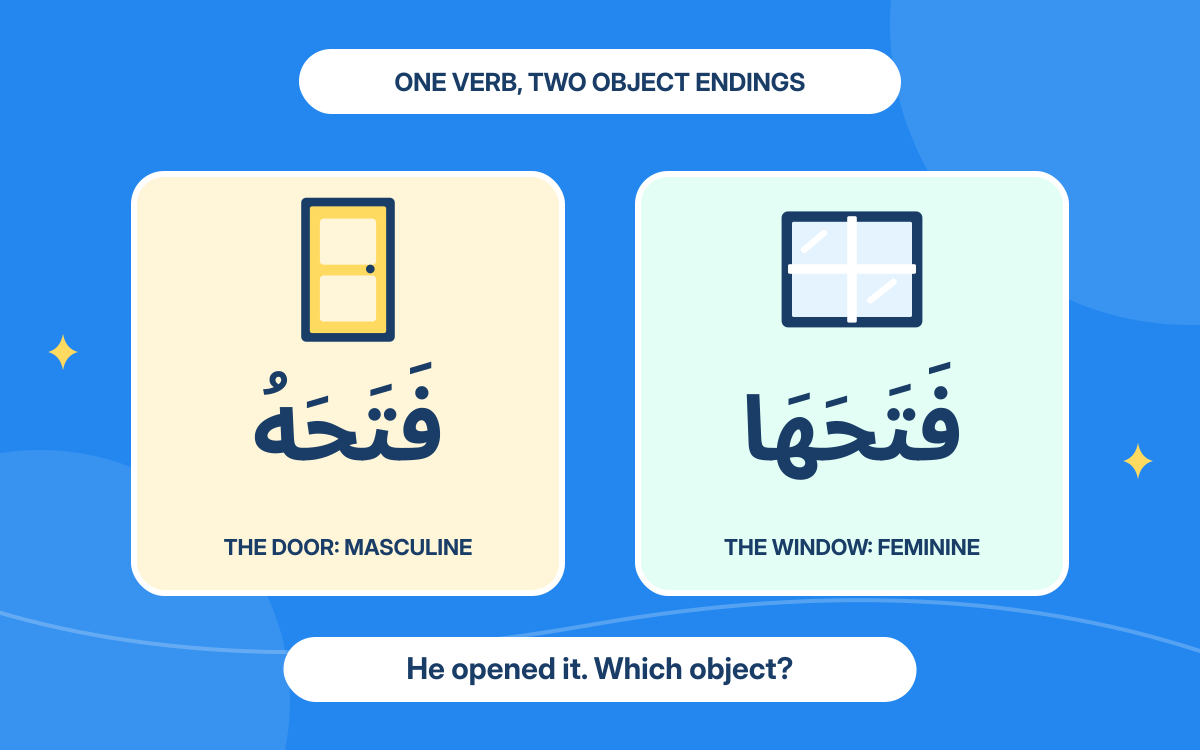
An object pronoun comes after the completed subject form. In رَأَيْتُهُ, tu still means the subject “I”; the following hu means the object “him.” A masculine thing can also be “it,” depending on context.
رَأَيْتُهُ أَمْسِ
raaytuhu amsi
I saw him yesterday.
Amsi means “yesterday.” Adding hu does not turn “I saw” into “he saw.” First identify the subject ending, then ask who or what was seen.
What to remember
- Raa means he saw; its final alif maqsura represents a long a, with ya as the original final radical.
- Raaytu, raayta, raayti and raayna reveal ya; raat, she saw, has a different stem shape.
- In raaytuhu, tu identifies the subject I and hu identifies the object him or a masculine it.
Your reference shelf
Open a guide whenever you need it.
The past forms at a glanceReview the six main forms and two additional they forms
| Subject | Past form | Plain reading aid |
|---|---|---|
| He | رَأَى | raa |
| She | رَأَتْ | raat |
| I | رَأَيْتُ | raaytu |
| You: one male | رَأَيْتَ | raayta |
| You: one female | رَأَيْتِ | raayti |
| We | رَأَيْنَا | raayna |
| They: male or mixed group | رَأَوْا | raaw |
| They: female group | رَأَيْنَ | raayna |
The final a in “we saw” is long; the final a in “they, female group, saw” is short. The Arabic distinguishes نَا from نَ, even though these simplified reading aids look alike. The final written alif in رَأَوْا is not pronounced. For the object contrast, keep رَأَيْتُ, I saw, and رَأَيْتُهُ, I saw him, together.
Sources & further learning
References for the language explanations and learning guidance.