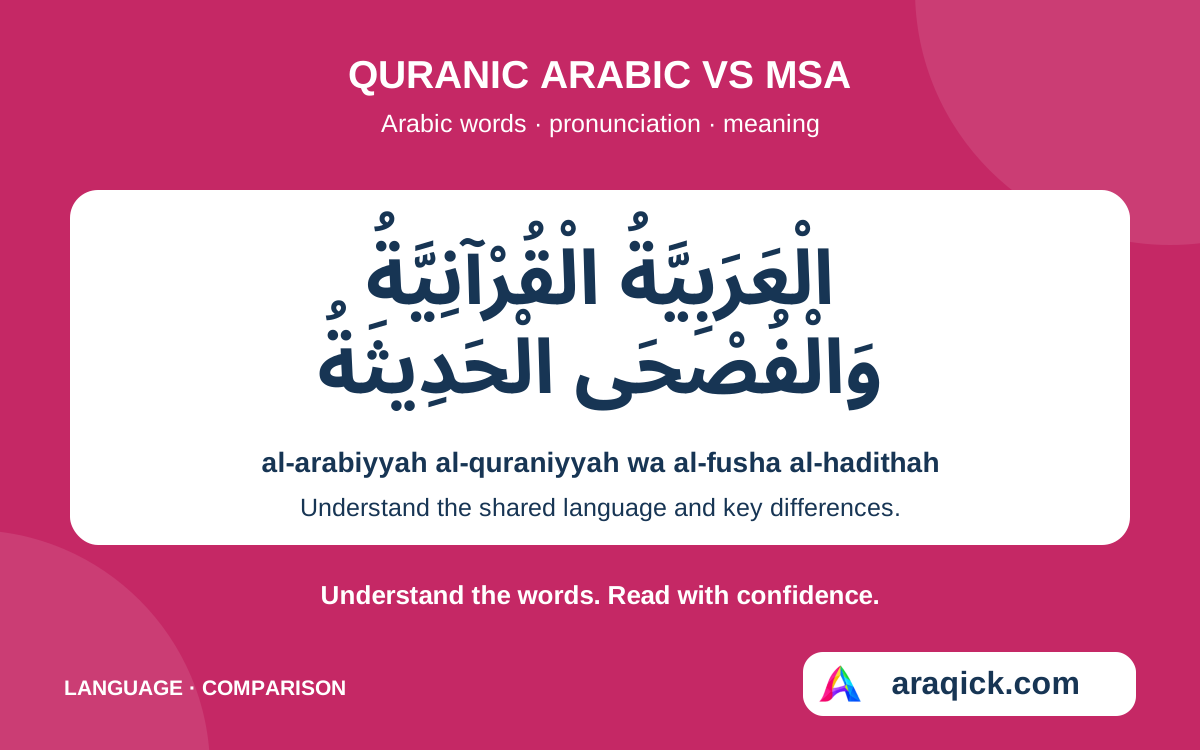
Quranic Arabic is the Arabic of the Quran, studied within the Classical Arabic tradition. Modern Standard Arabic, or MSA, is the formal Arabic used in much contemporary writing and broadcasting. They share substantial grammar and vocabulary, while purpose, style, some usages and reading conventions differ.
01How are the two related?
Think of a shared language tradition with different texts and purposes. Quranic Arabic names the language of a particular scripture. Classical Arabic includes a wider body of older literary and scholarly writing. MSA describes contemporary formal usage. Calling them completely unrelated languages would hide the foundations that learners can transfer between them.
Both classical and modern formal Arabic are commonly associated with الْفُصْحَى (alfusha). The labels are useful for choosing courses, but they do not create a simple wall between every older and newer expression. Individual texts differ in difficulty and style.
02Shared grammar gives you a foundation
Noun and adjective agreement, pronouns, verb patterns and the idafa construction are useful in both areas of study. Understanding how a noun connects to another noun helps with an older text and a modern article. The same is true of learning how a verb identifies its subject.
بَابُ الْبَيْتِ
babu albayti
The door of the house. A constructed Standard Arabic example.
This noun relationship is explained in our idafa guide. Shared principles do not mean that every construction occurs equally often in every genre, or that a beginner can interpret any passage without further study.
03Vocabulary reflects the subject and context
A contemporary report may discuss a computer, an election or an airport. Quran study requires attention to the meanings that words carry within the Quran and its historical language. Familiar modern words can help, but a modern everyday meaning should not be inserted into an older passage automatically.
For practice, compare كِتَابٌ (kitab, book) with حَاسُوبٌ (hasub, computer). The first illustrates shared vocabulary; the second illustrates modern subject matter. These are learning examples, not statistics about overlap. Consult a contextual dictionary entry and a reliable explanation when several meanings seem possible.
04Vowel marks and Quranic spelling
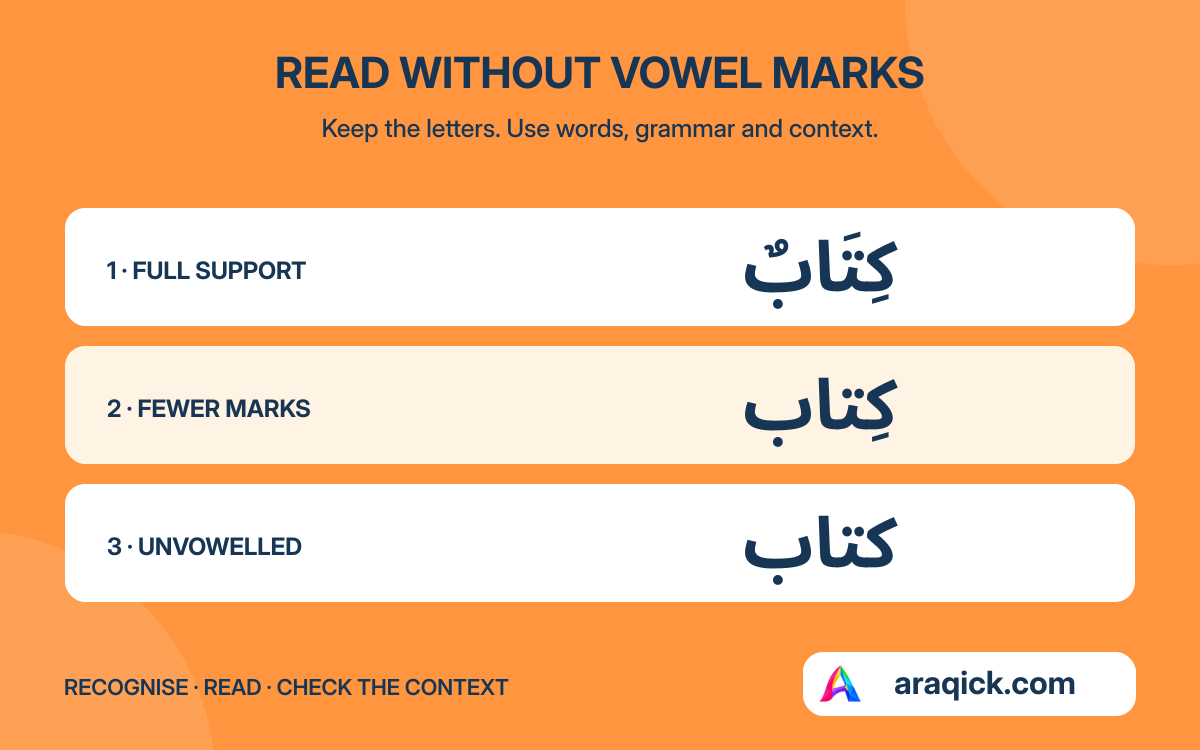
Printed Qurans commonly show vowel and recitation marks in detail. Ordinary MSA newspapers and websites usually omit most short vowel marks. That is a difference in presentation and reading demands, not evidence that MSA has no vowels. Learner materials can fully mark MSA too.
Quran editions may also use Uthmani spelling conventions that differ from ordinary modern spelling. Recognising the underlying word remains useful, but beginners should learn the signs in the edition they read. Our reading without vowel marks guide explains how vocabulary and grammar support unmarked text. Keep spelling conventions separate from questions about meaning.
05Recitation and contemporary reading have different aims
Quran recitation involves transmitted reading conventions, including how sounds connect and where pauses occur. A modern news presenter is performing a different kind of reading. Clear MSA pronunciation is helpful groundwork, while accurate Quran recitation requires its own instruction and practice.
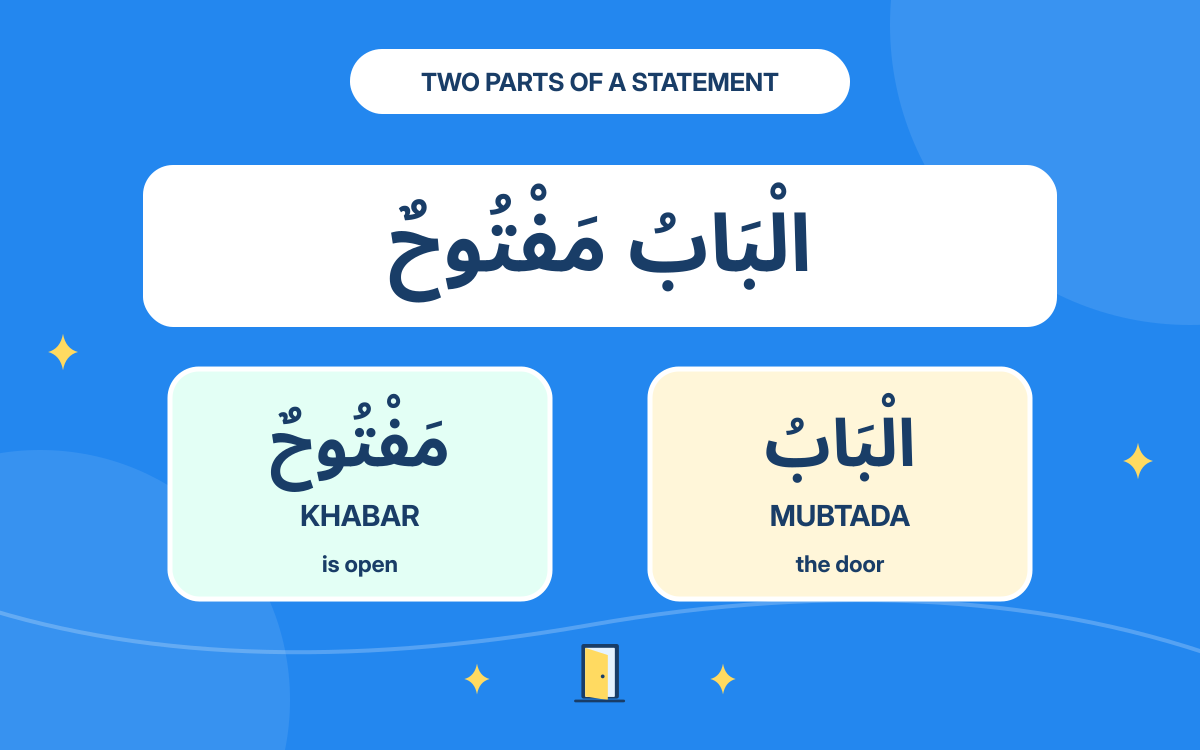
Comprehension also depends on genre. A short news paragraph often states its subject directly. A Quranic passage may require attention to rhetorical relationships, the surrounding verses and established explanation. Length alone does not determine difficulty. Practise identifying sentence relationships with our nominal sentences lesson, then study each text within its setting.
06Which should you study first?
If your main goal is understanding the Quran, combine foundational Arabic with Quran-focused vocabulary, supported passages and recitation guidance. If your immediate aim is formal contemporary reading, start with MSA material and modern topics. You can later add the other focus without discarding the shared foundation.
For everyday local conversation, a regional spoken variety may also be useful. That is a separate planning decision: MSA is not simply the casual home speech of every Arabic speaker. Choose by task rather than by a claim that one course automatically unlocks everything. Reassess your plan using a real text you want to read.
What to remember
- Quranic Arabic and MSA belong to a connected language tradition with substantial shared foundations.
- Vocabulary, style, written conventions and reading purposes can differ.
- Choose a course by your goal and add text-specific study rather than assuming automatic comprehension.
Your reference shelf
Open a guide whenever you need it.
Compare the study focusThese are general contrasts, not rigid rules for every text.
| Feature | Quranic Arabic study | MSA study |
|---|---|---|
| Main texts | Quran and supporting explanation | Contemporary formal writing and speech |
| Grammar | Classical constructions in Quranic contexts | Shared foundations in modern usage |
| Vocabulary | Words understood within Quranic contexts | Contemporary topics and established vocabulary |
| Writing | Quranic marks and edition conventions | Often unmarked ordinary spelling |
Match learning to your goalUse a foundation, then add the skills the task needs.
| Goal | Useful emphasis | Additional support |
|---|---|---|
| Understand a Quran passage | Vocabulary, grammar and context | Translation, tafsir and guidance |
| Read modern formal articles | MSA reading and current vocabulary | Unmarked reading practice |
| Recite accurately | Quran reading conventions | Listening and qualified feedback |
| Talk locally | Relevant spoken variety | Conversation and listening practice |
Sources & further learning
References for the language explanations and learning guidance.