Begin Quranic Arabic by learning to read the script, building a small vocabulary, recognising word forms and studying short passages in context. Quranic Arabic belongs to the Classical Arabic tradition. This staged plan connects reading with understanding; it does not promise complete comprehension after a fixed number of days.
01Find your starting point
First separate three abilities: reading Arabic letters, reciting accurately and understanding meaning. You may already read fluently while needing help with vocabulary. Another learner may understand familiar expressions but still struggle to connect letters. Start with the missing skill instead of repeating everything or skipping essential foundations.
Try reading one short line without a Latin-letter guide, then explain any words you recognise. Record the result without guessing. If letters are the obstacle, begin with our Arabic alphabet guide. If reading is comfortable, move into vocabulary while continuing pronunciation practice.
02Read vowels and listen carefully
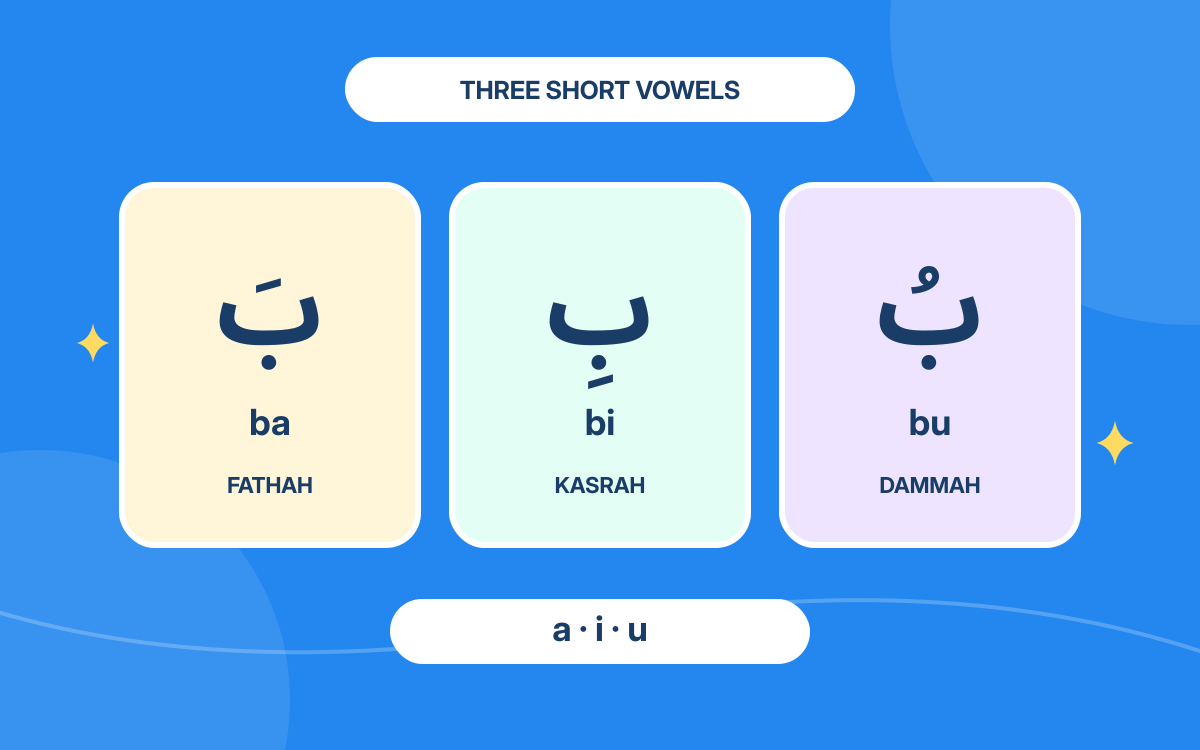
Practise short and long vowels, doubled consonants and letters without a following vowel. These marks affect what you say. Work through a few fully marked words, listening to a careful recording and pointing to the letters as you hear them. A teacher can correct sounds that Latin spelling cannot show reliably.
كَتَبَ
kataba
He wrote. A simple reading example, not a Quran quotation.
Keep each short a brief. Our short vowels lesson provides focused practice. Quran recitation also requires attention to its own reading conventions; ordinary vocabulary study does not replace that training.
03Learn words inside useful phrases
Collect a few nouns, verbs and connecting words from the passage you are studying. Write the Arabic, a context-appropriate meaning and the phrase where you found it. Test recall in both directions. A word list becomes more useful when you can recognise a word in a sentence rather than only on a flashcard.
Give short words serious attention: مِنْ (min, from), فِي (fi, in) and وَ (wa, and) help connect meanings. Do not assume one English gloss fits every occurrence. Review familiar items before adding several new ones.
04Notice endings, pronouns and patterns
Learn to separate a word from attached pieces. The ending ـنَا (na) can refer to us or our, depending on its construction. In رَبُّنَا (rabbuna, our Lord), it marks possession. Identifying that ending is a specific learning achievement; it does not yet explain every grammatical feature of a verse.
Next study nouns, verbs, basic pronouns and a few recurring patterns. Roots help organise vocabulary, but a root alone does not supply a complete translation. Our roots and dictionary forms guide explains this distinction. Keep a short list of forms you can actually identify.
05Study a short passage in context
Choose a short passage with a reliable Arabic text, a named translation and an accessible tafsir. Listen and read first. Mark words you know, consult the remaining words, then read the whole translation. Finally check the explanation for context and relationships that a word-by-word display leaves unclear.
Ask concrete questions: Who is addressed? Which word joins the phrases? What does the pronoun refer to? If a grammatical analysis is unfamiliar, note the question for a teacher. Understanding isolated labels is different from understanding the passage. Return to the Arabic after consulting the supporting materials.
06Build a repeatable study session
A manageable session might include five minutes of reading aloud, five minutes reviewing vocabulary and ten minutes examining a short passage. Treat these times as an adaptable example. A difficult line may deserve the entire session, while an easy review may take less time. Consistency matters more than finishing an arbitrary page count.
At the end, close your notes and recall one meaning, one word form and one question to revisit. Review the same passage later. Measure progress by recognising and explaining previously difficult material, with support gradually reduced. Complete comprehension and careful interpretation require sustained study beyond this beginner plan.
What to remember
- Reading, recitation and comprehension are related abilities that need distinct practice.
- Learn vocabulary in phrases and use roots alongside word forms and context.
- Review short passages with a named translation, an explanation and appropriate guidance.
Your reference shelf
Open a guide whenever you need it.
Choose the next learning taskStart where your current skills need support.
| If you can… | Work on… | A useful check |
|---|---|---|
| Recognise only isolated letters | Joining letters and short vowels | Read a marked word |
| Read words but miss their meanings | Vocabulary in phrases | Explain a familiar phrase |
| Recognise words but lose sentence meaning | Pronouns and sentence structure | Identify what a pronoun refers to |
| Follow a supported passage | Review and gradual independence | Explain it again with fewer notes |
One adaptable 20-minute sessionAn example routine, not a mastery deadline.
| Time | Task | Result |
|---|---|---|
| 5 minutes | Read aloud and listen | One corrected sound or reading |
| 5 minutes | Recall familiar vocabulary | A short review list |
| 10 minutes | Study a short passage | One meaning, one form, one question |
Sources & further learning
References for the language explanations and learning guidance.