“The student almost fell” describes how close an event came. Arabic uses kada for past near occurrence and yakadu for present near occurrence. The following action is expressed with a present verb in both patterns.
01Describe past near occurrence
Kada, كَادَ, presents an event as close to happening in the past:
كَادَ الطَّالِبُ يَسْقُطُ
kada ttalibu yasqutu
The student almost fell.
Yasqutu means he falls. Although the following verb has a present form, kada places the nearness in the past. The sentence reports near occurrence; it does not itself assert an ordinary completed fall.
02Keep the present verb’s own ending
Use kada, a nominative noun, then a present-verb clause:
كَادَ الْوَلَدُ يَضْحَكُ
kada lwaladu yadhaku
The boy almost laughed.
Alwaladu, the boy, is the nominative noun of kada. Yadhaku means he laughs and stays indicative with final u in this model. The whole verb clause fills an accusative predicate position; this does not turn yadhaku into the subjunctive yadhaka. Its understood subject refers to the boy.
03Use yakadu for present nearness
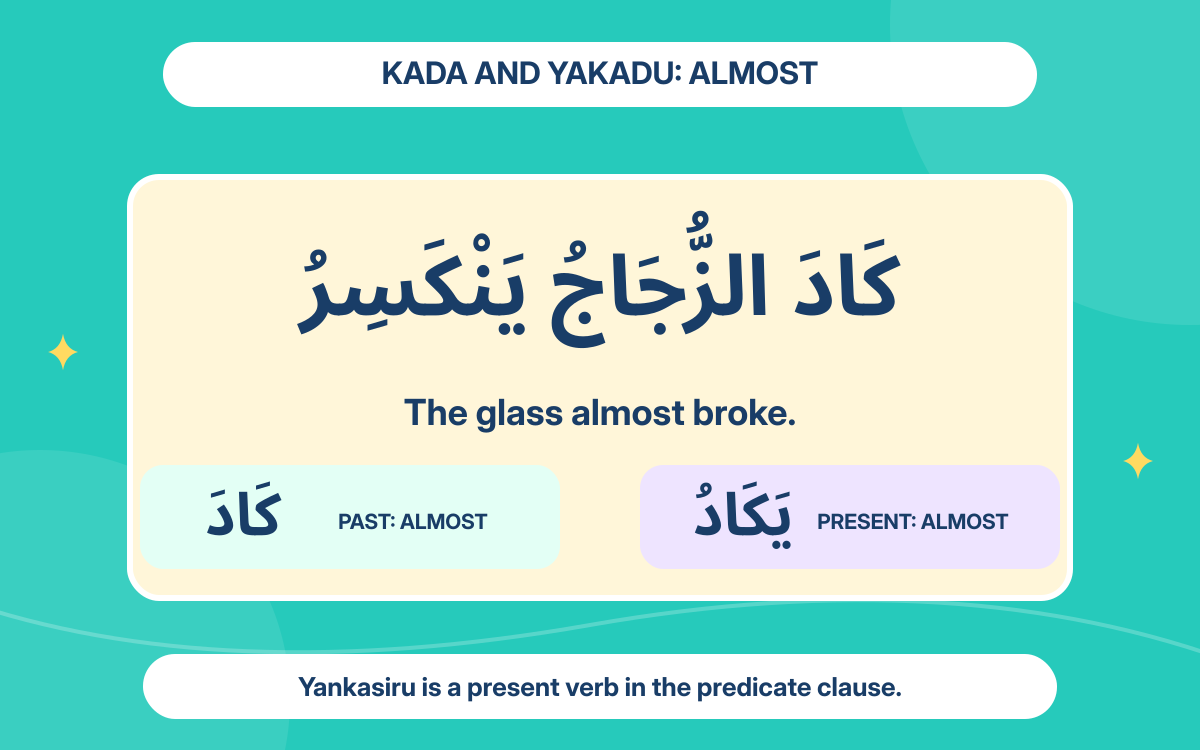
Yakadu, يَكَادُ, presents near occurrence now. Zujaj means glass; yankasiru means it breaks:
يَكَادُ الزُّجَاجُ يَنْكَسِرُ
yakadu zzujaju yankasiru
The glass is about to break.
The glass is close to breaking at the time being described. Both yakadu and yankasiru have ordinary indicative u endings here. Context tells what eventually happens; do not turn near occurrence into a universal claim about the event’s final outcome.
04Match the singular feminine forms
Use kadat with a female singular noun. The following present verb also refers to her:
كَادَتْ زَيْنَبُ تَضْحَكُ
kadat zaynabu tadhaku
Zaynab almost laughed.
Kadat has the feminine past t ending. Zaynabu is nominative; tadhaku means she laughs in this context. For present nearness with a feminine singular noun, the corresponding form is تَكَادُ, takadu.
05Assemble a present near event
To say the boy is close to laughing now, begin with yakadu, then the boy, then he laughs:
يَكَادُ الْوَلَدُ يَضْحَكُ
yakadu lwaladu yadhaku
The boy is about to laugh.
The noun stays nominative and the present verb stays indicative in this common pattern without an. Use kada for past nearness and yakadu for present nearness, while keeping the action verb in its present form.
What to remember
- Kada places near occurrence in the past; yakadu presents present near occurrence.
- The common pattern uses a nominative noun and a present-verb clause; the verb remains indicative in these examples without an.
- Kadat and takadu are the corresponding feminine singular forms; the following present verb refers to the same noun.
Your reference shelf
Open a guide whenever you need it.
Review the near-occurrence constructionSeparate clause position from the verb’s mood
كَادَ الْوَلَدُ يَضْحَكُ — kada lwaladu yadhaku — The boy almost laughed.
يَكَادُ الْوَلَدُ يَضْحَكُ — yakadu lwaladu yadhaku — The boy is about to laugh.
كَادَتْ زَيْنَبُ تَضْحَكُ — kadat zaynabu tadhaku — Zaynab almost laughed.
Kada belongs to the near-occurrence verbs and has a noun and a predicate in this construction. Its noun is nominative; its predicate is a present-verb clause in an accusative position. The examples use the common construction without an. An is possible in less frequent kada constructions, so absence of an is not an exceptionless rule for every text. This guide covers affirmative near occurrence, not negative la yakadu or ma kada. Read a sentence’s context before deciding what eventually happened.
Sources & further learning
References for the language explanations and learning guidance.