Sometimes you need to mention one person without identifying which person. Arabic can join ahad or ihda directly to a group noun or an attached pronoun. This small construction means “one of.” Start with clearly identified groups of men and women, then see how the sentence changes the ending.
01Choose one person from a group
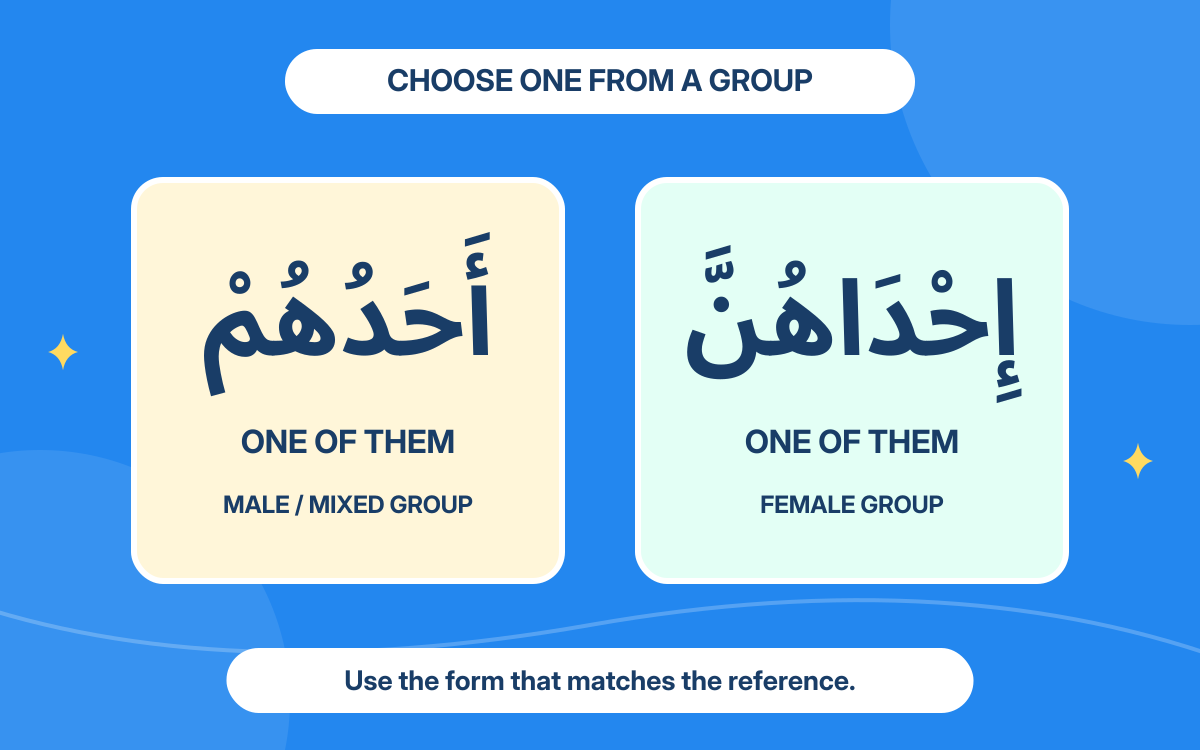
For a group of men, ahaduhum means “one of them.” For a group of women, ihdahunna means “one of them.” The chosen person is singular, even though the group is plural.
أَحَدُهُمْ مَرِيضٌ
ahaduhum maridun
One of them is ill. The group consists of men.
إِحْدَاهُنَّ مَرِيضَةٌ
ihdahunna maridatun
One of them is ill. The group consists of women.
The predicate matches the selected person: maridun is masculine singular; maridatun is feminine singular. The suffix identifies the group, not several ill people.
02Name the group with a plural noun
Instead of a suffix, use ahad or ihda followed by the group noun. This is an idafa: the first word is mudaf, and the following plural noun is genitive.
أَحَدُ الطُّلَّابِ مَرِيضٌ
ahadu ttullabi maridun
One of the male students is ill.
إِحْدَى الطَّالِبَاتِ مَرِيضَةٌ
ihda ttalibati maridatun
One of the female students is ill.
There is no separate min inside these expressions. The genitive plural identifies the group from which one person is selected. Ahadu has no tanween because it is mudaf.
03Attach the group pronoun
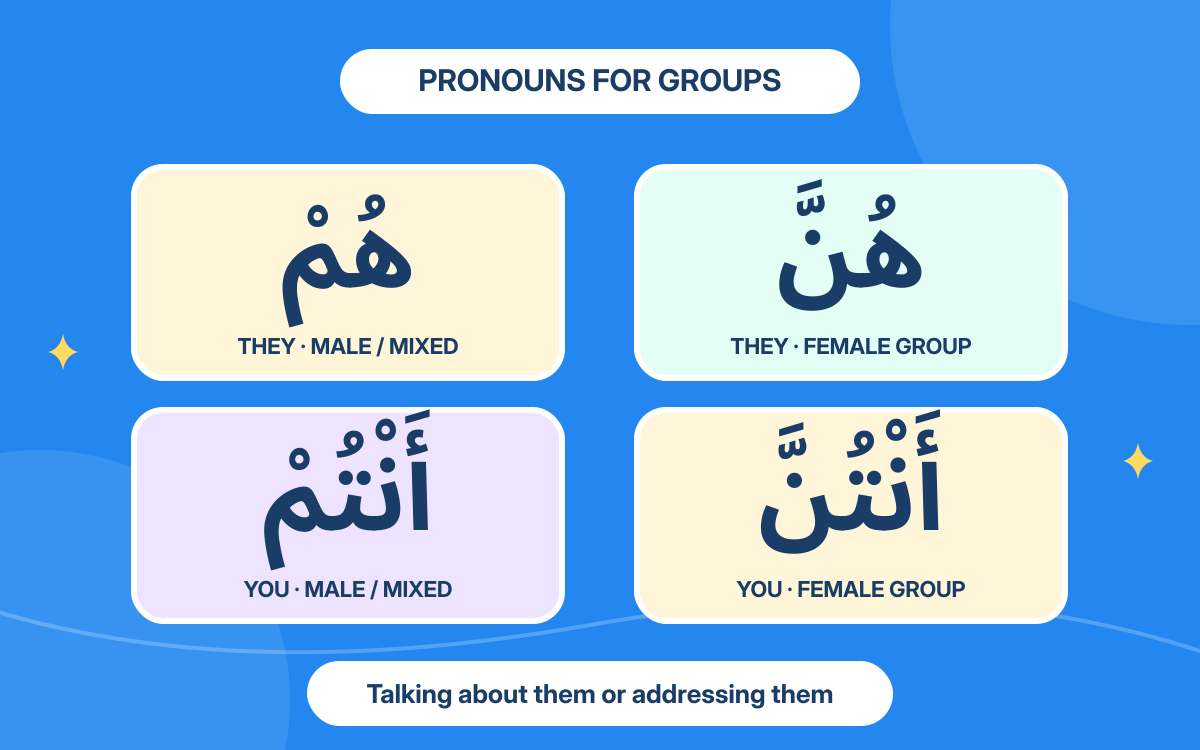
When the group is already known, replace its noun with a suffix. The suffix hum refers to the men; hunna refers to the women in these examples.
أَحَدُهُمْ طَالِبٌ
ahaduhum talibun
One of them is a student. The group consists of men.
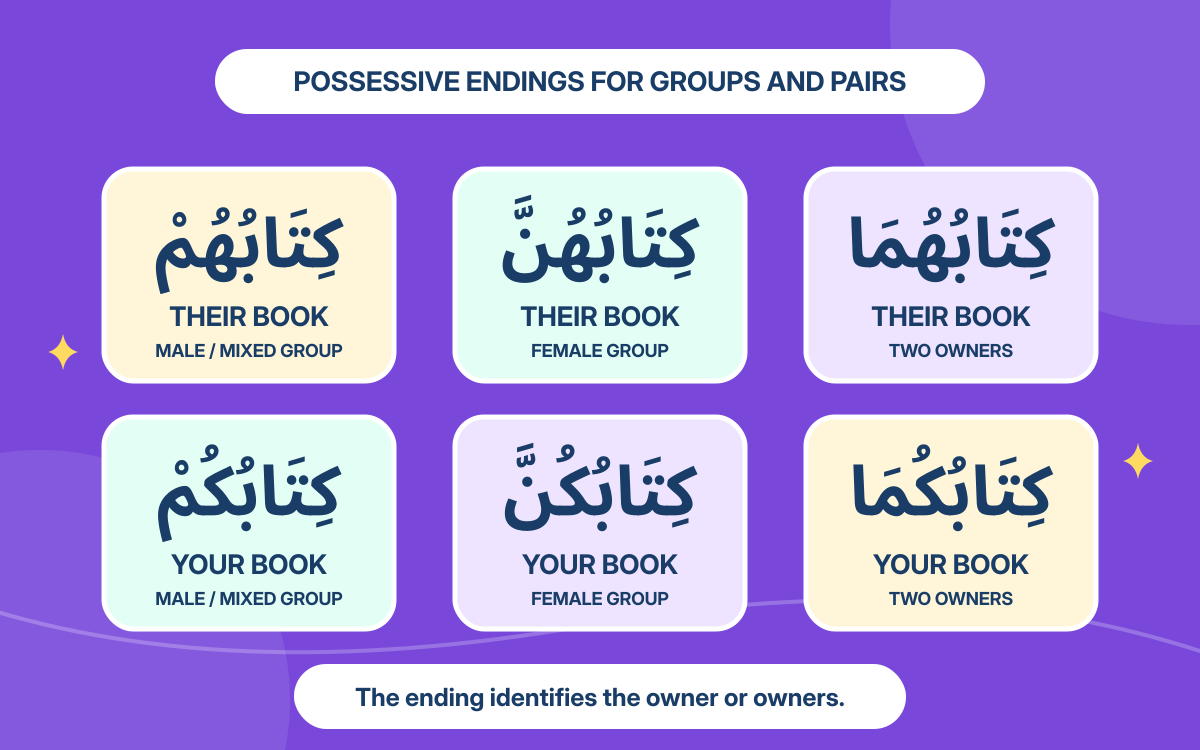
The attached pronoun occupies the genitive position of the group noun. It does not turn ahad into a plural. With ihda, the final alif is written as ا before a suffix: إِحْدَاهُنَّ. Keep the whole expression together as one written word.
04Change ahad to fit its role
Ahad takes the case required by the sentence. Compare ahaduhum as a nominative subject with these two forms:
رَأَيْتُ أَحَدَهُمْ
raaytu ahadahum
I saw one of them. The group consists of men.
مِنْ أَحَدِهِمْ
min ahadihim
From one of them. The group consists of men.
The direct object is accusative, so use ahadahum. After min, use genitive ahadihim. Notice that the suffix is pronounced him after this kasrah, rather than hum. The group stays the same; the grammatical role changes.
05Recognise a case you cannot see
Ihda ends in a long alif. Its case ending is estimated rather than pronounced as an extra short vowel. The same visible form can therefore occur in different grammatical roles.
ذَهَبْتُ مَعَ إِحْدَاهُنَّ
dhahabtu maa ihdahunna
I went with one of them. The group consists of women.
Here ihda is genitive after maa, “with,” but its long alif remains. Do not add a short i to ihda. These reading aids show formal connected endings where audible; plain Latin spelling simplifies Arabic sounds and vowel length.
What to remember
- Use أَحَدُهُمْ for one from the stated male group and إِحْدَاهُنَّ for one from the stated female group.
- Ahad or ihda is mudaf; the following group noun or attached pronoun is in the genitive position.
- Ahad shows changing case endings; ihda has estimated endings on its long alif.
Your reference shelf
Open a guide whenever you need it.
One of them across three rolesCompare visible ahad endings with the unchanged long alif of ihda
| Role | Male group | Female group |
|---|---|---|
| Nominative subject | أَحَدُهُمْ | إِحْدَاهُنَّ |
| Accusative object | أَحَدَهُمْ | إِحْدَاهُنَّ |
| Genitive after min | مِنْ أَحَدِهِمْ | مِنْ إِحْدَاهُنَّ |
The first word changes case according to its role; the suffix remains in the genitive position. Ihda is declinable despite its unchanged visible alif. The examples use clearly specified human groups. Other uses of ahad, including after negation, need their own context and are not a reason to extend these practice rules to every sentence.
Sources & further learning
References for the language explanations and learning guidance.