Nun of emphasis strengthens a command or a present-form verb in particular constructions. Heavy nun has shaddah; light nun has sukun. These are not ordinary subject endings. Their attachment also changes the visible shapes of some dual, plural and feminine forms, so the vowel before nun matters.
01Add emphasis to a command
اُكْتُبَنَّ الْعُنْوَانَ بِوُضُوحٍ
uktubanna alunwana biwuduhin
Be sure to write the address clearly.
This is a command to one man. Uktub becomes uktubanna when heavy nun of emphasis is attached. The final root consonant ba takes fathah before the doubled nun.
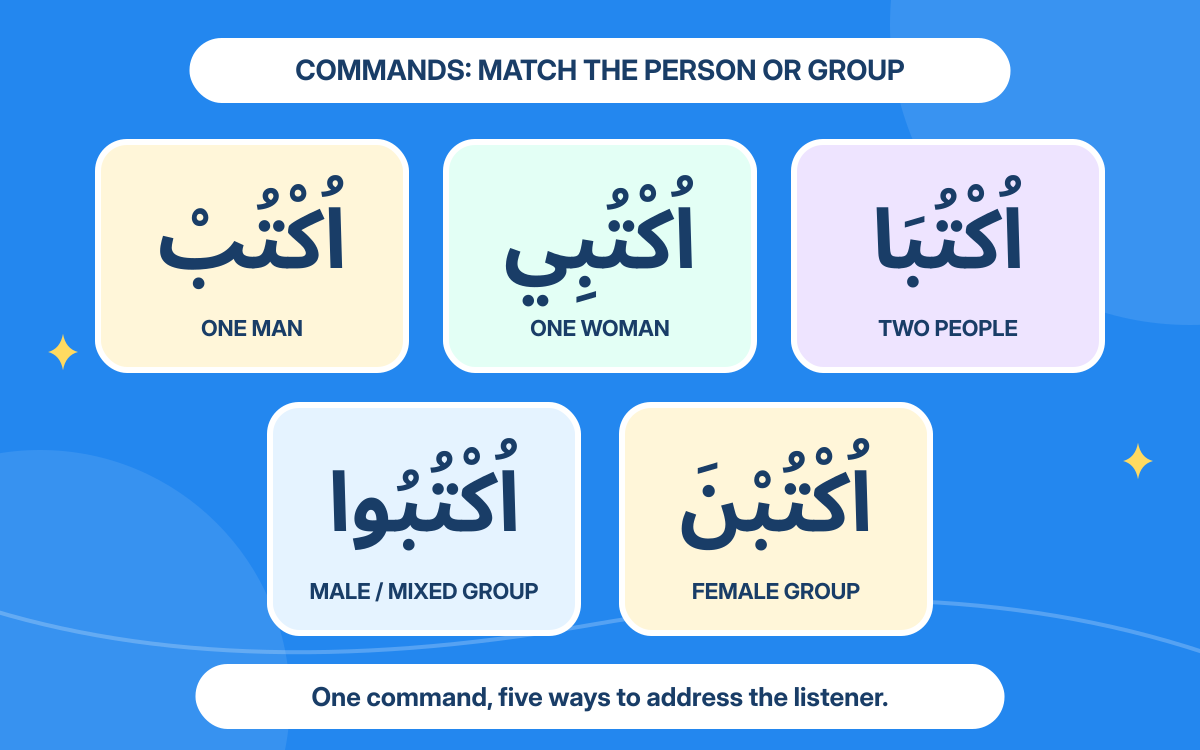
The command has stronger insistence than plain اُكْتُبْ. It is a formal pattern to recognize, not a replacement for every ordinary request. Start with command person forms if the unmodified endings are new.
02Read an emphatic future statement
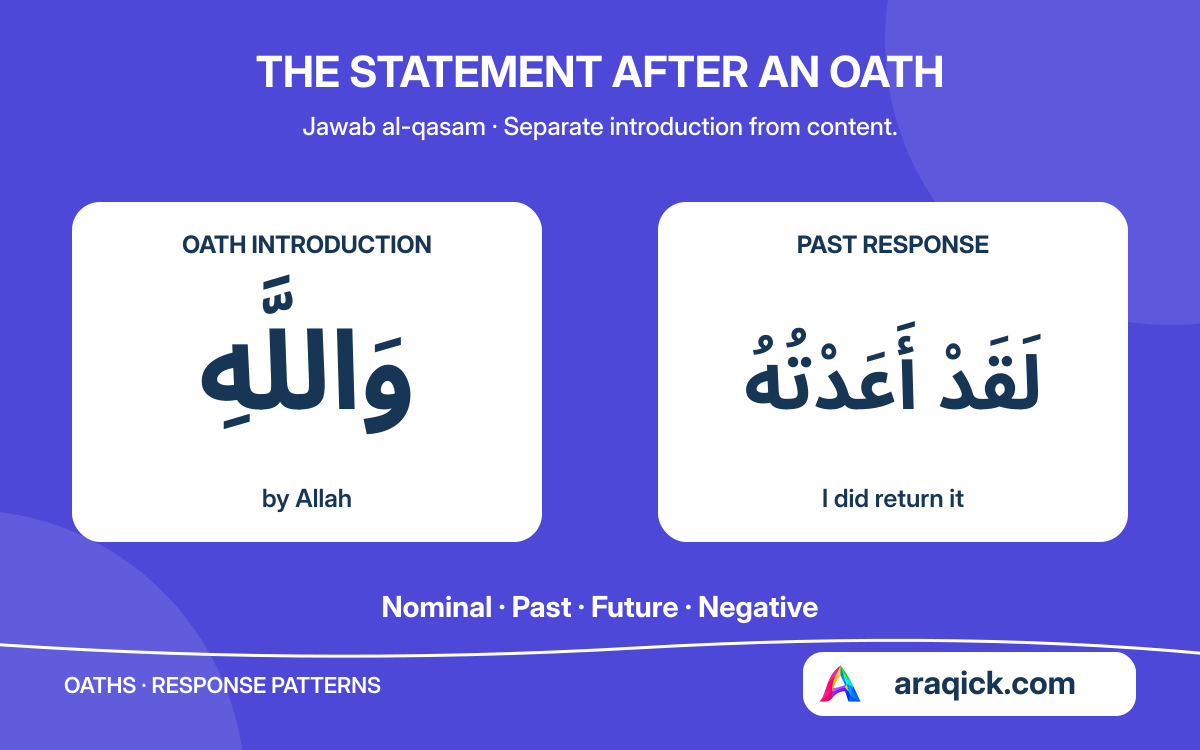
وَاللَّهِ لَأَكْتُبَنَّ الْمُلَخَّصَ غَدًا
wallahi laaktubanna almulakhkhasa ghadan
By Allah, I will certainly write the summary tomorrow.
The prefix a identifies I. Lam and heavy nun mark this directly connected affirmative future oath response. The nun does not change I into we; the person prefix still matters.
Nun of emphasis attaches to present-form verbs and commands, not to ordinary past verbs. The singular form shown here is built on fathah when directly joined to emphatic nun. Do not apply that simple description unchanged to every dual or plural form.
03Watch the vowel before heavy nun
لَتَكْتُبَنَّ — لَتَكْتُبُنَّ — لَتَكْتُبِنَّ
lataktubanna — lataktubunna — lataktubinna
You will certainly write: one man — a group — one woman
With the you readings shown here, fathah before nun marks one man, dammah marks a male or mixed group, and kasrah marks one woman. The ordinary subject waw or ya is no longer visibly present in the latter two sound-verb forms.
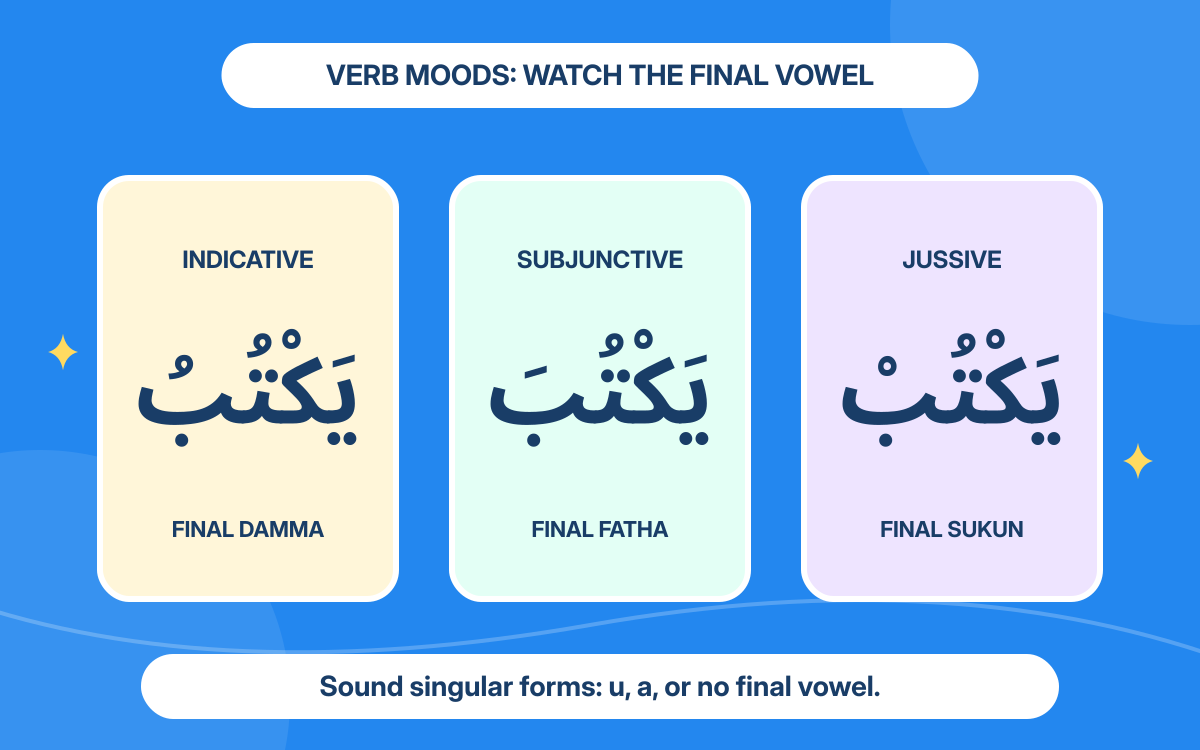
The ordinary indicative endings also change: taktubuna and taktubina do not keep their final indicative nun before the new emphatic suffix. Read the vowels, not just the unvowelled consonants. Context can also make the first form refer to she.
04Keep dual and feminine-plural forms distinct
لَتَكْتُبَانِّ — لَتَكْتُبْنَانِّ
lataktubanni — lataktubnanni
You two will certainly write — You women will certainly write
The dual keeps its alif before heavy nun, which takes kasrah. In the feminine plural, the subject nun is retained, and a separating alif appears before the heavy nun. The chart spells out the difference.
Ordinary يَكْتُبْنَ means they write for women; its final nun is a subject suffix. In لَيَكْتُبَنَّ, the doubled nun adds emphasis and the subject is he. These two nuns have different jobs.
05Recognize light nun without confusing it with tanwin
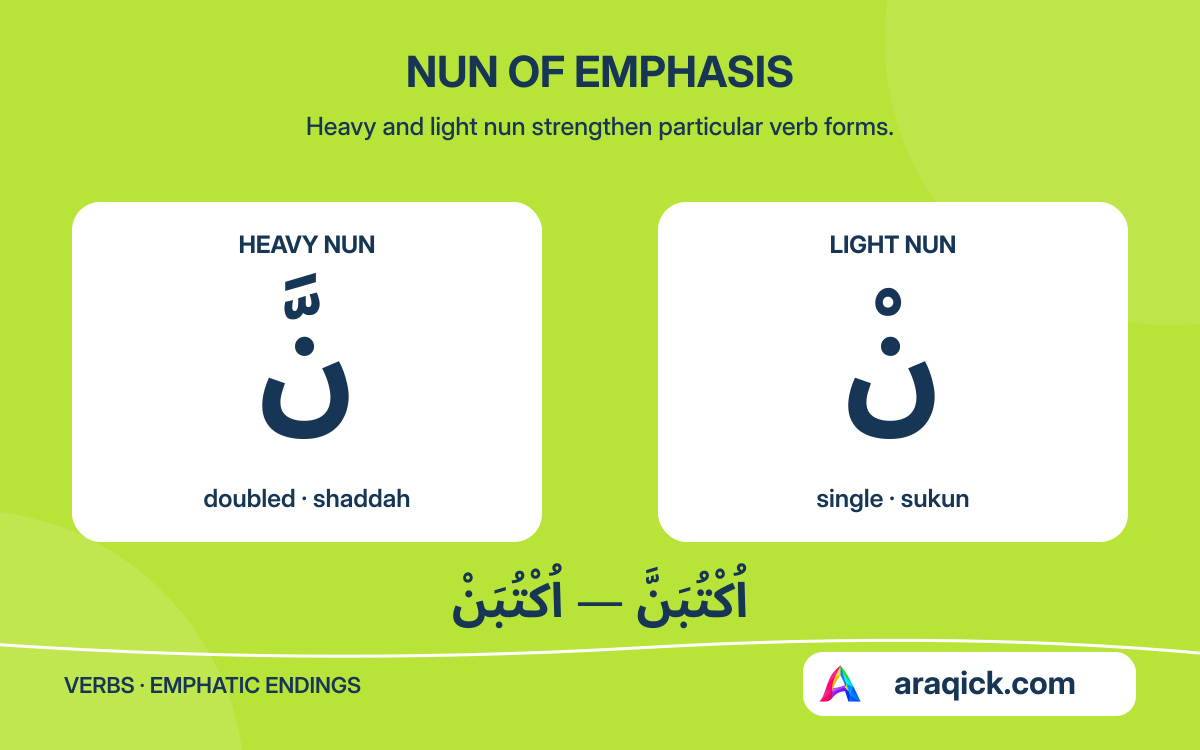
اُكْتُبَنَّ — اُكْتُبَنْ
uktubanna — uktuban
Write, with heavy emphasis — Write, with light nun
Heavy nun is doubled and written with shaddah. Light nun is a single written nun with sukun. Both add emphasis in this singular command model; the terminology describes their forms, not two different subjects.
Light nun here is not noun tanwin: the word is a verb and nun is an actual letter. The charts focus on heavy nun across persons; do not extend the singular light-nun example mechanically to every row. Plain reading aids simplify vowel length, so use the fully marked Arabic for precise endings.
What to remember
- Heavy nun has shaddah; light nun has sukun.
- Emphatic nun does not identify the subject by itself.
- Read the vowel before nun and distinguish dual from feminine-plural forms.
Your reference shelf
Open a guide whenever you need it.
Kataba: present forms with heavy nunCompare ordinary indicative forms with affirmative future oath-response forms
| Subject | Ordinary indicative | With lam and heavy nun |
|---|---|---|
| He | يَكْتُبُ | لَيَكْتُبَنَّ |
| They — two males | يَكْتُبَانِ | لَيَكْتُبَانِّ |
| They — male or mixed group | يَكْتُبُونَ | لَيَكْتُبُنَّ |
| She | تَكْتُبُ | لَتَكْتُبَنَّ |
| They — two females | تَكْتُبَانِ | لَتَكْتُبَانِّ |
| They — female group | يَكْتُبْنَ | لَيَكْتُبْنَانِّ |
| You — one man | تَكْتُبُ | لَتَكْتُبَنَّ |
| You — two people | تَكْتُبَانِ | لَتَكْتُبَانِّ |
| You — male or mixed group | تَكْتُبُونَ | لَتَكْتُبُنَّ |
| You — one woman | تَكْتُبِينَ | لَتَكْتُبِنَّ |
| You — female group | تَكْتُبْنَ | لَتَكْتُبْنَانِّ |
| I | أَكْتُبُ | لَأَكْتُبَنَّ |
| We | نَكْتُبُ | لَنَكْتُبَنَّ |
These are sound-verb models using kataba. In the emphatic column, lam belongs to the future oath-response construction. Weak verbs need their own spelling adjustments.
Kataba: commands with heavy nunThe addressee changes the ending
| Addressee | Ordinary command | Emphatic command |
|---|---|---|
| One man | اُكْتُبْ | اُكْتُبَنَّ |
| One woman | اُكْتُبِي | اُكْتُبِنَّ |
| Two people | اُكْتُبَا | اُكْتُبَانِّ |
| Male or mixed group | اُكْتُبُوا | اُكْتُبُنَّ |
| Female group | اُكْتُبْنَ | اُكْتُبْنَانِّ |
The alif before heavy nun is part of the dual form, but a separator after the retained subject nun in the feminine plural.
Sources & further learning
References for the language explanations and learning guidance.