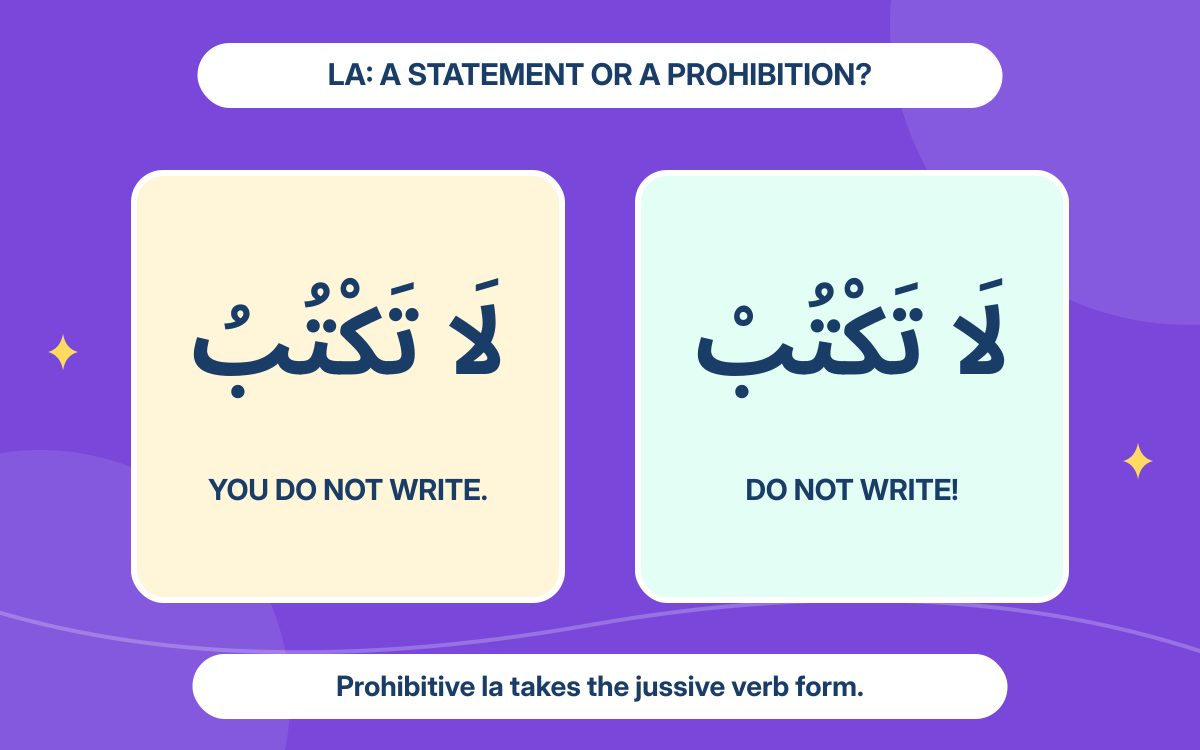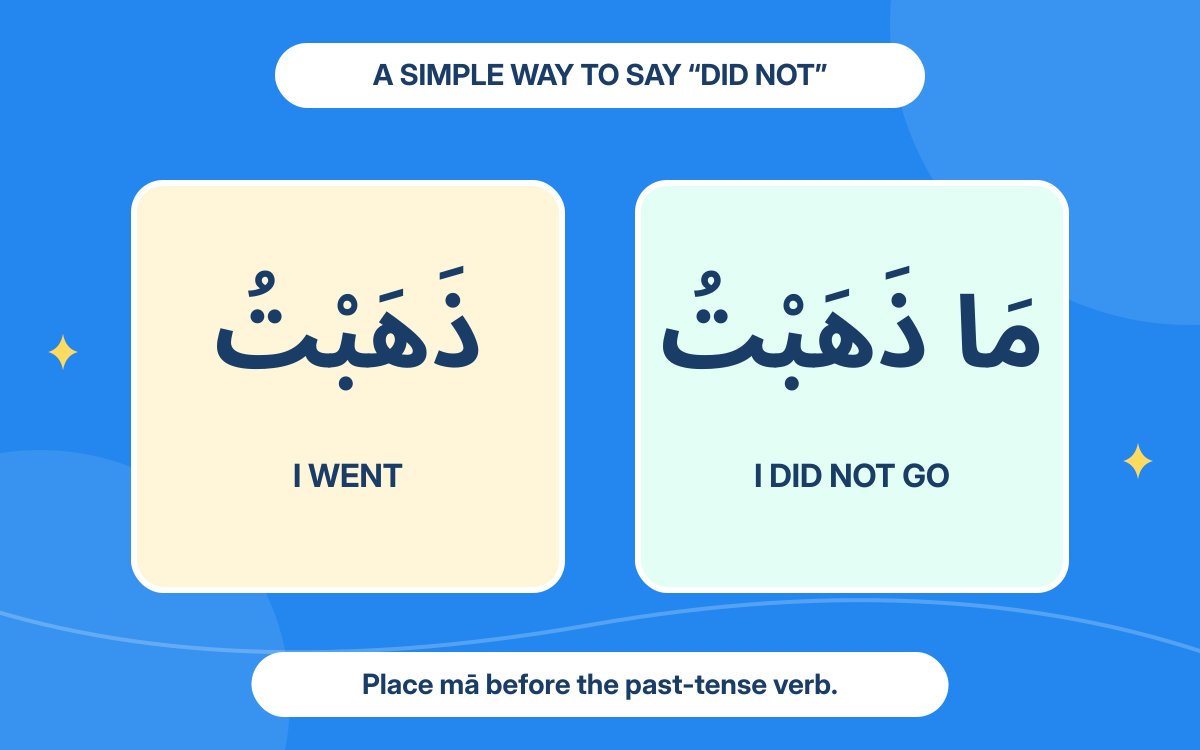
For a simple present statement such as I do not understand, put la before the matching verb: la afhamu. The verb still tells you who is speaking. Start with this small Modern Standard Arabic pattern, then change the action while keeping the negative word in place.
01Change I understand into I do not understand
afhamu
I understand
la afhamu
I do not understand
- لَا la makes this statement negative.
- أَفْهَمُ already means I understand, so a separate word for I is optional.
- Keep la as its own written word before the verb.
You can use la afhamu when an explanation is unclear. It describes your understanding, rather than telling another person what to do.
02Try the same pattern with two actions
aktubu
I write
la aktubu
I do not write
adrusu
I study
la adrusu
I do not study
Notice what stays the same: the first-person verb. In these negative statements, la does not change its ending.
English uses “do not” to make this sentence negative. In Arabic, la goes before the main verb; there is no extra word for “do.” Choose the Arabic verb form for I, then place la before it.
03Add what the action is about
أَشْرَبُ ashrabu means I drink. الْقَهْوَة alqahwa means the coffee; this drink can be named generally in Arabic with al.
لَا أَشْرَبُ الْقَهْوَة
la ashrabu alqahwa
I do not drink coffee.
Keep the drink after the verb. This sentence can describe a habit or preference about drinking coffee. The Arabic noun has al even though natural English usually leaves out the in this general statement.
To say I drink coffee, remove la and keep the other words in order.
04I do not know or I do not understand?
la arifu
I do not know
la afhamu
I do not understand
- Use la arifu when you do not know a fact or answer.
- Use la afhamu when you cannot make sense of an explanation or message.
- Both are first-person statements; the action word carries the difference.
If someone asks for an address you do not know, la arifu fits. If you know the topic but the explanation is unclear, la afhamu fits.
05Keep the statement about yourself
You can add أَنَا ana, I, before the negative pattern:
أَنَا لَا أَكْتُبُ
ana la aktubu
I do not write.
Ana makes the speaker explicit. It does not replace the first-person form aktubu. A man or a woman can use the same sentence when speaking about themself.
This lesson covers present statements. I did not write, I am not a teacher and the command Do not write require other patterns. La also appears in commands, but that use follows different grammar.
Before building a sentence, decide who is speaking, choose the matching action, and check that you mean a present negative statement.
What to remember
- Put la before a matching present verb to make these first-person statements negative.
- La arifu means I do not know; la afhamu means I do not understand.
- Adding ana makes I explicit, but the verb still needs its first-person form.
Sources & further learning
References for the language explanations and learning guidance.