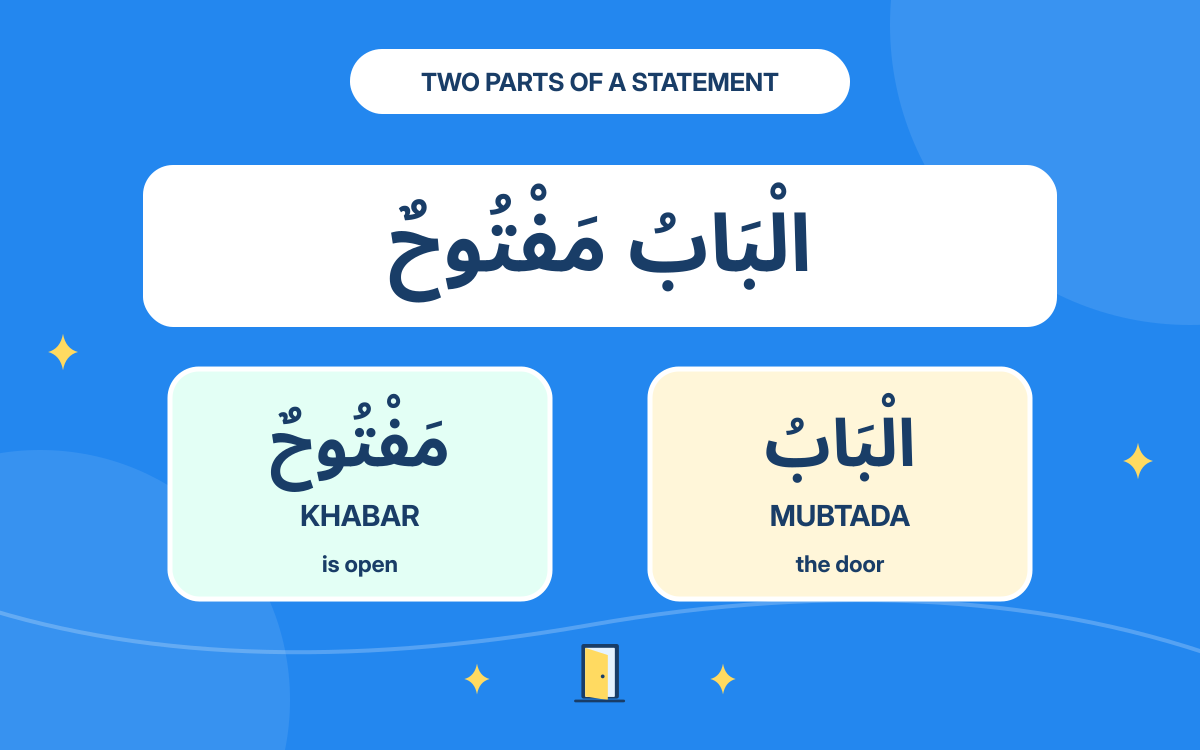
Alkitabu jadidun means “The book is new.” To say “The book is not new,” use laysa and change the descriptive predicate to jadidan. This guide shows how the pattern works with named people, things and locations.
01Make a description negative
Use laysa to deny the description of a masculine noun in this singular pattern. Here, it means “is not”; its past-shaped form does not make the sentence “was not.”
الْكِتَابُ جَدِيدٌ
alkitabu jadidun
The book is new.
لَيْسَ الْكِتَابُ جَدِيدًا
laysa alkitabu jadidan
The book is not new.
02Separate the noun from the predicate
After laysa, the noun being discussed is called its ism, or noun. The information denied is its khabar, or predicate.
لَيْسَ حَامِدٌ مَرِيضًا
laysa hamidun maridan
Hamid is not ill.
Hamidun remains nominative. Maridan is an accusative adjectival predicate. It describes Hamid; it is not an action’s direct object. Laysa belongs to the kana family, whose members work with a noun and a predicate.
03Use laysat for a female person
Use laysat when the named person is female. The descriptive predicate also matches that person’s gender.
لَيْسَتْ زَيْنَبُ مُتْعَبَةً
laysat zaynabu mutabatan
Zaynab is not tired.
Zaynabu is nominative. Mutabatan is the feminine accusative description. The added t on laysat and the feminine adjective have separate jobs: the verb and the description both agree with Zaynab.
04Negate a location
The predicate can be a prepositional phrase rather than a single adjective.
لَيْسَ الْكِتَابُ فِي الْحَقِيبَةِ
laysa alkitabu fi alhaqibati
The book is not in the bag.
Fi alhaqibati gives the location being denied. Alhaqibati stays genitive after fi. The phrase fills the predicate role; do not give the noun after fi a made-up accusative ending. The book itself, alkitabu, remains nominative.
05Choose the construction for your meaning
Use laysa for the description or location patterns above. A past action and a present action use different beginner models.
لَيْسَ الْبَابُ مَفْتُوحًا
laysa albabu maftuhan
The door is not open.
مَا فَتَحْتُ الْبَابَ
ma fatahtu albaba
I did not open the door.
The first denies a state; the second denies a completed action. For a simple present action, la aktubu means I do not write. These are useful starting patterns, rather than a rule that one negative word can never occur in another construction.
What to remember
- Laysa negates a masculine singular description; laysat matches a feminine singular noun.
- Its explicit noun is nominative, while a single adjectival predicate is accusative.
- A prepositional predicate keeps its own internal noun case: fi alhaqibati remains genitive.
Your reference shelf
Open a guide whenever you need it.
Laysa syntax and an optional bi formKeep the predicate role separate from its visible ending
| Meaning | Arabic | Reading |
|---|---|---|
| The book is not new. | لَيْسَ الْكِتَابُ جَدِيدًا | laysa alkitabu jadidan |
| Zaynab is not tired. | لَيْسَتْ زَيْنَبُ مُتْعَبَةً | laysat zaynabu mutabatan |
| The book is not in the bag. | لَيْسَ الْكِتَابُ فِي الْحَقِيبَةِ | laysa alkitabu fi alhaqibati |
You may also meet the optional emphatic bi before an adjectival predicate: لَيْسَ الْكِتَابُ بِجَدِيدٍ, laysa alkitabu bijadidin, “The book is not new.” Jadidin is visibly genitive after bi, while retaining the predicate’s accusative grammatical position. Bi is not required and is not inserted before an existing preposition such as fi.
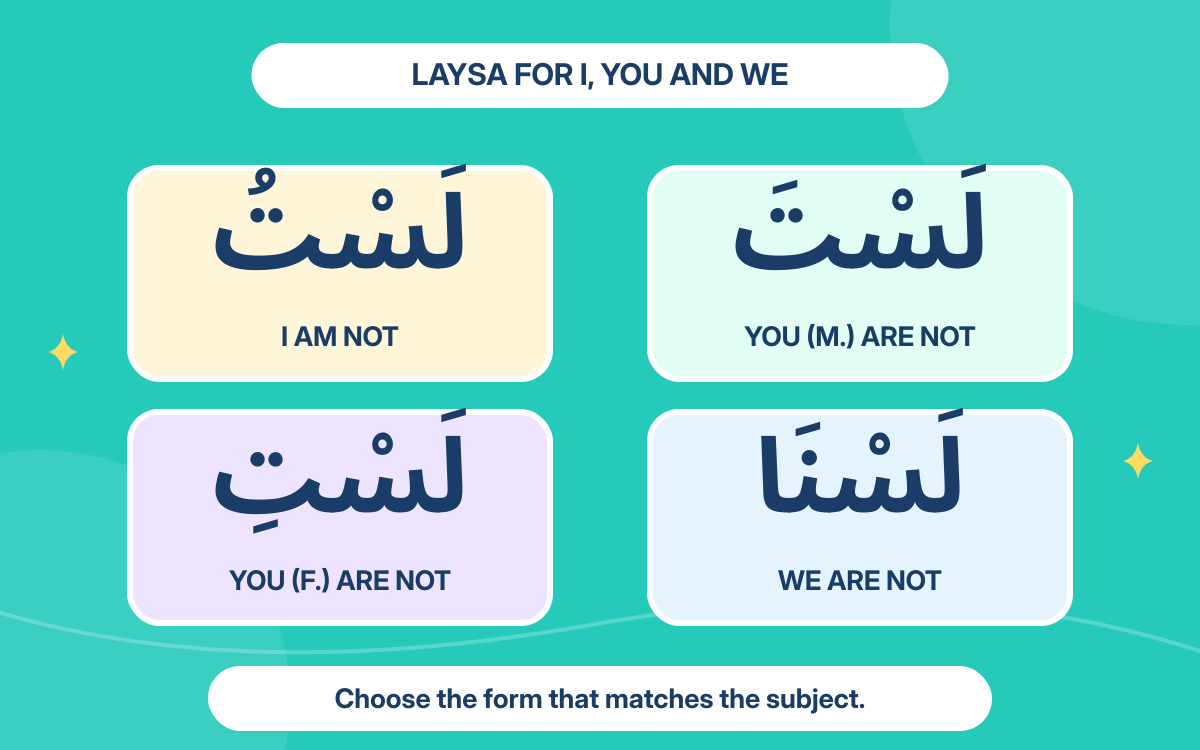
Calling laysa a defective or incomplete copular verb refers to its noun-and-predicate construction. This is different from classifying roots as weak; weak-root action verbs still have subjects. Learn laysa’s person forms in the companion guide.
Sources & further learning
References for the language explanations and learning guidance.