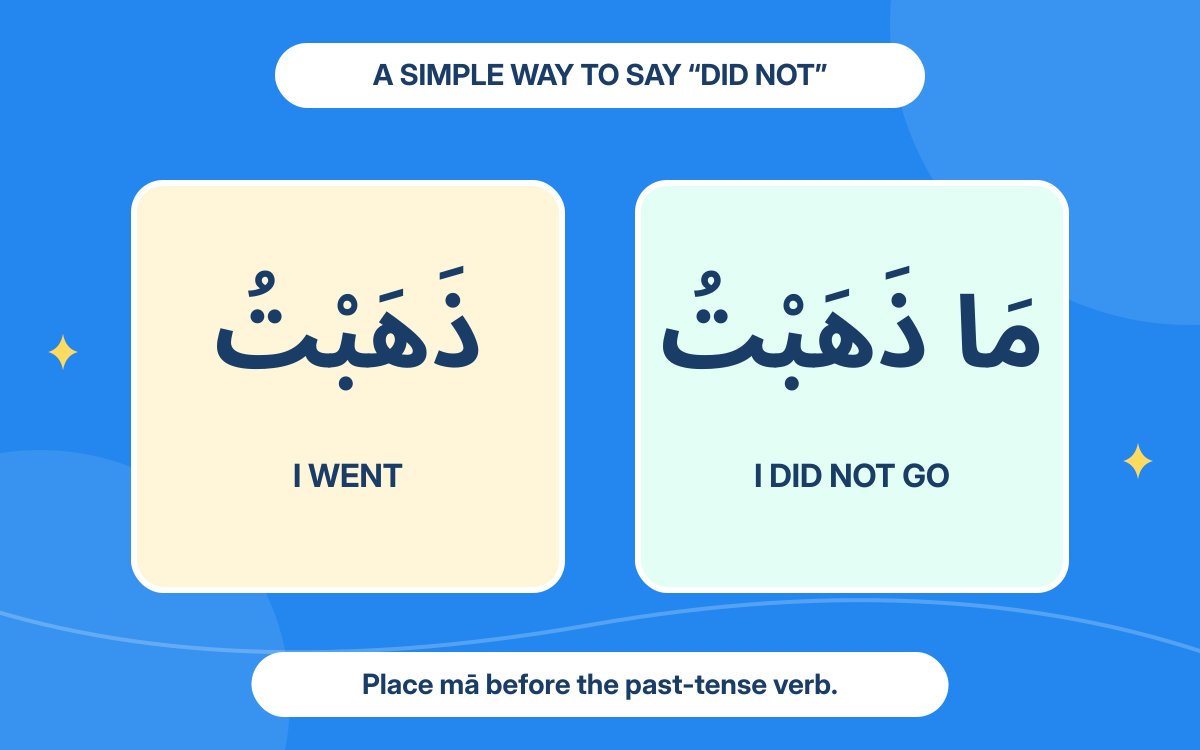
Katabtu means “I wrote.” Ma katabtu means “I did not write.” This small change lets you deny a completed action while keeping the same verb form. Start with the past sentence you already know, then add ma before its verb.
01Add ma before the past verb
Ma is a separate negative particle. In this pattern, it denies the action expressed by the following past verb.
كَتَبْتُ
katabtu
I wrote.
مَا كَتَبْتُ
ma katabtu
I did not write.
English adds “did not.” Arabic uses ma before the existing past form; it does not add a separate equivalent of “did.”
02Keep the same person ending
The verb ending still identifies who did not perform the action. Ma does not turn I into you or she.
مَا ذَهَبْتُ
ma dhahabtu
I did not go.
مَا ذَهَبَتْ
ma dhahabat
She did not go.
The final tu identifies I; the final at identifies she. Choose the correct past form first, then add ma. A separate subject pronoun is optional when the ending and context already identify the person.
03Keep a named subject nominative
You can also name the person after the verb. Ma negates the action without changing that person’s grammatical role.
مَا جَلَسَ بِلَالٌ
ma jalasa bilalun
Bilal did not sit down.
Bilalun is the subject of jalasa and remains nominative. It is not an object, and it does not become accusative simply because the sentence is negative.
04Keep what was not done
If the positive action has a direct object, keep that object in the negative statement.
مَا كَتَبْتُ رِسَالَةً
ma katabtu risalatan
I did not write a letter.
Risalatan names what was not written. It remains the verb’s accusative direct object. Ma changes the statement’s polarity, not the roles of its subject and object.
05Add the destination
A prepositional phrase can finish the same negative past statement. Keep its normal preposition and noun ending.
مَا ذَهَبْتُ إِلَى السُّوقِ
ma dhahabtu ila assuqi
I did not go to the market.
Ila means to, and assuqi is genitive after it. The statement denies this trip. It does not say that the speaker never visits markets. Our plain reading aids simplify vowel length and some Arabic sounds; the Arabic preserves the full forms.
What to remember
- Put the separate word ma before the past verb to deny a completed action.
- Keep the verb’s person ending: ma katabtu still refers to I.
- Subjects, direct objects and prepositional phrases keep their normal roles.
Your reference shelf
Open a guide whenever you need it.
Compare positive and negative past formsThe person ending stays unchanged
| Person | Positive | Negative |
|---|---|---|
| I | كَتَبْتُ — katabtu | مَا كَتَبْتُ — ma katabtu |
| He | كَتَبَ — kataba | مَا كَتَبَ — ma kataba |
| She | كَتَبَتْ — katabat | مَا كَتَبَتْ — ma katabat |
| We | كَتَبْنَا — katabna | مَا كَتَبْنَا — ma katabna |
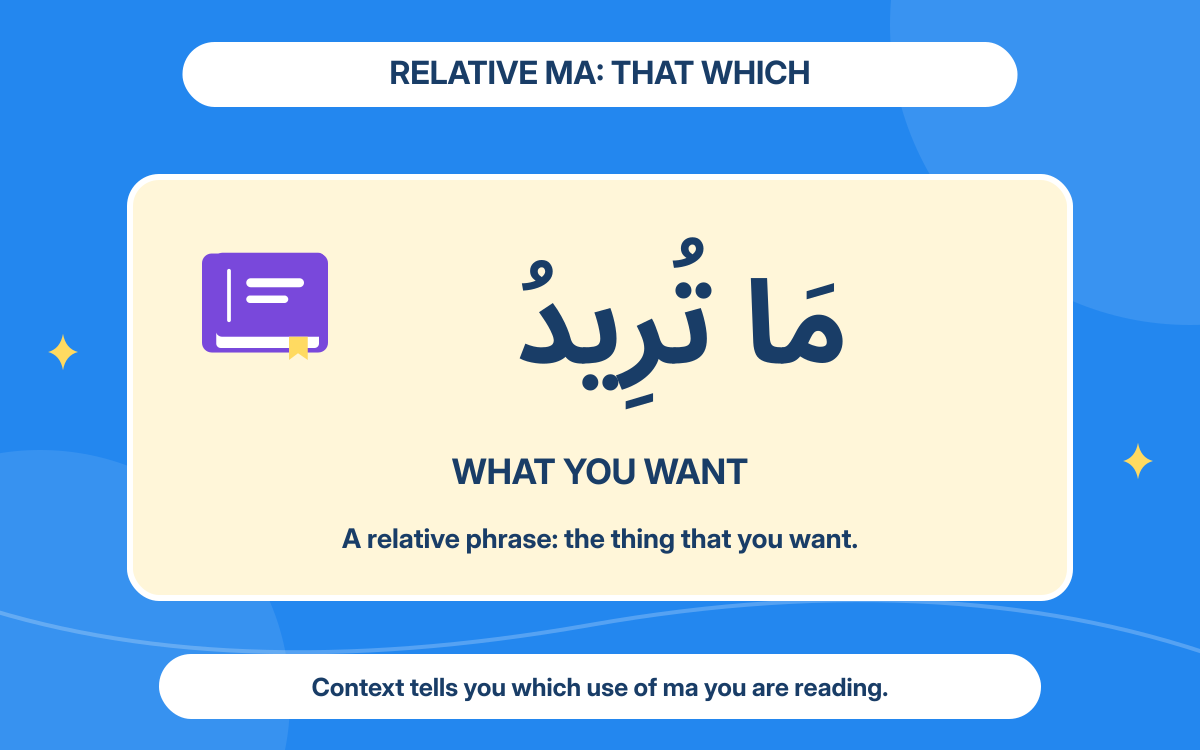
Ma has other uses in Arabic, including questions meaning what and negative possession patterns such as ma indi. The complete construction determines its job. This guide teaches ma followed by a past action verb; it does not assign one tense to every use of ma.
Sources & further learning
References for the language explanations and learning guidance.