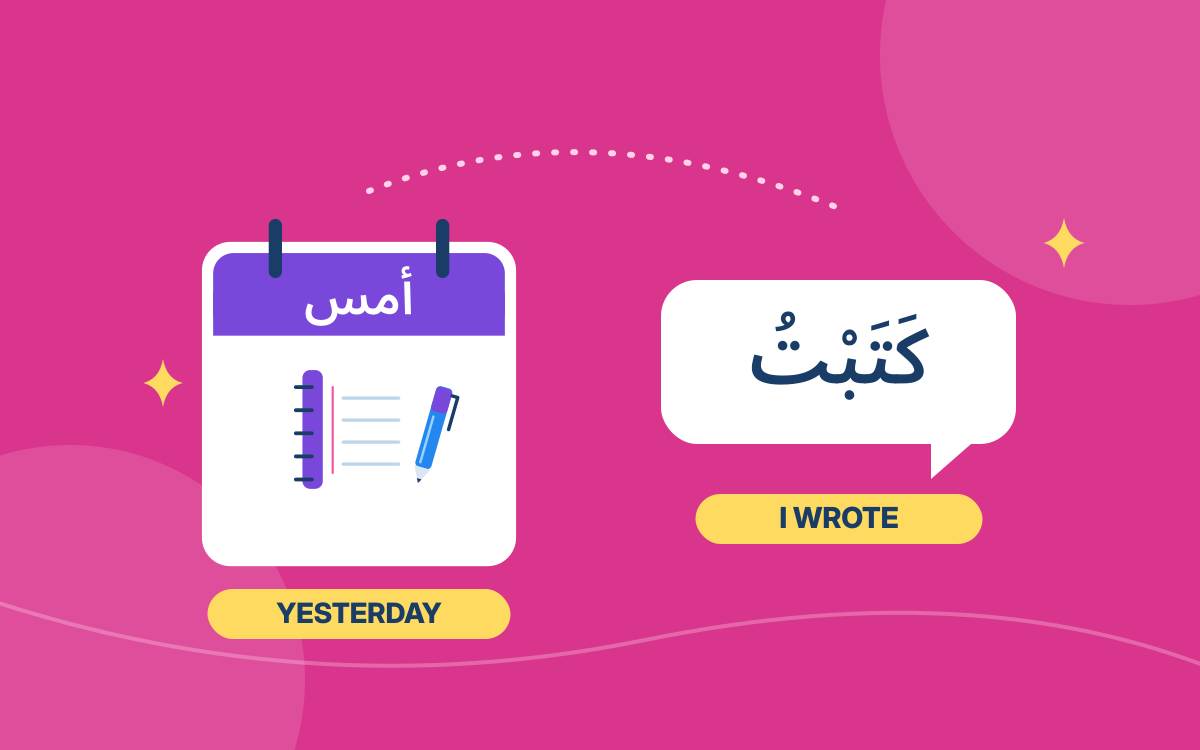
Katabtu means “I wrote.” Its final tu identifies I in this past tense form. Use the six sentences below to describe small things you did yesterday: read, wrote, studied, drank, went and returned. We will keep every action in the first person so you can practise talking about yourself.
01Start with reading and writing
qaratu kitab
I read a book.
katabtu risala
I wrote a letter.
Both actions are presented as completed. Qaratu is the reading action; katabtu is the writing action. Keep each verb together with its meaning before changing the rest of the sentence.
02Add study and a drink
دَرَسْتُ الْعَرَبِيَّةَ
darastu alarabiyya
I studied Arabic.
شَرِبْتُ مَاءً
sharibtu ma
I drank water.
Darastu describes studying; sharibtu describes drinking. Alarabiyya names the Arabic language, while ma names water. Match the object to the action you want to report.
Notice the final tu in both verbs. In these forms, the verb itself tells the listener that I did the action. You do not need to add ana, I, before every sentence.
03Leave and come back
ذَهَبْتُ إِلَى الْمَدْرَسَةِ
dhahabtu ila almadrasa
I went to school.
عُدْتُ إِلَى الْبَيْتِ
udtu ila albayt
I returned home.
These sentences name a destination after ila: the school or the home. Dhahabtu means I went; udtu means I returned. Returning includes the idea of coming back.
Learn udtu as a complete form. You cannot create all six past verbs by simply adding tu to a present tense verb. The shape before the ending matters too.
04Say that it happened yesterday
كَتَبْتُ رِسَالَةً أَمْسِ
katabtu risala ams
I wrote a letter yesterday.
Ams means yesterday. Our example puts it after the action and its object. Katabtu already marks the past; ams gives a more exact time.
Keep the same order for شَرِبْتُ مَاءً أَمْسِ sharibtu ma ams: I drank water yesterday. Arabic permits other placements, but practise this ending position first.
05Keep the speaker clear
- Read or wrote: choose qaratu or katabtu.
- Studied or drank: choose darastu or sharibtu.
- Went or returned: choose dhahabtu or udtu.
These first person forms work whether the speaker is a man or a woman. The final tu identifies the speaker; it does not identify the speaker’s gender.
Tell yourself one true sentence from yesterday. Start with the action you remember, then add its object or destination and, if useful, ams. The goal is a clear personal statement, not reciting every verb at once.
The plain reading aids simplify sounds and omit noun case endings. Keep the Arabic visible as you review.
What to remember
- Learn each complete past form; the final tu marks I in these six verbs.
- Use the same first person forms for a male or female speaker.
- Add ams for yesterday; practise it at the end of these sentences.
Your reference shelf
Open a guide whenever you need it.
All six past tense sentencesOpen the complete set with plain reading aids
On small screens, scroll the table sideways to see every column.
| Meaning | Arabic | Plain reading aid |
|---|---|---|
| I read a book. | قَرَأْتُ كِتَابًا | qaratu kitab |
| I wrote a letter. | كَتَبْتُ رِسَالَةً | katabtu risala |
| I studied Arabic. | دَرَسْتُ الْعَرَبِيَّةَ | darastu alarabiyya |
| I drank water. | شَرِبْتُ مَاءً | sharibtu ma |
| I went to school. | ذَهَبْتُ إِلَى الْمَدْرَسَةِ | dhahabtu ila almadrasa |
| I returned home. | عُدْتُ إِلَى الْبَيْتِ | udtu ila albayt |
Add أَمْسِ ams at the end to place any of these actions yesterday. The first person ending is written تُ. Its vowel matters; other endings can identify different people.
These are affirmative Modern Standard Arabic examples. The reading aids omit noun case endings and simplify sounds, including the glottal stop in qaratu. They help you recall the forms beside the Arabic; they are not an exact sound guide. Negative past sentences and other persons are outside this lesson.
Sources & further learning
References for the language explanations and learning guidance.