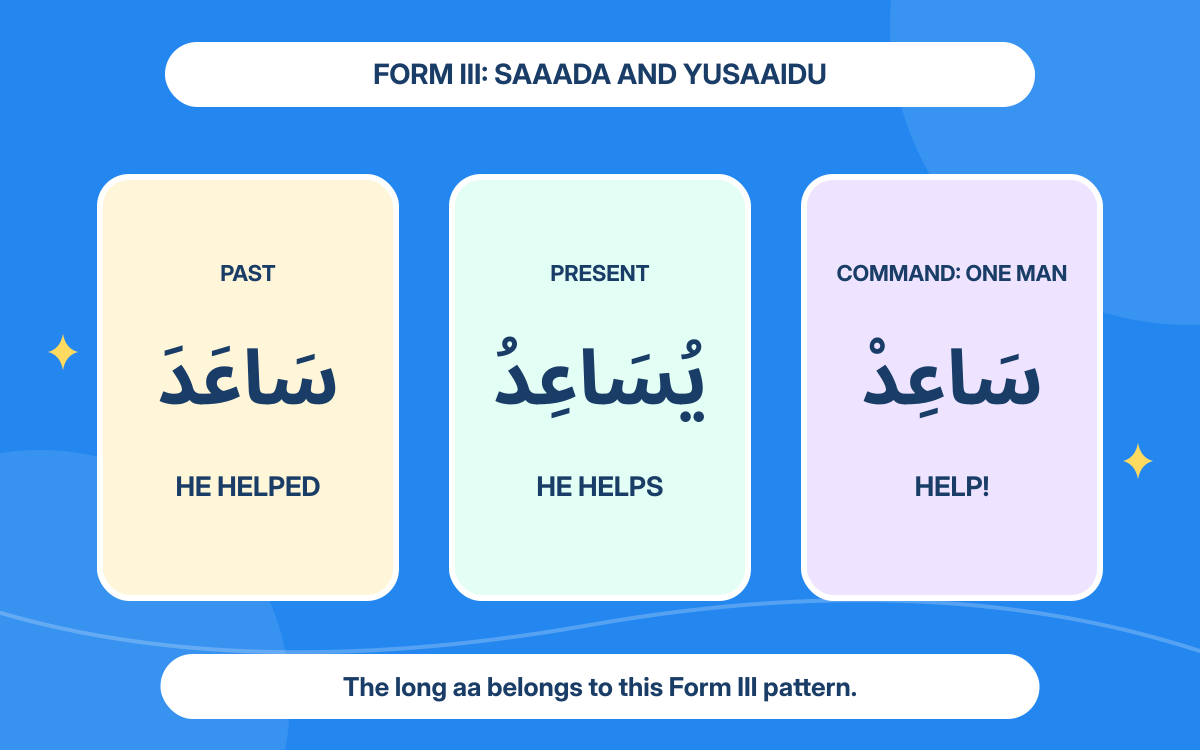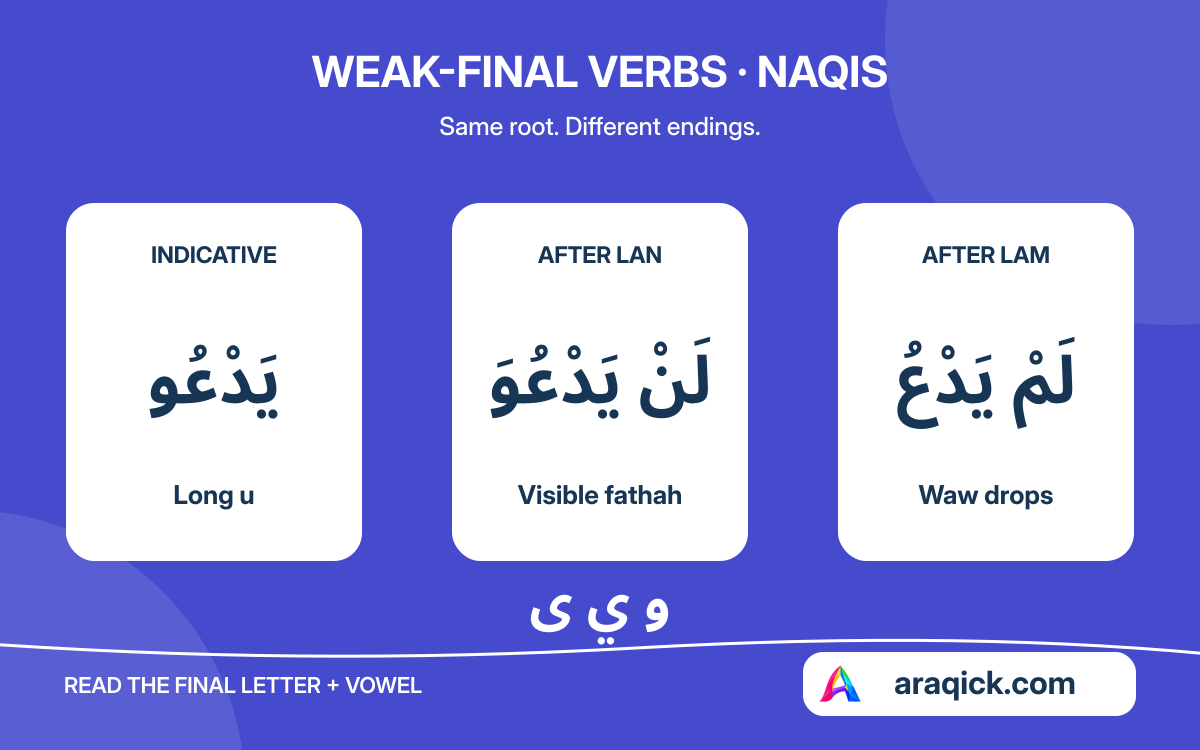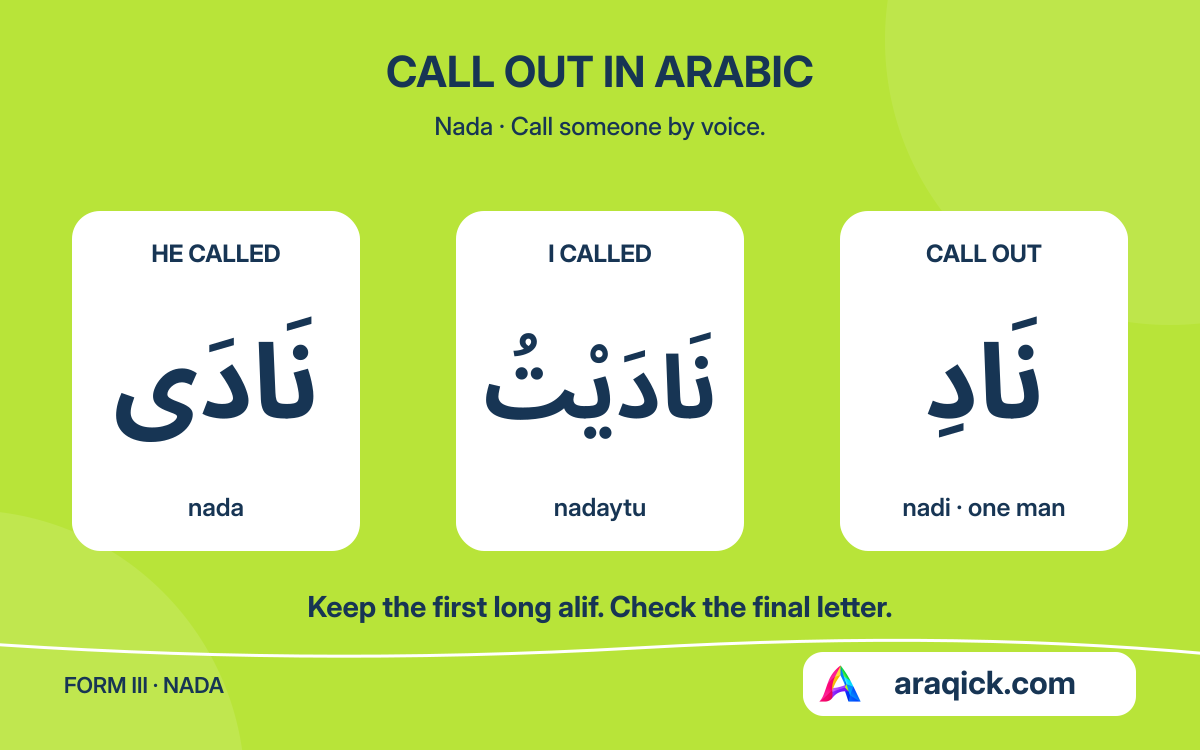
Nada, written نَادَى, means he called out to someone or called someone by voice. It is a Form III verb traditionally listed under the root ن د و. The long a after n stays in its main forms, while the final weak letter changes with the ending.
01Identify the person being called
نَادَى الْحَارِسُ السَّائِقَ
nada alharisu assaiqa
The guard called out to the driver.
Alharisu is the subject doing the calling. Assaiqa is the direct object, the person being called. English adds out to in this translation, but the Arabic example does not need an extra preposition before the driver.
This use of nada concerns calling by voice. For making a telephone call, Arabic commonly uses اِتَّصَلَ بِـ. Choosing a verb from the situation is more reliable than translating the English word call in isolation.
02Notice the y in I called
نَادَيْتُ الْمُعَلِّمَ
nadaytu almuallima
I called out to the teacher.
Nadaytu has y before the past ending tu. It does not keep the final alif maqsurah of nada unchanged. We called is نَادَيْنَا; she called is نَادَتْ.
The visible y in nadaytu does not mean the dictionary root must end in y. The traditional root entry is ن د و, and the derived weak-verb pattern explains the surface forms. Learn the root and the conjugated spelling as related but distinct information.
03Keep u at the beginning of I call
أُنَادِي الْحَارِسَ
unadi alharisa
I am calling out to the guard.
Unadi is the I present form, with initial u and final long i. He calls is يُنَادِي; we call is نُنَادِي. These are active Form III forms, even though their prefixes carry u.
A male or mixed group uses يُنَادُونَ. The final weak letter does not stay identical across the chart. Compare the Form III overview with defective verbs to see the two patterns working together.
04Call someone with a short instruction
نَادِ الْحَارِسَ مِنْ فَضْلِكَ
nadi alharisa min fadlika
Call the guard, please. — to one man
The command to one man is nadi, written نَادِ with a short final kasrah and no final ya. One woman hears نَادِي, with long i; a male or mixed group hears نَادُوا.
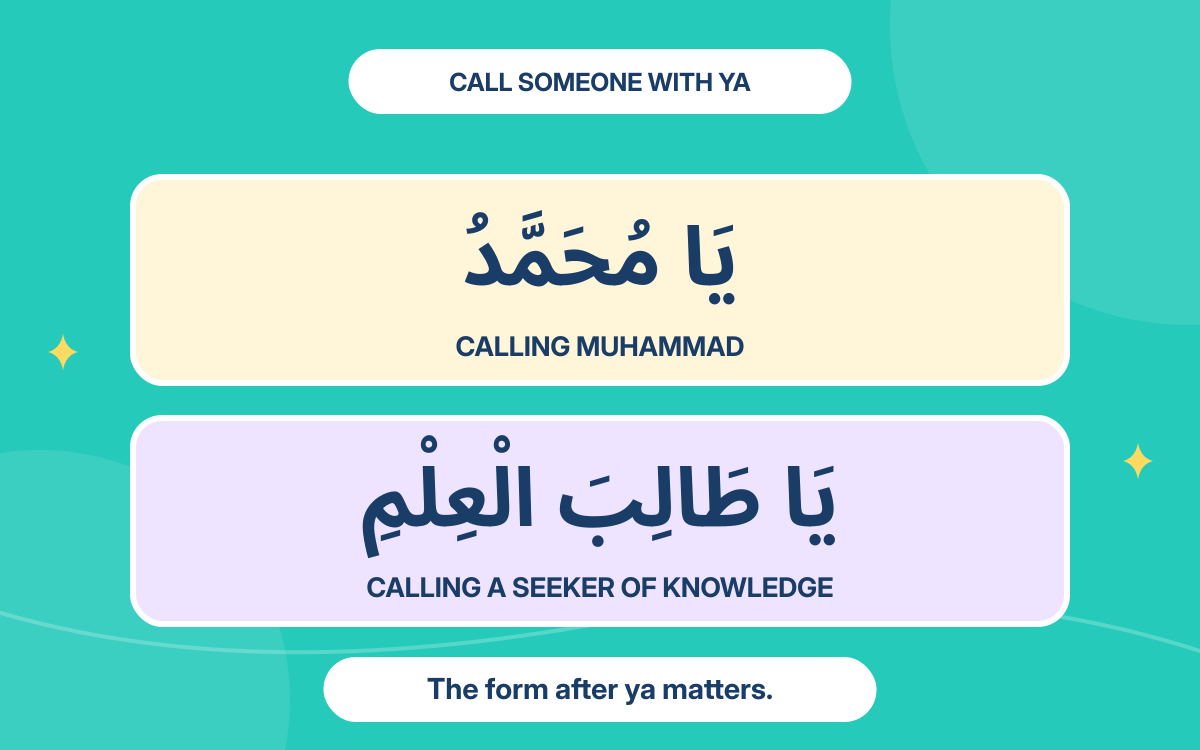
Keep the earlier long alif after n in every one of these commands. Only the final part changes here. Calling someone with the vocative ya is a different construction from using nada as a conjugated verb.
05Say you did not call anyone
لَمْ أُنَادِ أَحَدًا
lam unadi ahadan
I did not call out to anyone.
Lam makes unadi jussive, removing the final ya while leaving a short kasrah. Ahadan means anyone in this negative context and is the object. The I prefix and the earlier long alif remain.
The action nouns مُنَادَاةٌ and نِدَاءٌ can name calling. Do not use them as person-marked verbs. The charts show the spelling distinctions that simplified plain-letter reading aids may leave unclear.
What to remember
- Nada describes calling someone by voice and can take a direct object.
- Nadaytu is I called; unadi is I call.
- The final ya drops in lam unadi and nadi addressed to one man.
Your reference shelf
Open a guide whenever you need it.
Call out: past and presentComplete person forms; the present column is indicative
| Person | Past | Present |
|---|---|---|
| He | نَادَى | يُنَادِي |
| They: two men | نَادَيَا | يُنَادِيَانِ |
| They: male or mixed group | نَادَوْا | يُنَادُونَ |
| She | نَادَتْ | تُنَادِي |
| They: two women | نَادَتَا | تُنَادِيَانِ |
| They: female group | نَادَيْنَ | يُنَادِينَ |
| You: one man | نَادَيْتَ | تُنَادِي |
| You: two people | نَادَيْتُمَا | تُنَادِيَانِ |
| You: male or mixed group | نَادَيْتُمْ | تُنَادُونَ |
| You: one woman | نَادَيْتِ | تُنَادِينَ |
| You: female group | نَادَيْتُنَّ | تُنَادِينَ |
| I | نَادَيْتُ | أُنَادِي |
| We | نَادَيْنَا | نُنَادِي |
The dual you form serves two listeners of either gender. The present column gives ordinary indicative forms; mood particles can change the endings. The you feminine singular and you feminine plural indicative forms look alike here. Their nun has a different grammatical role: the singular indicative nun drops in the subjunctive or jussive, while the feminine-plural subject nun remains.
Call out: commands and word familyChoose the listener, then distinguish verbs from nouns
| Use | Arabic | Meaning |
|---|---|---|
| One man | نَادِ | Command: call out |
| One woman | نَادِي | Command: call out |
| Two people | نَادِيَا | Command: call out |
| Male or mixed group | نَادُوا | Command: call out |
| Female group | نَادِينَ | Command: call out |
| Action noun | مُنَادَاةٌ | calling out |
| Related action noun | نِدَاءٌ | a call; calling |
The dual command serves two listeners of either gender. A final alif after group waw is silent. Noun endings shown here are nominative; their case can change in a sentence.
Sources & further learning
References for the language explanations and learning guidance.