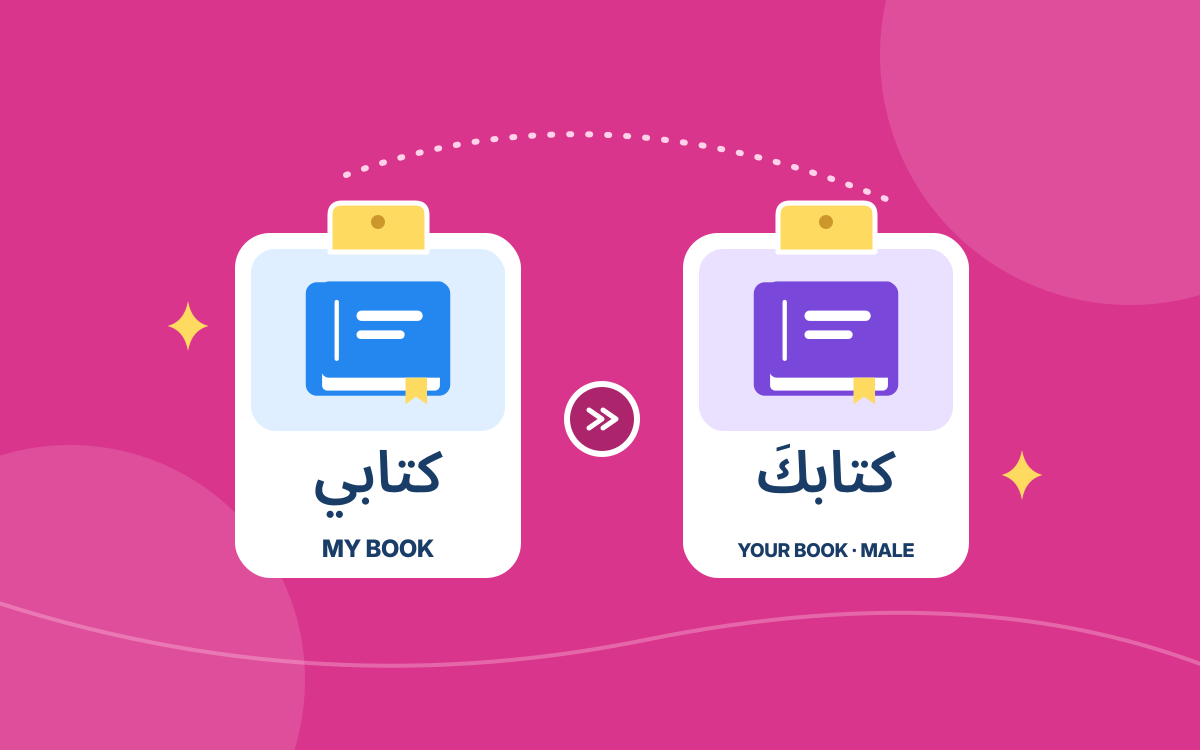
In Arabic, my and your can attach to the end of a noun. Kitab means book; kitabi means my book. For “your,” the ending changes according to the person you are addressing. Learn three useful forms, then try them with a book, a name and a bag.
01Make the book yours
kitab
A book
kitabi
My book
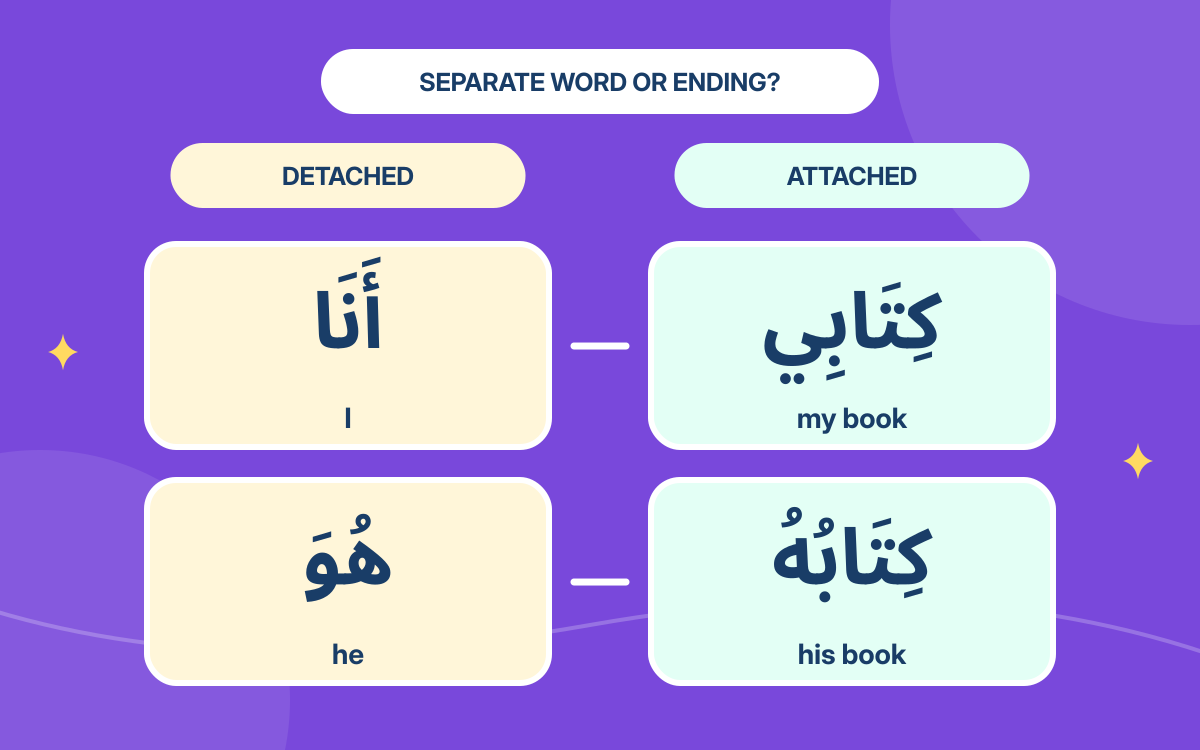
Attach ي to this noun to express “my.” It forms one written word: كِتَابِي. The same my ending works whether the speaker is a man or a woman.
هَذَا كِتَابِي
hadha kitabi
This is my book.
Start with a real object that belongs to you. Point to it and say the whole sentence, rather than treating “my” as a separate word.
02Who are you speaking to?
hadha kitabuka
This is your book.
hadha kitabuki
This is your book.
- The ending كَ refers to one male addressee.
- The ending كِ refers to one female addressee.
The book has not changed. Choose the ending according to the person you are speaking to, not according to the book or the speaker. The short vowel on the final letter makes the difference.
03Keep the ending attached
Possession already identifies the noun. Do not add the Arabic word for “the,” ال, to kitabi. The useful form is simply كِتَابِي, my book.
قَلَمِي — qalami — my pen
اِسْمِي — ismi — my name
The meaning is broader than owning an object: your name is connected to you, too. In a short introduction, اِسْمِي سَارَة ismi sara means “My name is Sara.” Keep the suffix joined when writing.
04A small change for bag
haqiba
Bag: ends in ة.
حَقِيبَتِيhaqibati
My bag: the ending opens to ت before my.
When a noun ends in taa marbuta, ة, that letter becomes ت before a possessive ending. You hear the t in haqibati.
هَذِهِ حَقِيبَتِي
hadhihi haqibati
This is my bag.
Use hadhihi here because bag is grammatically feminine. This choice concerns the noun; it does not tell you the gender of the bag’s owner.
05Put the pieces together
Check two different things before speaking:
- The noun: book uses hadha; bag uses hadhihi.
- The owner or addressee: my uses the same ending for everyone; singular your distinguishes a man from a woman.
The displayed kitabuka and kitabuki forms fit the “This is your book” sentences above. Arabic case vowels can change elsewhere, so learn complete examples before extending the pattern to every sentence.
Our plain reading aids leave out pronunciation symbols. Use the Arabic spelling and listening practice alongside them, especially to hear the different final vowels in the two forms of your.
What to remember
- Kitabi means my book; the my ending works for any speaker.
- In the model sentence, kitabuka addresses one man and kitabuki addresses one woman.
- A final ة becomes ت before a possessive ending: haqiba becomes haqibati.
Your reference shelf
Open a guide whenever you need it.
My and your at a glanceCompare my and singular your in the model sentences
Read the your forms below after “This is.” They show the case vowels used in that sentence pattern.
| Noun | My | Your: one man | Your: one woman |
|---|---|---|---|
| book | كِتَابِي kitabi | كِتَابُكَ kitabuka | كِتَابُكِ kitabuki |
| pen | قَلَمِي qalami | قَلَمُكَ qalamuka | قَلَمُكِ qalamuki |
| bag | حَقِيبَتِي haqibati | حَقِيبَتُكَ haqibatuka | حَقِيبَتُكِ haqibatuki |
Sources & further learning
References for the language explanations and learning guidance.