Sometimes “The house is beautiful” feels too quiet for your reaction. A standard Arabic exclamation lets you say “How beautiful the house is!” Learn the ma afala pattern with a named noun, then replace that noun with an attached object pronoun.
01Express admiration with a fixed pattern
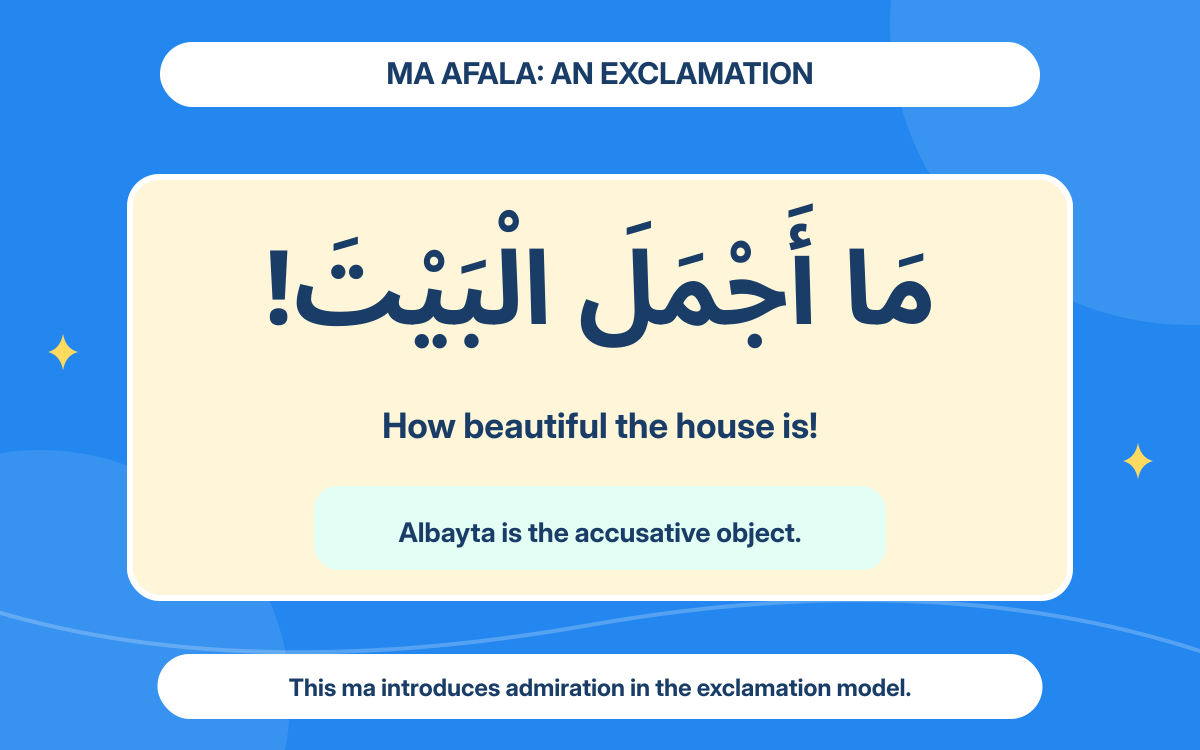
One standard exclamation pattern is مَا أَفْعَلَ, followed by the thing being exclaimed about. Ajmala supplies the meaning beautiful in our model.
مَا أَجْمَلَ الْبَيْتَ!
ma ajmala lbayta
How beautiful the house is!
This expresses admiration rather than requesting information. Ajmala is a fixed, past-shaped exclamatory verb, with final a. The expression can admire a house you are looking at now; the verb shape does not force an English past translation.
02Put the admired noun in accusative case
The noun after the exclamatory verb is its direct object, the thing admired. A regular definite singular noun has final fathah, a, in this accusative position.
مَا أَجْمَلَ السَّيَّارَةَ!
ma ajmala ssayyarata
How beautiful the car is!
Assayyarata is accusative, just as albayta is in the first example. Ajmala keeps the same fixed form for the feminine car: do not turn it into ajmalat. The attached pronoun or object noun identifies what you admire; the verb does not agree with that object’s gender.
03Replace a known noun with an object pronoun
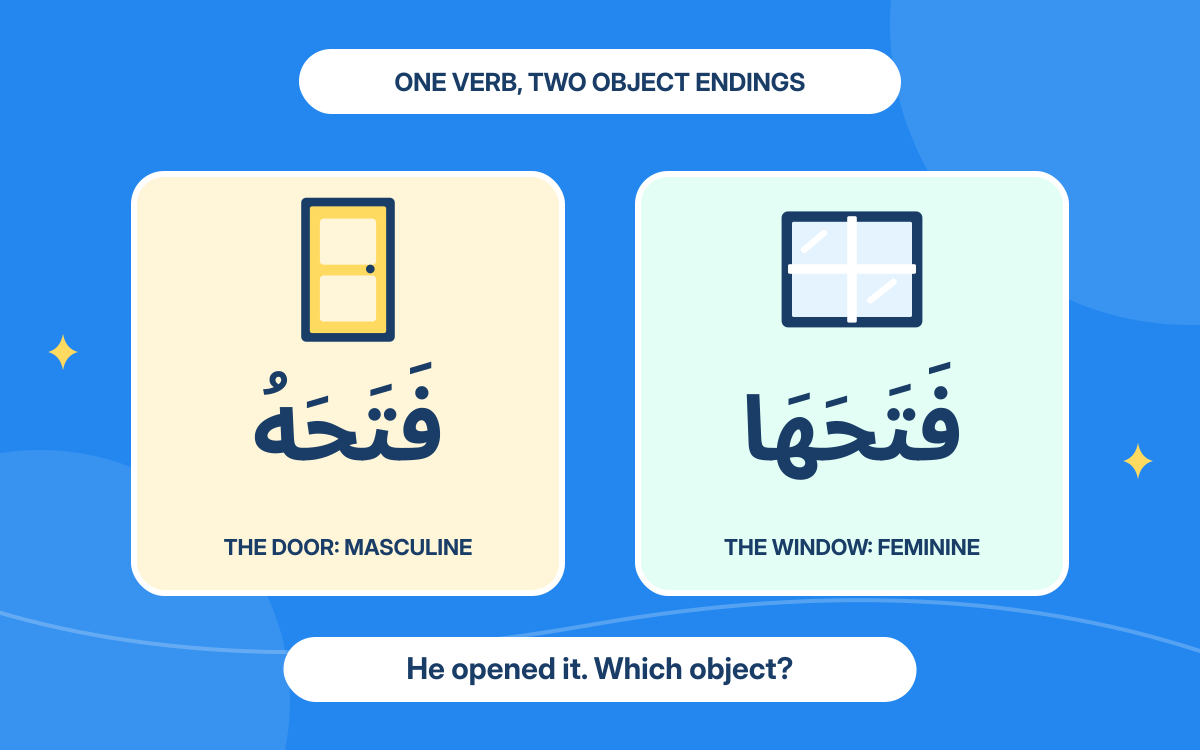
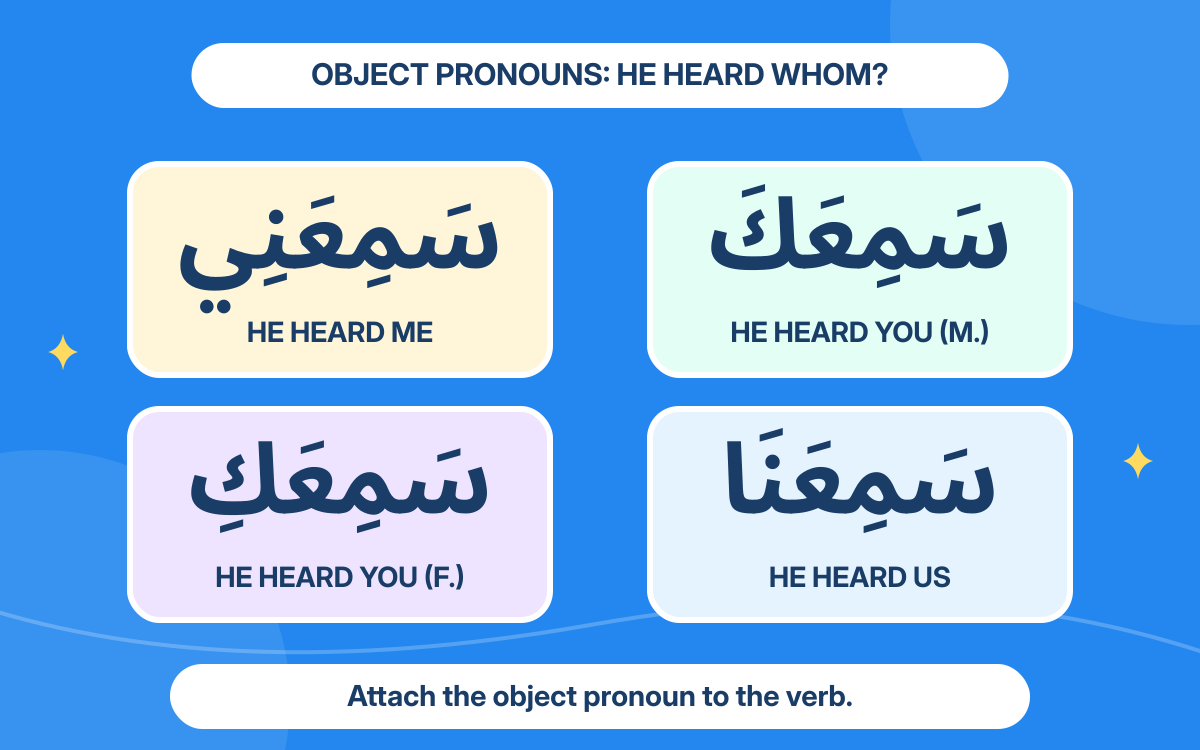
When the house is already known, attach hu instead of repeating its name. For the feminine car, use ha.
مَا أَجْمَلَهُ!
ma ajmalahu
How beautiful it is! — referring to the house
مَا أَجْمَلَهَا!
ma ajmalaha
How beautiful it is! — referring to the car
Hu and ha are attached objects here, not possessors or separate subjects. They occupy an accusative position while keeping their fixed forms. The u in hu does not make it nominative. Select the suffix from the known referent’s grammatical gender.
04Read ma from its construction and context
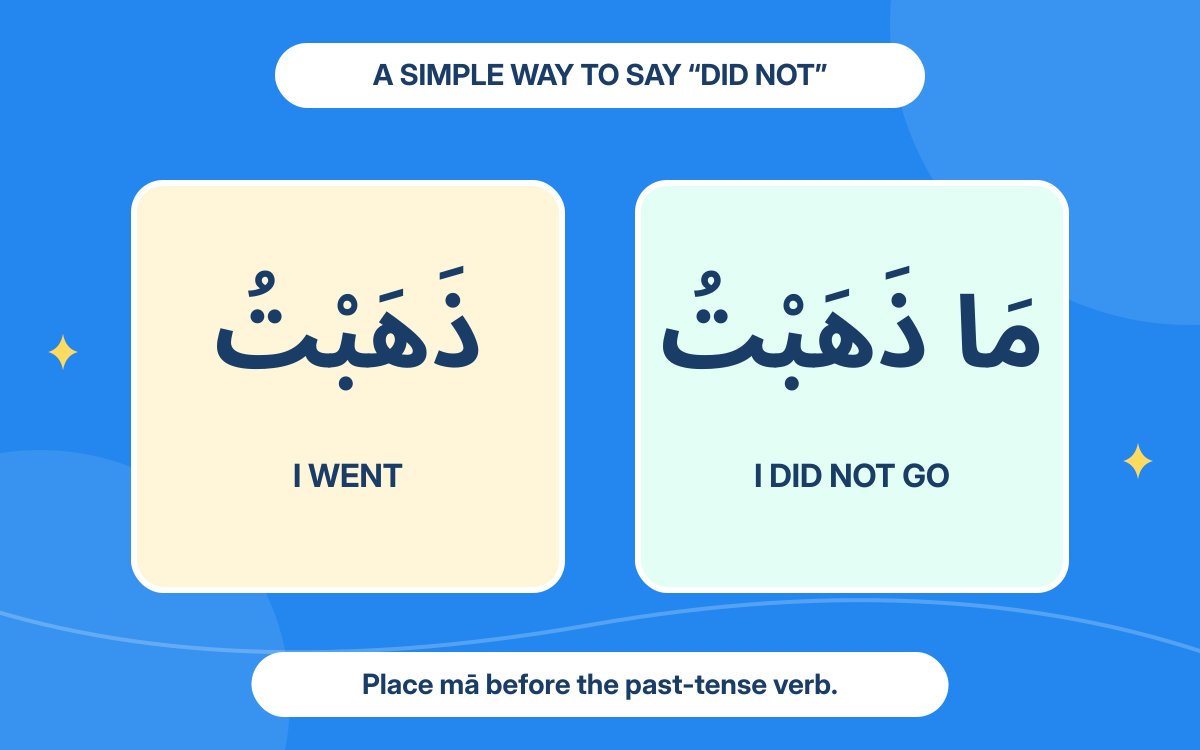
Ma has different jobs in different constructions. مَا هَذَا؟ means What is this? The ordinary negative statement مَا كَتَبْتُ means I did not write.
مَا أَجْمَلَ الْبَيْتَ!
ma ajmala lbayta
How beautiful the house is!
Here the speaker is admiring the house, using the exclamation pattern. Ma is exclamatory. It neither asks What is this? nor denies a writing action. Read the full construction and the situation, rather than translating every ma as what or not.
05Keep the three parts in order
For today’s named-noun model, write ma first, the exclamatory verb ajmala next, and the accusative object last.
مَا أَجْمَلَ الْبَيْتَ!
ma ajmala lbayta
How beautiful the house is!
Ma remains a separate word. An attached object such as hu joins ajmala instead. In connected reading, the article’s starting vowel drops after ajmala: lbayta. Before the sun letter s, the article joins the doubled s: ssayyarata. Our plain aids retain formal endings and simplify vowel length.
What to remember
- Use ma ajmala plus an object to express “How beautiful … is!”
- Keep ajmala fixed and use an accusative noun or attached object pronoun for the admired thing.
- Distinguish exclamatory ma from questioning or negative ma through the complete construction and context.
Your reference shelf
Open a guide whenever you need it.
Review named and attached objectsFour beauty exclamations and the limits of the direct pattern
| Arabic | Reading aid | Meaning |
|---|---|---|
| مَا أَجْمَلَ الْبَيْتَ! | ma ajmala lbayta | How beautiful the house is! |
| مَا أَجْمَلَ السَّيَّارَةَ! | ma ajmala ssayyarata | How beautiful the car is! |
| مَا أَجْمَلَهُ! | ma ajmalahu | How beautiful it is! — the house |
| مَا أَجْمَلَهَا! | ma ajmalaha | How beautiful it is! — the car |
Traditional parsing treats exclamatory ma as the subject of a nominal sentence, with the following verb clause as its predicate. The fixed past-shaped verb has an understood subject referring to ma; the admired noun or pronoun is its object.
The direct afala pattern has formation conditions. Its underlying verb must meet requirements including being triliteral, fully conjugable, complete, affirmative, active and gradable; it must not have a colour or physical-defect adjective on the afal and fala pattern. Learn established examples rather than turning any adjective into an exclamatory verb.
Arabic also has the standard أَفْعِلْ بِهِ pattern and other ways of expressing astonishment. They have their own constructions. This article practises only ma ajmala, so it does not claim that every Arabic exclamation uses one pattern.
Sources & further learning
References for the language explanations and learning guidance.