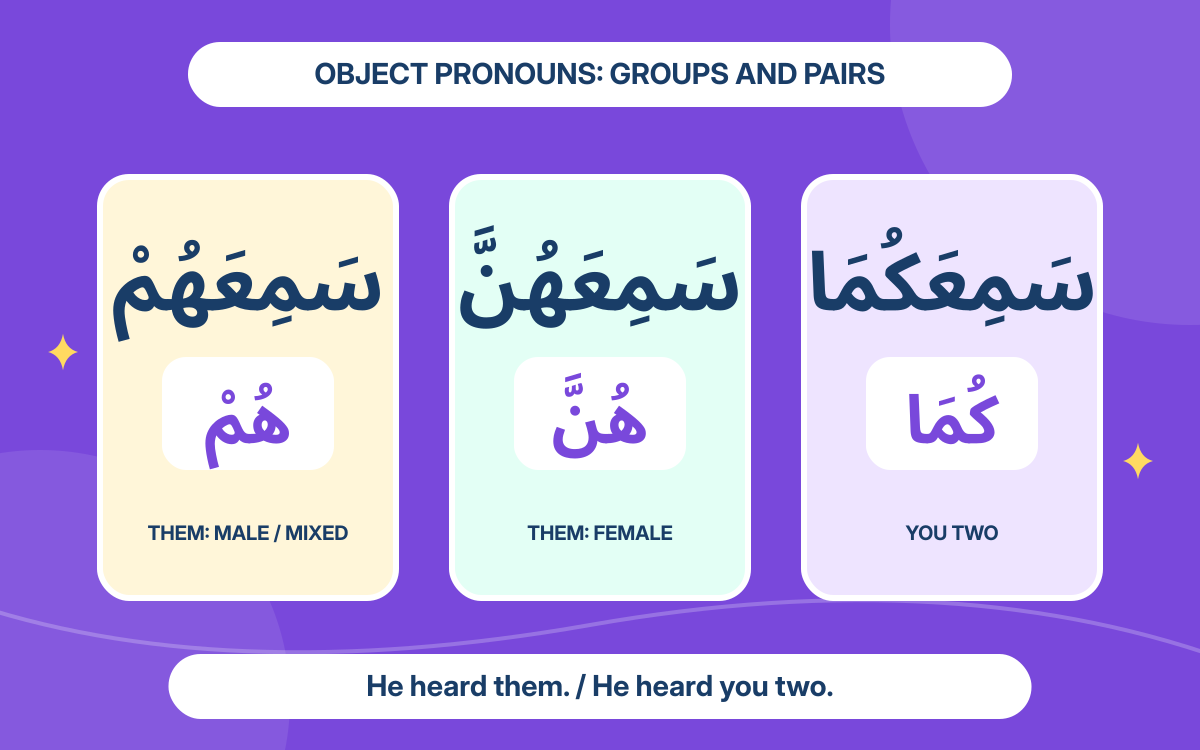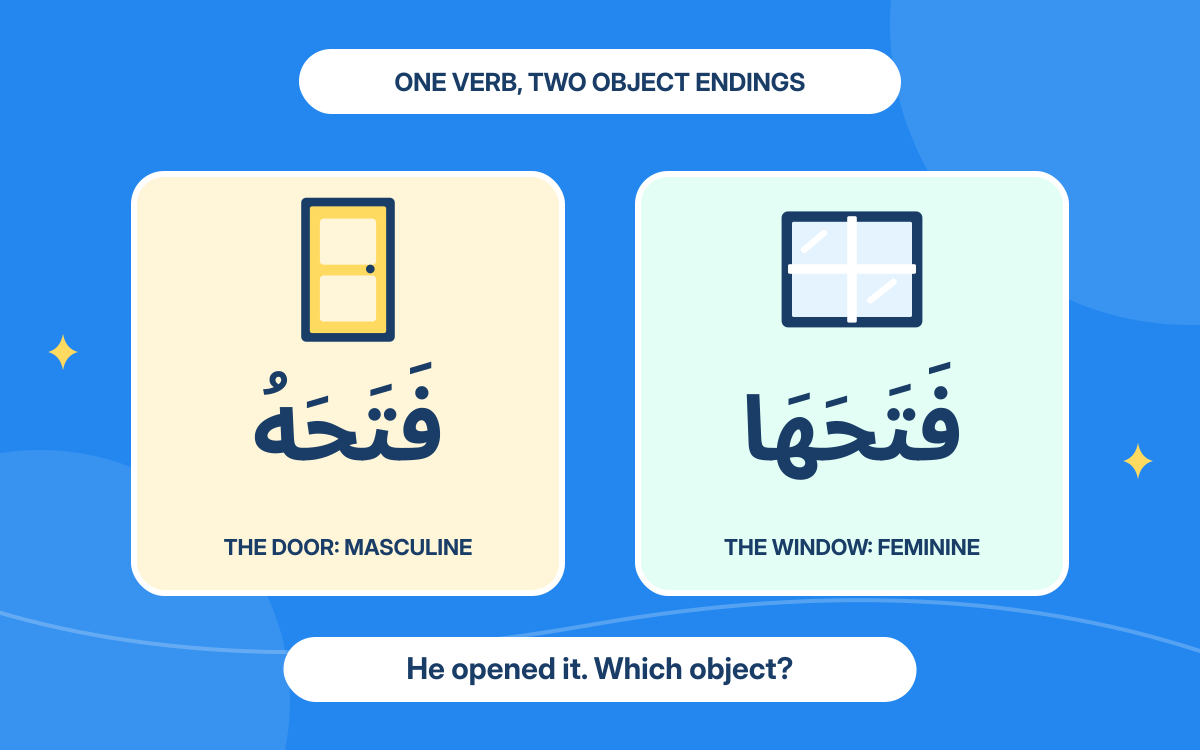
The earlier object-pronoun guide introduced hu and ha. Now use a familiar past verb to say he heard me, you or us. The final object suffix identifies the person heard. Read the verb’s doer separately, especially when na appears.
01Add ni for me
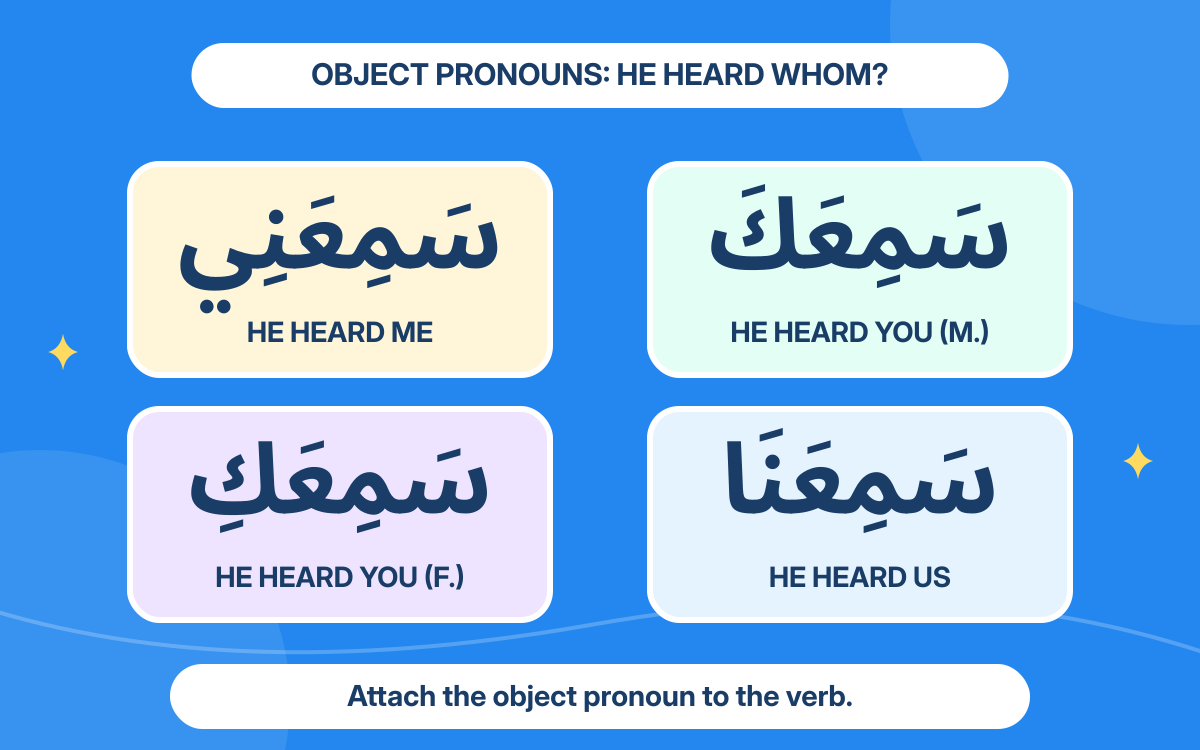
سَمِعَ means he heard. Add ni to make the speaker the person heard. A male or female speaker uses the same me form.
سَمِعَنِي
samiani
He heard me.
Before the first-person ya on a verb, Arabic inserts نُونُ الْوِقَايَةِ, protective nun. The ya means me; the nun carries the kasrah before it and preserves the verb’s ending. Ni here does not mean I did the hearing.
02Choose ka or ki for the person heard
Attach ka for one male object and ki for one female object. The choice follows the person being addressed, not the person doing the hearing.
سَمِعَكَ
samiaka
He heard you. — to one male
سَمِعَكِ
samiaki
He heard you. — to one female
Both examples start with samia, so both have he as the doer. Changing the last vowel from a to i changes the listener who was heard.
03Add na for us
Attach na to samia when the speaker’s group is the object. The us suffix is the same for male, female and mixed groups.
سَمِعَنَا
samiana
He heard us.
The ain keeps its fathah from samia. Na identifies the people heard. The verb still identifies one male as the hearer.
04Distinguish us from we
Na can also be a past subject ending. Compare the marked verb before it: ain has fathah in he heard us and sukun in we heard.
سَمِعَنَا
samiana
He heard us.
سَمِعْنَا
samina
We heard.
In the first word, na receives the action. In the second, na performs it. Identical final letters can have different jobs; read the complete form.
05Keep the doer before adding an object
Start with سَمِعْتُ, I heard. Keep tu for the speaker, then add ka for one male object.
أَنَا سَمِعْتُكَ
ana samituka
I heard you. — to one male
Tu identifies I as the hearer; ka identifies you as the person heard. Ana makes I explicit and can be omitted. Keep both endings attached to the verb as one written word.
What to remember
- Ni means me on these verbs; its nun protects the ending before the first-person ya.
- Ka and ki identify a single male or female object; they do not change who performed the action.
- Samiana is he heard us, while samina with sukun on ain is we heard.
Your reference shelf
Open a guide whenever you need it.
Read the object and the doer separatelyFour object suffixes and two useful subject contrasts
| Arabic | Reading | Meaning |
|---|---|---|
| سَمِعَنِي | samiani | He heard me |
| سَمِعَكَ | samiaka | He heard you: one male |
| سَمِعَكِ | samiaki | He heard you: one female |
| سَمِعَنَا | samiana | He heard us |
| سَمِعْنَا | samina | We heard |
| سَمِعْتُكَ | samituka | I heard you: one male |
An attached object pronoun occupies the direct object’s accusative position. Its spelling remains fixed; the kasrah in ki does not make it genitive. The same pronoun letters can do different jobs when attached to a noun or preposition, so identify the host word before translating.
In ni, the first-person ya is the object pronoun and nun is the protective letter. It is different from a feminine plural subject nun or the mood nun in the five verbs. We use ni here as a convenient reading label for the whole ending.
The first-person me and us forms do not distinguish gender. This guide practises four objects with a regular past verb; plural and dual second- and third-person objects belong to later practice.
Our plain Latin reading aids omit special symbols for ain and do not precisely mark long vowels. The fully marked Arabic distinguishes samiana from samina.
Sources & further learning
References for the language explanations and learning guidance.