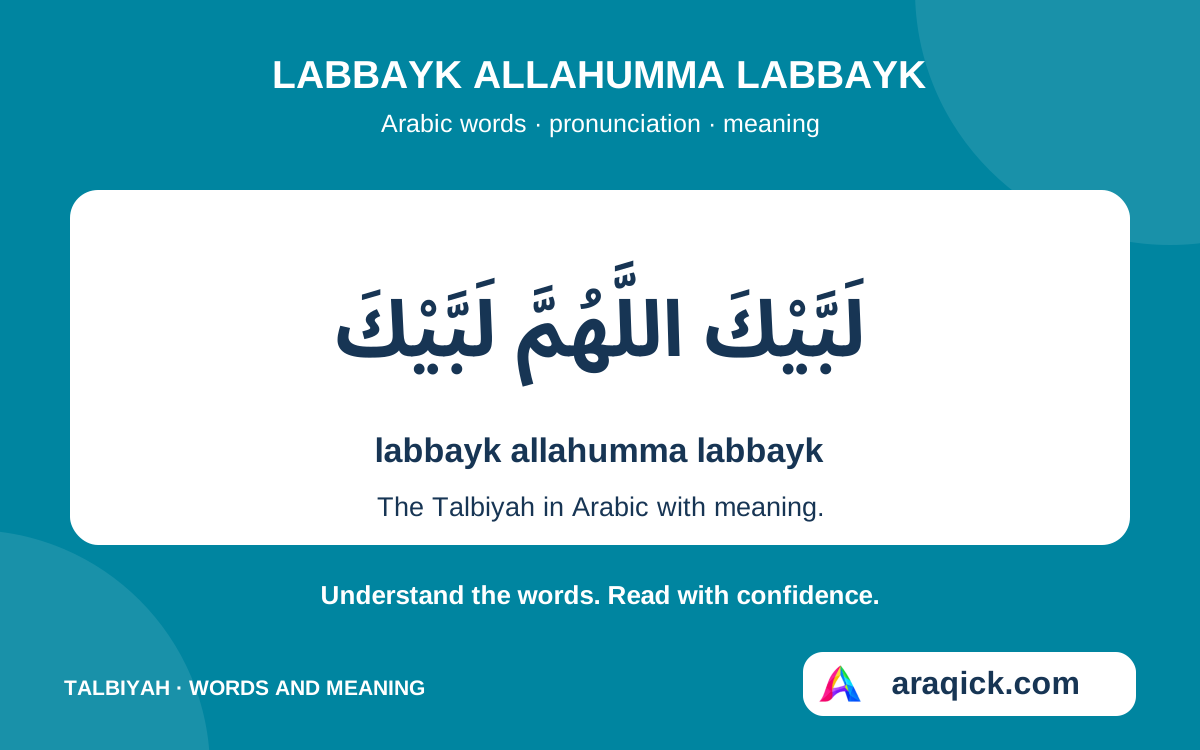
لَبَّيْكَ اللَّهُمَّ لَبَّيْكَ, labbayka-llaahumma labbayk, means “I answer Your call, O Allah; I answer Your call.” These are the opening words of the Talbiyah, a declaration associated with Hajj and Umrah. Its main formula combines a ready response with praise, gratitude and an affirmation that Allah has no partner.
01Talbiyah is the name of this declaration
التَّلْبِيَةُ, at-talbiyah, names the declaration beginning with labbayk. Sahih al-Bukhari 1549 and Sahih Muslim 1184a transmit its main wording from Abdullah ibn Umar as the Prophet’s Talbiyah. The complete formula appears in the first expandable reference below. It is a reported devotional formula, rather than a Quran verse.
The words address Allah directly. They are therefore different from a greeting offered to another pilgrim. Learn the complete message alongside its sound, and connect its setting with our guide to the Arabic names Hajj and Umrah.
02Labbayk and Allahumma express response and address
لَبَّيْكَ, labbayk at a pause, expresses an emphatic response and readiness to serve. “I answer Your call” is a helpful English rendering; a bare “hello” loses that meaning. The repeated word reinforces the response rather than introducing a different person or destination.
اللَّهُمَّ, allaahumma, means “O Allah.” In connected speech the opening becomes labbayka-llaahumma: the short a after k is heard before the next word. Hold the doubled bb in labbayk, and keep its ay sound distinct from a long ee. Transliteration helps you follow the Arabic but cannot replace listening.
03La sharika laka means You have no partner
لَا شَرِيكَ لَكَ, laa shariika lak at a pause, means “You have no partner.” The word شَرِيكٌ, shariik, names a partner or associate. Within this formula its ending is shariika. Do not treat every printed short vowel as a separate syllable to add after a pause.
لَكَ, laka when continued, means “for You” or “to You” according to the phrase. Here the whole expression denies any partner for Allah. The same statement returns at the end, giving the declaration a clear repeated theme rather than a list of different requests.
04Hamd, nimah and mulk carry the central meanings
الْحَمْدَ, al-hamda in this wording, is praise. النِّعْمَةَ, an-ni'mata, refers to favour or blessing. الْمُلْكَ, al-mulka, means sovereignty or dominion. Together the clause attributes praise, favour and sovereignty to Allah. The little word إِنَّ, inna, introduces an emphatic statement.
Keep mulk separate from malik, “king,” and malak, “angel”: similar consonants do not make the words interchangeable. For another Arabic word often translated as blessing, explore barakah and its related forms. English translations may choose different wording while preserving the same central meanings.
05Read connected words as connected speech
The reference divides the formula into four useful learning clauses. Its plain-letter readings join words within each clause and pause at the end. Thus inna-lhamda joins inna to the following definite noun, and wan-ni'mata shows the doubled n heard after wa, “and.” The written definite article changes its sound before n.
Long aa and ii need more length than short a and i. The apostrophe in ni'mah flags ayn, a throat consonant with no direct English equivalent. At the end of the third clause, walmulk is a paused reading of وَالْمُلْكَ; its final short a returns when continuing.
06Learn the meaning without adding unsupported promises
Practise one clause at a time: identify its Arabic words, recall the meaning, then connect it to the next clause. Next, cover the English column and explain the message in your own words. The six questions test vocabulary and understanding, rather than speed or a prescribed number of repetitions.
Muslim’s report also records additional words used by Ibn Umar; it distinguishes them from the main wording attributed to the Prophet. The reference here keeps that main formula together. Questions about practical ritual timing belong with your pilgrimage instruction. For related intention vocabulary, see niyyah in Arabic.
What to remember
- Labbayk expresses a ready response; Allahumma means O Allah.
- The main formula affirms no partner for Allah and attributes praise, favour and sovereignty to Him.
- Read connected words together and use the source attribution to distinguish the main formula from reported additions.
Your reference shelf
Open a guide whenever you need it.
The complete main Talbiyah: Arabic, reading and meaningThe complete main wording recorded in Sahih al-Bukhari 1549 and Sahih Muslim 1184a, divided into four clauses. English meanings are our own rendering; readings pause at each row’s end.
| Arabic | Plain-letter reading | English meaning |
|---|---|---|
| لَبَّيْكَ اللَّهُمَّ لَبَّيْكَ | labbayka-llaahumma labbayk | I answer Your call, O Allah; I answer Your call. |
| لَبَّيْكَ لَا شَرِيكَ لَكَ لَبَّيْكَ | labbayka laa shariika laka labbayk | I answer Your call. You have no partner. I answer Your call. |
| إِنَّ الْحَمْدَ وَالنِّعْمَةَ لَكَ وَالْمُلْكَ | inna-lhamda wan-ni'mata laka walmulk | Indeed, praise and favour belong to You, and sovereignty belongs to You. |
| لَا شَرِيكَ لَكَ | laa shariika lak | You have no partner. |
Key words in their formula formsThese are the forms used within the declaration, rather than a claim that every noun always has this ending.
| Arabic form | Reading in context | Meaning or function |
|---|---|---|
| لَبَّيْكَ | labbayka; labbayk at a pause | A ready response: I answer Your call |
| اللَّهُمَّ | allaahumma | O Allah |
| لَا | laa | No; not, in the relevant construction |
| شَرِيكَ | shariika | Partner; form used after la here |
| لَكَ | laka; lak at a pause | For You; to You |
| إِنَّ | inna | Indeed; introduces emphasis |
| الْحَمْدَ | al-hamda | Praise |
| النِّعْمَةَ | an-ni'mata | Favour; blessing |
| الْمُلْكَ | al-mulka; al-mulk at a pause | Sovereignty; dominion |
Sources & further learning
References for the language explanations and learning guidance.