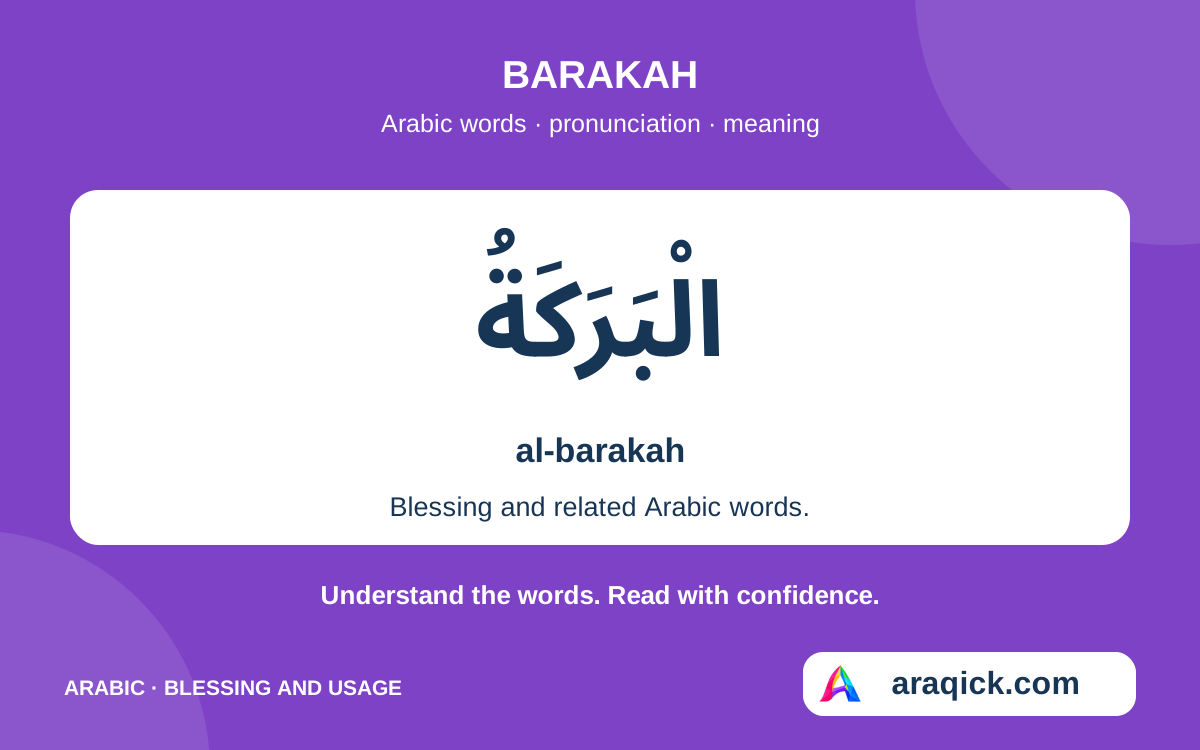
Barakah, بَرَكَةٌ, means blessing. In Islamic usage it refers to blessing from Allah, rather than a measurable amount of money or a promise that every task will succeed. The related adjective mubarak means blessed, while barakat is a plural meaning blessings. These words belong to one Arabic family but perform different jobs in a sentence.
01What does barakah mean?
“Blessing” is a useful starting translation. A speaker may discuss blessing in time, food, knowledge or family life. The surrounding words explain what is being described. Barakah is not a special Arabic unit for measuring how much someone owns, and describing something as blessed does not tell us its price or size.
For example, بَرَكَةٌ فِي الْوَقْتِ means “blessing in time.” This is a vocabulary phrase, not a quotation or a calculation. Learn the noun together with its context, rather than replacing every occurrence with “extra money.” The related idea of provision is explored in our rizq guide.
02Read barakah with three short vowels
The spelling is baa, raa, kaaf and taa marbutah: بَرَكَة. Say ba-ra-kah at a pause, keeping the three a vowels short. The final h in this plain-letter guide represents the usual paused reading of taa marbutah; it is not an extra Arabic letter added to the spelling.
In fully connected grammar, بَرَكَةٌ can be read barakatun. The t becomes audible and the ending reflects the noun’s grammatical role. Contrast بِرْكَةٌ, birkah, meaning a pool. Its first vowel and consonant grouping differ. Accurate vowel marks can distinguish words even when their unvowelled outlines look identical.
03Barakat, baraka and mubarak are different forms
The root letters are ب ر ك. بَرَكَاتٌ, barakaat at a pause, is the plural “blessings.” بَارَكَ, baaraka, is a verb meaning “he blessed.” مُبَارَكٌ, mubaarak, is a form meaning “blessed.” Notice the long aa in the verb and adjective, unlike the short vowels in barakah.
A shared root connects these forms without making them interchangeable. When reading a sentence, first ask whether the word names a blessing, describes something as blessed, or expresses an action. Our Arabic roots guide explains how patterns add information to root letters.
04Notice the form used in a Quranic passage
Quran 7:96 uses the plural barakat in a passage concerning the communities addressed there, faith and mindfulness of Allah. Quran 19:31 uses mubarak when Jesus speaks about being made blessed. These examples show a plural noun and a descriptive form in different settings.
Read the complete passage and its explanation before drawing broader conclusions. The lexical meaning “blessing” does not turn either verse into a numerical formula for income. A translation helps identify the meaning, while tafsir explains a passage in more detail; our translation and tafsir comparison keeps those tasks distinct.
05Let mubarak agree with its noun
An original practice phrase is يَوْمٌ مُبَارَكٌ, yawmun mubaarak at a pause: “a blessed day.” For a feminine noun, compare لَيْلَةٌ مُبَارَكَةٌ, laylatun mubaarakah: “a blessed night.” The adjective changes to match the noun’s gender. These examples illustrate grammar; they do not designate a particular date.
In English writing, Mubarak may also appear as a personal name. Decide from context whether you are reading a name or an adjective. The phrase’s meaning depends on its words and setting, not simply on recognising one familiar spelling. See Arabic adjectives for more agreement examples.
06Keep meaning, form and context together
Make a three-column note: the Arabic word, its grammatical job and its meaning in the sentence. Put barakah under “noun,” barakat under “plural noun” and mubarak under “describing word.” Then read a short example aloud. This approach builds recognition without relying entirely on an English spelling.
Finally, separate vocabulary learning from claims about results. Knowing the word barakah does not establish a fixed recitation count, guarantee wealth or make one greeting compulsory. A sound explanation can describe what the Arabic says while allowing the source and context to determine any further religious interpretation.
What to remember
- Barakah means blessing; barakat means blessings, and mubarak means blessed.
- Barakah has short a vowels, while baaraka and mubaarak contain a long aa.
- Context and grammatical form matter; the word itself does not promise a measurable worldly result.
Your reference shelf
Open a guide whenever you need it.
Barakah word familyNouns use pause readings unless another word follows; the verb retains its dictionary-form ending.
| Arabic | Plain-letter reading | Form and meaning |
|---|---|---|
| بَرَكَةٌ | barakah | Singular noun: blessing |
| بَرَكَاتٌ | barakaat | Plural noun: blessings |
| بَارَكَ | baaraka | Past-tense verb: he blessed |
| مُبَارَكٌ | mubaarak | Masculine descriptive form: blessed |
| مُبَارَكَةٌ | mubaarakah | Feminine descriptive form: blessed |
| بِرْكَةٌ | birkah | A different noun: pool |
Context and agreement referenceUse the complete source for Quranic examples. Practice phrases below are language examples, not quotations.
| Example | Meaning or location | What to notice |
|---|---|---|
| Quran 7:96 | Plural blessings in the passage | The verse uses barakat with its own grammatical ending |
| Quran 19:31 | Jesus describes being made blessed | The verse uses mubarak in a sentence-specific form |
| يَوْمٌ مُبَارَكٌ | A blessed day; yawmun mubaarak | Masculine noun and adjective |
| لَيْلَةٌ مُبَارَكَةٌ | A blessed night; laylatun mubaarakah | Feminine noun and adjective |
| بَرَكَةٌ فِي الْوَقْتِ | Blessing in time; barakatun fil-waqt | The prepositional phrase supplies the context |
Sources & further learning
References for the language explanations and learning guidance.