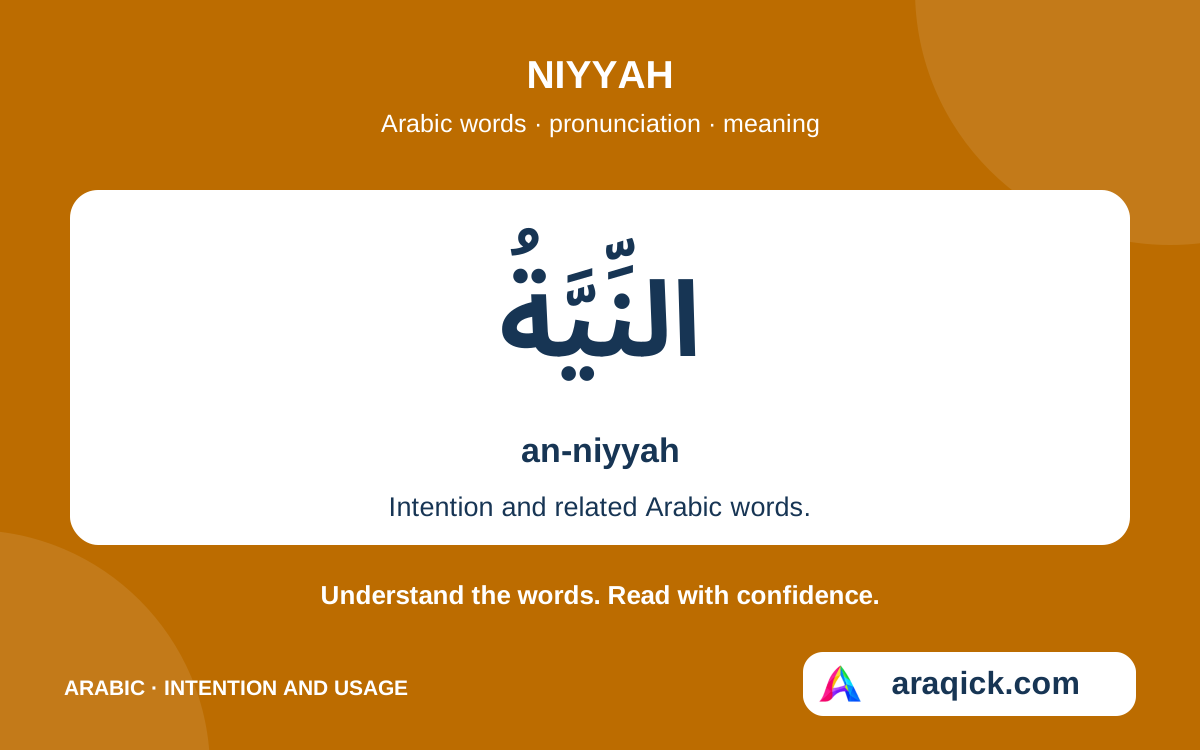
Niyyah, نِيَّةٌ, means intention: what someone means or purposes to do. In Islamic discussion it concerns the intention behind an action. The noun is related to nawa, “he intended,” and nawaytu, “I intended.” Understanding these forms helps you read the familiar hadith about intentions without treating the word as the name of one fixed spoken sentence.
01Niyyah names the purpose behind an action
An intention answers “What am I setting out to do?” or “For what purpose?” Two outwardly similar actions can have different purposes. Someone might travel to visit family, study or work. The journey alone does not state the intention behind it; additional information is needed.
Niyyah therefore describes meaning and purpose, rather than the physical action itself. In religious writing, a passage may connect that purpose to worship and accountability. In ordinary Arabic, the same noun can describe everyday plans. Start with “intention,” then let the sentence explain whose intention is meant and what it concerns.
02Hold the doubled y in niyyah
The Arabic letters are noon, yaa and taa marbutah. The shaddah on yaa in نِيَّةٌ marks a doubled consonant. A useful paused reading is niy-yah: the i is short, and the y is held. Do not replace the doubled y with an unrelated long ee vowel.
The final taa marbutah is commonly heard as h at a pause, but its t appears in connected grammatical forms. Thus the fully pronounced standalone nominative form is niyyatun. The common English spellings niyyah and niyah usually point to the same Arabic word, although niyyah makes the doubled y easier to notice.
03Recognise niyyat in the hadith about intentions
Sahih al-Bukhari 1 begins إِنَّمَا الْأَعْمَالُ بِالنِّيَّاتِ. A brief original rendering is “Actions are assessed according to intentions.” The narration then gives an example involving migration and the purpose motivating it. Read the full narration to see how its example develops the opening idea.
The word النِّيَّاتِ is a plural form with the definite article and a sentence-specific ending. Its base plural is نِيَّاتٌ, niyyaat at a pause. The long aa in this plural is audible. Our Arabic plurals guide explains why a plural can look different from its singular.
04Nawa and nawaytu identify different subjects
نَوَى, nawaa, means “he intended.” نَوَيْتُ, nawaytu, means “I intended.” The change is grammatical: nawaytu identifies the speaker as the subject. It is not simply a longer spelling of the noun niyyah. The present-tense form يَنْوِي, yanwii, means “he intends.”
These are useful examples of a verb whose final weak root letter changes appearance across forms. Learn the forms with their meanings rather than guessing the subject from the first letter. The roots and dictionary forms guide gives a broader method for organising related Arabic vocabulary.
05Separate an intention from a sentence describing it
The original practice sentence نَوَيْتُ السَّفَرَ means “I intended to travel.” Read it nawaytu-ssafar at a pause. It describes an intention; learning this sentence does not make it a prescribed formula for travel or worship. A person can intend an action without using this exact wording.
نِيَّتِي, niyyatii, means “my intention,” with a long final ii from the attached “my” ending. This is a noun with a suffix, whereas nawaytu is a verb. Keeping those structures separate helps you understand phrases about intention without turning every occurrence into a command to speak.
06Ask whose intention and what purpose
When you meet the word in a text, identify the person, the action and the stated purpose. Then check whether you are reading the singular noun, a plural or a verb. This gives you a practical reading habit and helps prevent mistakes caused by relying only on roman spelling.
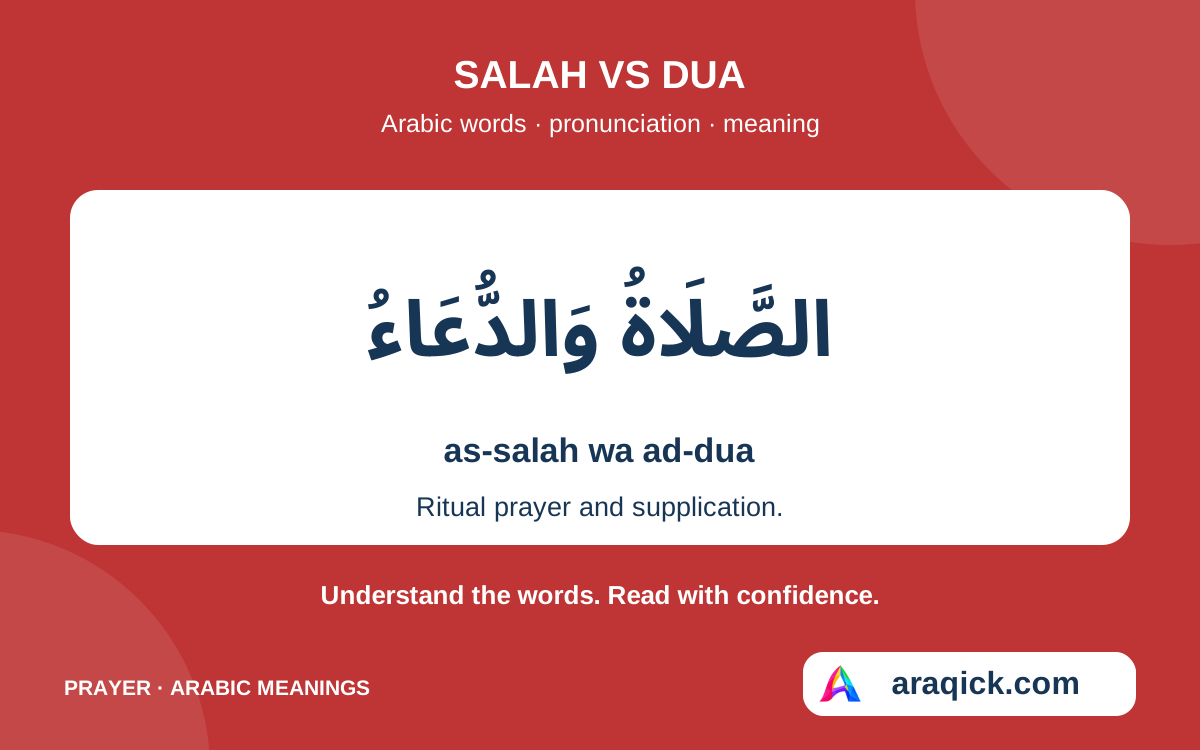
Niyyah, salah and dua also name different ideas: intention, prayer in its relevant context, and supplication. Our salah and dua comparison explains the latter pair. Details about intention in particular acts of worship need their own sources; the dictionary meaning alone does not establish one universal verbal script.
What to remember
- Niyyah means intention; its shaddah marks a doubled y, not a long initial vowel.
- Niyyat means intentions, nawa means he intended, and nawaytu means I intended.
- A sentence describing an intention is not automatically a fixed religious formula.
Your reference shelf
Open a guide whenever you need it.
Intention: nouns and verbsRead the meanings and grammatical roles together. Long vowels are written aa or ii.
| Arabic | Plain-letter reading | Meaning and role |
|---|---|---|
| نِيَّةٌ | niyyah | Intention; singular noun, paused reading |
| نِيَّاتٌ | niyyaat | Intentions; plural noun, paused reading |
| نِيَّتِي | niyyatii | My intention; noun with a suffix |
| نَوَى | nawaa | He intended; past-tense verb |
| نَوَيْتُ | nawaytu | I intended; past-tense verb |
| يَنْوِي | yanwii | He intends; present-tense verb |
Read form and function in contextThe first row identifies a sourced hadith expression; the remaining rows are original language examples.
| Arabic or example | Reading | Meaning or reading task |
|---|---|---|
| بِالنِّيَّاتِ | bin-niyyaat at a pause | According to intentions; the form occurs in Bukhari 1 |
| نَوَيْتُ السَّفَرَ | nawaytu-ssafar at a pause | I intended to travel; a practice sentence |
| نِيَّةٌ حَسَنَةٌ | niyyatun hasanah at a pause | A good intention; noun and agreeing adjective |
| نِيَّتِي حَسَنَةٌ | niyyatii hasanah at a pause | My intention is good; a nominal sentence |
| Singular, plural or verb? | Identify the grammatical form first | A noun names an intention; a verb says who intends or intended |
Sources & further learning
References for the language explanations and learning guidance.