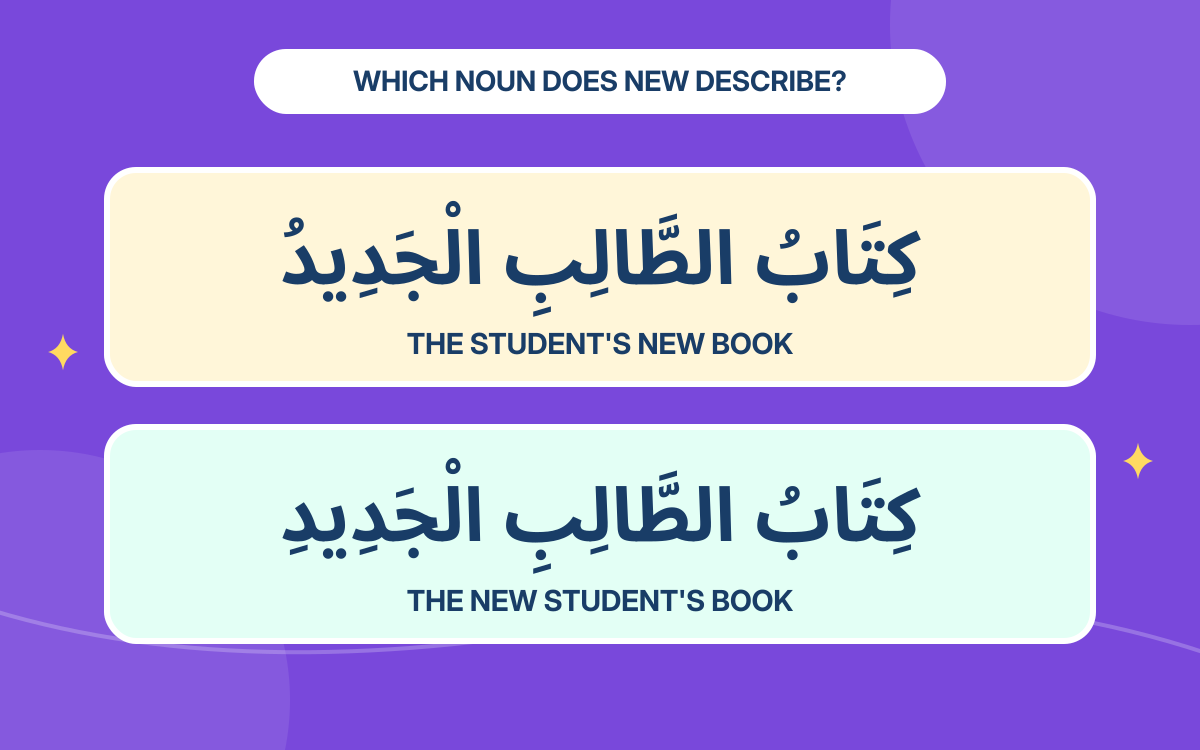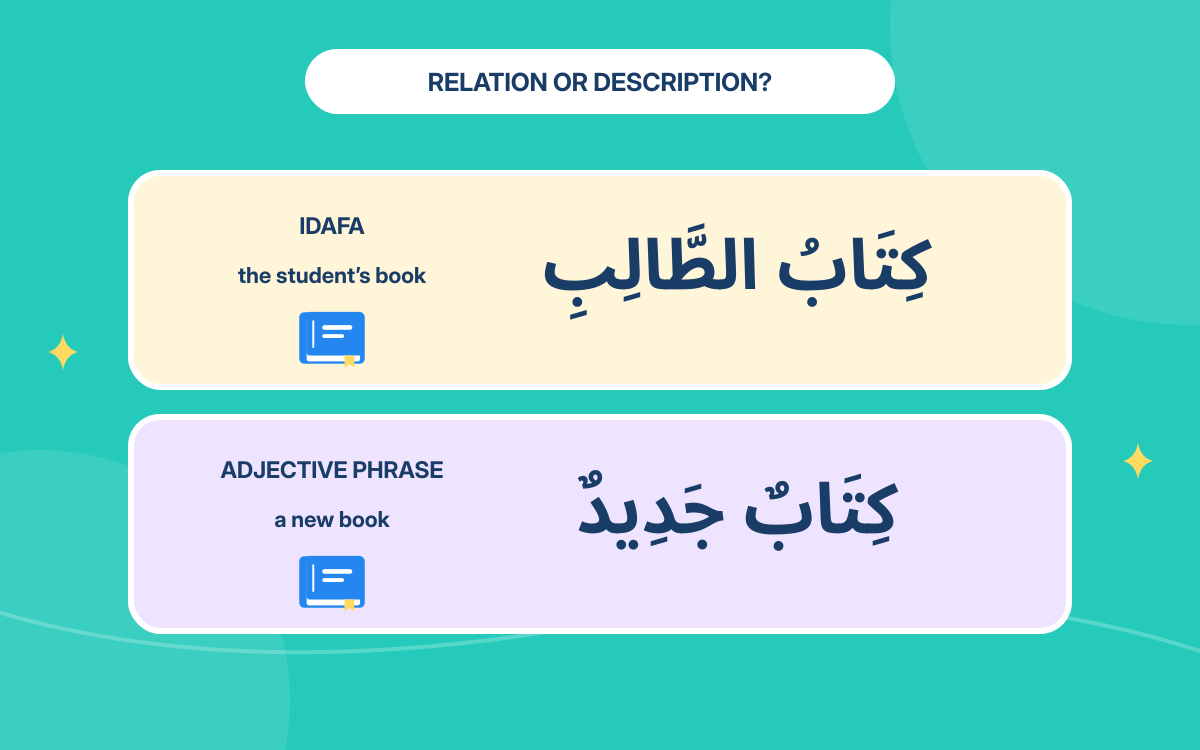
Two Arabic words beside each other can do different jobs. “The student’s book” links a book with a student; “a new book” describes the book. Both are useful noun phrases, but their grammar differs. Start by deciding what the second word contributes.
01Ask relationship or description?
كِتَابُ الطَّالِبِ
kitabu ttalibi
The student’s book
كِتَابٌ جَدِيدٌ
kitabun jadidun
A new book
The first phrase is idafa: the second noun identifies whose book. In the second, jadidun gives a quality of the book. It is an adjective. These examples use nominative forms, with full endings retained so you can compare their structures.
02Recognise the idafa pattern
بَابُ الْبَيْتِ
babu lbayti
The door of the house
An idafa joins nouns in a relationship. Babu names a door, while albayti names the house it belongs to. The second word does not mean that the door is “house shaped” or describe its age or colour.
In this basic pattern, the first noun has neither ال nor tanween. The second is genitive. Its definiteness makes this whole phrase definite. The first noun’s case comes from its surrounding sentence, so babu can become baba or babi elsewhere.
03Recognise the adjective pattern
بَابٌ جَدِيدٌ
babun jadidun
A new door
الْبَابُ الْجَدِيدُ
albabu ljadidu
The new door
Jadidun describes the door as new. In the first example, the noun and adjective are both indefinite and nominative. In the second, both carry ال and have the same nominative case.
For the regular singular patterns here, the adjective follows its noun and agrees with it in gender, number, definiteness and case. Our examples are masculine singular. Learn the wider agreement rules separately; here the useful clue is that the second word describes the first.
04Do not classify by one ending alone
فِي كِتَابِ الطَّالِبِ
fi kitabi ttalibi
In the student’s book
فِي كِتَابٍ جَدِيدٍ
fi kitabin jadidin
In a new book
Both examples contain genitive words, but only the first contains idafa. There, fi governs kitabi, and attalibi is genitive as the second idafa noun. In the second, jadidin is genitive because it agrees with kitabin.
The matching i sounds do not decide the structure. Check the meanings and the forms together. One phrase relates the book to the student; the other gives information about the book’s age.
05Choose the meaning, then build the phrase
If you mean “the student’s book,” identify the student with the second noun and leave ال and tanween off the first. If you mean “a new book,” use a describing adjective and make the two words agree.
Try covering the English translations. Ask whether the second word names a related person or thing, or gives a quality of the first noun. Then uncover the translations and check your decision. This avoids relying only on whether you can see ال.
Full endings make these examples easier to analyse. At a pause, the final short vowel or un or in ending is normally dropped; the underlying structure stays the same. Our plain reading labels are aids, not exact representations of every Arabic sound.
What to remember
- Idafa links nouns in a relationship; an adjective gives a quality of its noun.
- The first noun of a basic idafa has no ال or tanween; a describing adjective agrees with its noun.
- Shared genitive endings do not prove idafa: inspect meaning and structure together.
Your reference shelf
Open a guide whenever you need it.
Four phrases to compare side by sideReview relationships and descriptions without changing the central book
| Arabic | Meaning | Structure |
|---|---|---|
| كِتَابُ الطَّالِبِ | The student’s book | Definite idafa |
| كِتَابُ طَالِبٍ | A student’s book | Indefinite idafa |
| كِتَابٌ جَدِيدٌ | A new book | Indefinite noun and adjective |
| الْكِتَابُ الْجَدِيدُ | The new book | Definite noun and adjective |
Why is ال alone insufficient?
The first noun of an idafa does not carry ال even when the whole phrase is definite. An indefinite idafa is possible too. Read what the second noun means and whether it is definite.
Must the two nouns in idafa match in gender?
No. Their relationship does not require gender agreement. Adjectives describing nouns follow agreement rules; the second noun of an idafa follows its own grammatical form.
Can an idafa also have a description?
Yes, but first keep the basic noun pair together. An adjective can follow the completed pair and agree with the noun it describes. That extended pattern comes after recognising the two simpler structures in this guide.
Sources & further learning
References for the language explanations and learning guidance.