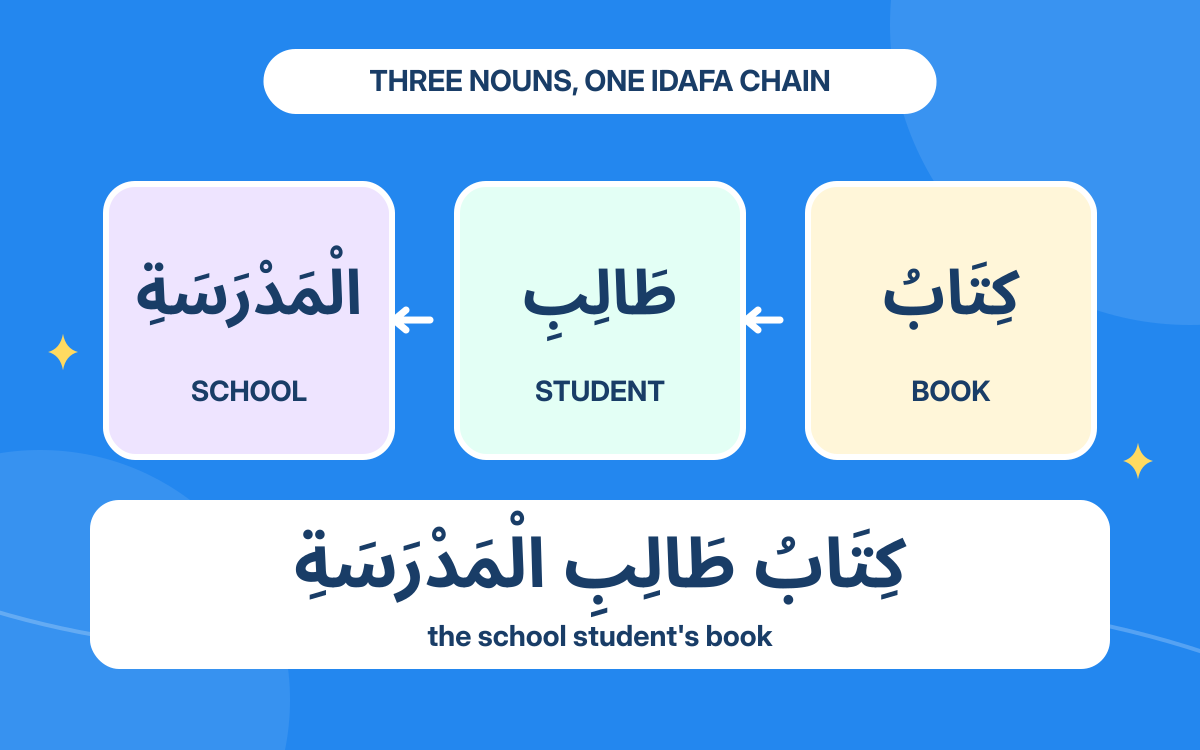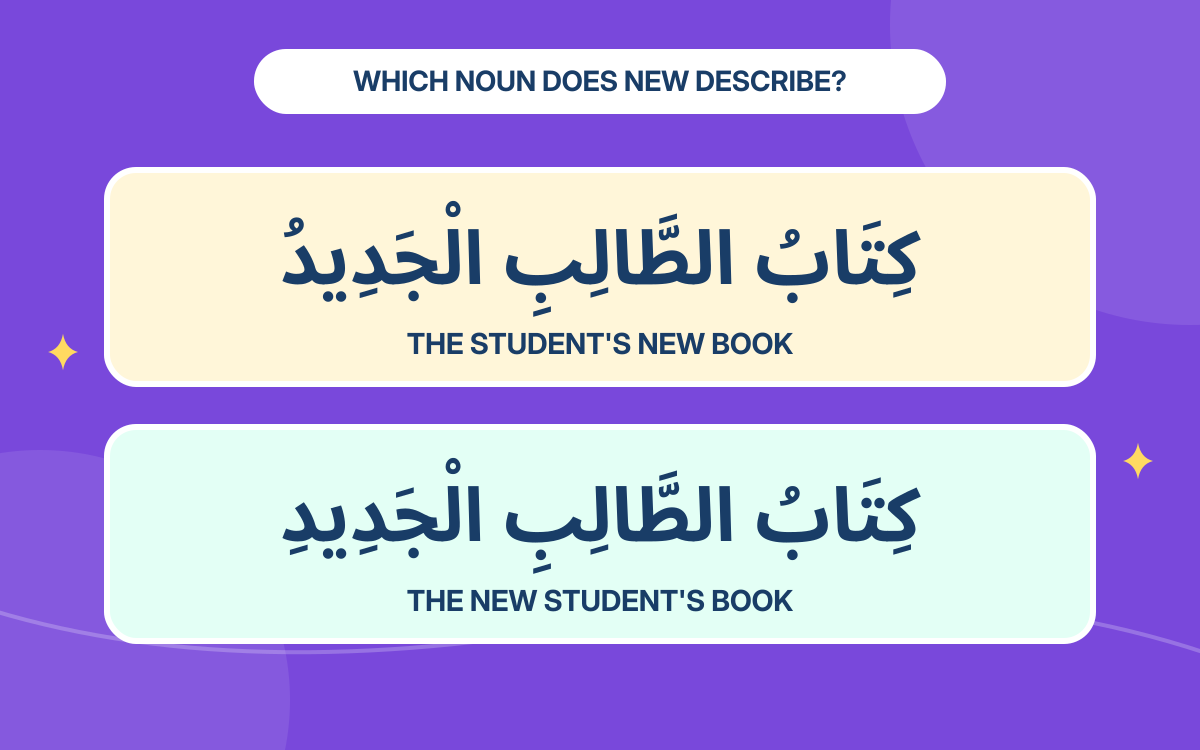
“The student’s new book” and “the new student’s book” describe different things. Arabic can place the adjective after the same two idafa nouns in both phrases. Agreement helps you identify its target, but sometimes the forms match and you need context. Start with clearly marked examples.
01Keep the two idafa nouns together
First build “the student’s book,” then add the adjective after the complete two-noun idafa. Do not insert “new” between kitab and attalib in this basic construction.
كِتَابُ الطَّالِبِ الْجَدِيدُ
kitabu ttalibi ljadidu
The student’s new book
Aljadidu describes the book even though the student noun stands closer to it. An adjective does not automatically describe the nearest noun. Here it matches kitabu in the nominative case.
02Compare the case of each possible target
Change the adjective’s ending and it can describe the student instead. Compare these two fully marked phrases:
كِتَابُ الطَّالِبِ الْجَدِيدُ
kitabu ttalibi ljadidu
The student’s new book
كِتَابُ الطَّالِبِ الْجَدِيدِ
kitabu ttalibi ljadidi
The new student’s book
Aljadidu is nominative like kitabu; aljadidi is genitive like attalibi. Both possible targets are masculine singular and definite, so case distinguishes them here. At a pause, the final short vowel is normally dropped, removing this spoken clue.
03Use gender when the case forms match
A preposition can make both idafa nouns genitive. Then case alone cannot decide which noun the adjective describes. Gender may still provide a clear clue.
فِي حَقِيبَةِ الطَّالِبِ الْجَدِيدَةِ
fi haqibati ttalibi ljadidati
In the student’s new bag
The bag, haqibah, is feminine; the male student, talib, is masculine. Aljadidati is feminine and genitive, so it describes the bag. For “in the new student’s bag,” use the masculine الْجَدِيدِ instead. The case remains genitive in both versions.
04Match definiteness, even without ال on the first noun
The adjective matches its target’s definiteness. A book identified through the student is definite even though kitab itself has no ال. Its describing adjective therefore takes ال.
كِتَابُ طَالِبٍ جَدِيدٌ
kitabu talibin jadidun
A new book belonging to a student
Here the idafa is indefinite because talibin is indefinite. Jadidun describes the nominative book and is also indefinite. Compare this with the definite aljadidu in our first example. Do not treat a mudaf’s missing ال as proof that it is indefinite.
05Recognise when grammar leaves two possibilities
If both nouns match the adjective in gender, number, definiteness and case, the phrase may need context. Fully written vowels do not always settle the meaning.
فِي كِتَابِ الطَّالِبِ الْجَدِيدِ
fi kitabi ttalibi ljadidi
In the student’s new book / In the new student’s book
Both kitab and attalib are masculine singular, definite and genitive here. Either can match aljadidi. Use the surrounding discussion to decide whether the book or the student is new. The plain reading aids simplify Arabic sounds and vowel length; these examples retain connected case endings.
What to remember
- Keep the nouns of a basic idafa together and place the describing adjective after the construction.
- The adjective agrees with the noun it describes, even when that noun is not its nearest neighbour.
- Case helps only when it distinguishes the targets; matching forms may require gender clues or context.
Your reference shelf
Open a guide whenever you need it.
A quick target checkReview four agreement clues and a possessive suffix
- Build the idafa and identify its nouns.
- Decide which noun you intend to describe.
- Match the adjective’s gender, number, definiteness and case to that noun.
- Place the adjective after the basic idafa.
- If another noun has the same features, provide enough context for a clear meaning.
A noun with a possessive suffix
بَيْتُهُ الْجَدِيدُ
baytuhu ljadidu
His new house
The pronoun suffix identifies the house, making it definite. Its adjective therefore takes ال and matches the house’s nominative case. The same definiteness principle applies when an idafa ends in a proper name. These examples use singular nouns; number agreement and nonhuman plurals are covered in the adjective-agreement guide.
Sources & further learning
References for the language explanations and learning guidance.