Reading is qiraa, drawing is rasm, and photography is taswir. These Arabic nouns name activities you might enjoy in your free time. Learn eight useful hobby words, then add uhibbu, I like, to turn a label into something you can say about yourself.
01Begin with reading and writing
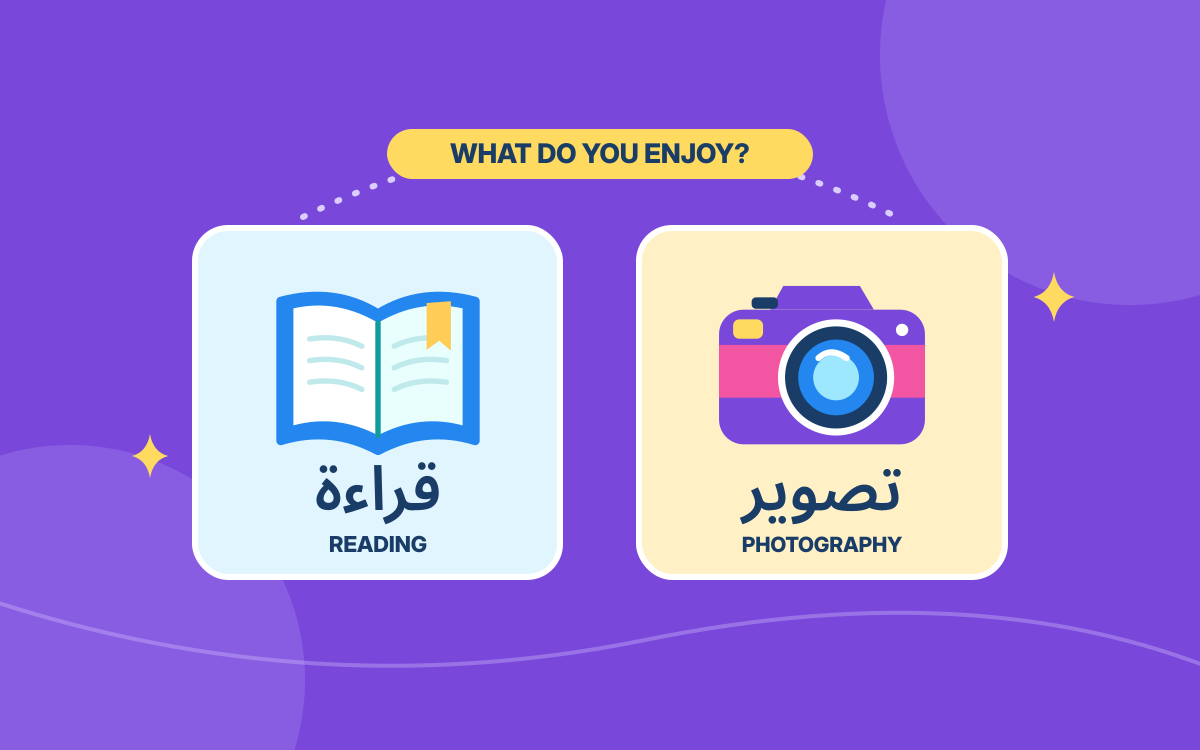
qiraa
Reading
kitaba
Writing
Qiraa names reading as an activity; kitaba names writing. They do not mean book and pen. A hobby word tells us what someone enjoys doing, rather than which object they use.
Read the two labels, cover them, and recall the activity beside the book. Then try the first question.
02Add two creative activities
rasm
Drawing
taswir
Photography
Use rasm for drawing and taswir for photography in this hobby context. Taswir has other meanings in other contexts, so the camera helps show the meaning practised here.
أُحِبُّ التَّصْوِير
uhibbu attaswir
I like photography.
Uhibbu means I like or I love. Here it expresses enjoyment of an activity. The hobby takes al in this pattern; before the t of taswir, its pronunciation becomes attaswir.
03Choose swimming or walking
sibaha
Swimming
mashy
Walking
أُحِبُّ السِّبَاحَة
uhibbu assibaha
I like swimming.
The words name the activities themselves. They do not say how often you do them or how skilled you are. Someone can enjoy swimming while still learning it.
- Sibaha: swimming.
- Mashy: walking.
- Use the hobby word after uhibbu to state a preference.
Al also joins the s sound in assibaha. Keep the full short example together when you practise.
04Add cooking and travel
tabkh
Cooking
safar
Travel
Tabkh is cooking, the activity of preparing food. Safar is travel. Neither word names a particular meal or destination.
أُحِبُّ الطَّبْخ
uhibbu attabkh
I like cooking.
You now have eight activities. Sort them in a way that helps you remember: things you enjoy at home, creative activities, or activities that take you elsewhere. The categories are a memory aid; your hobbies do not need to fit only one group.
05Make the sentence your own
أُحِبُّ الْقِرَاءَة
uhibbu alqiraa
I like reading.
أُحِبُّ الْقِرَاءَة وَالْكِتَابَة
uhibbu alqiraa wa alkitaba
I like reading and writing.
Wa means and. Attach it to the next Arabic word when writing. In the example, it joins two activities you enjoy.
- Keep uhibbu at the start.
- Choose one activity, or connect two with wa.
- Use the same uhibbu form for a masculine or feminine speaker.
Start with a truthful preference you can remember. You can talk about your free time without listing everything you do or giving a long explanation.
What to remember
- Learn activity words rather than just the objects associated with them.
- Use uhibbu plus the activity with al to say what you like.
- Join two hobbies with wa, then practise one sentence that is true for you.
Your reference shelf
Open a guide whenever you need it.
All eight hobbiesKeep the activity names together for a quick review
| Activity | Arabic | Plain reading aid |
|---|---|---|
| Reading | قِرَاءَة | qiraa |
| Writing | كِتَابَة | kitaba |
| Drawing | رَسْم | rasm |
| Photography | تَصْوِير | taswir |
| Swimming | سِبَاحَة | sibaha |
| Walking | مَشْي | mashy |
| Cooking | طَبْخ | tabkh |
| Travel | سَفَر | safar |
The table gives the activity names without al. In the sentence pattern above, add al: qiraa becomes alqiraa. With sun letters, the l blends into the next consonant, as in attaswir, assibaha and attabkh. Final grammatical case endings are omitted from these short reading aids.
Sources & further learning
References for the language explanations and learning guidance.