To say how you feel in Modern Standard Arabic, begin with ana, I, and add a description. Ana said means I am happy. Learn six words for emotions and physical states, then choose the form that matches the person speaking.
01Start with happy and sad
said
Happy
hazin
Sad
These are masculine forms. Add أَنَا ana, I, to make a complete statement. Arabic needs no separate word for am in this present tense pattern.
أَنَا سَعِيد
ana said
I am happy. — masculine speaker
Change only the description: ana hazin means I am sad. Ana stays the same.
02Name a physical state
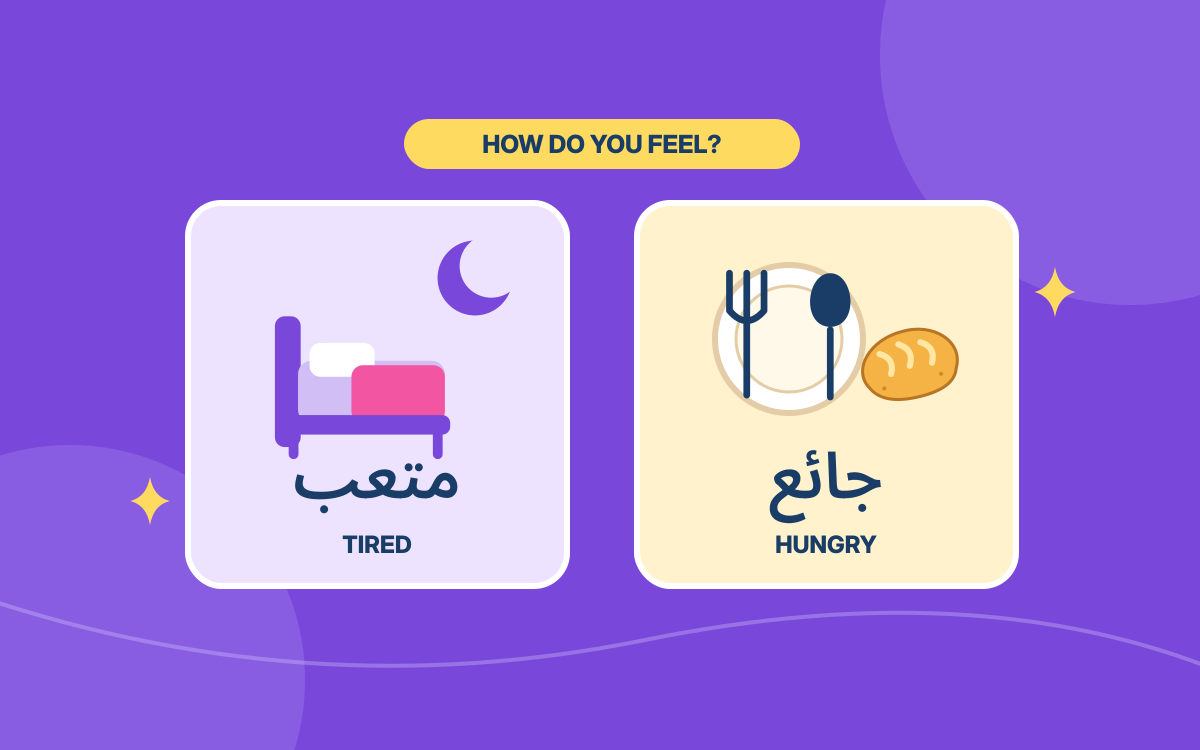
mutab
Tired
jai
Hungry
A masculine speaker says أَنَا مُتْعَب ana mutab, I am tired, or أَنَا جَائِع ana jai, I am hungry.
- Mutab describes tiredness.
- Jai describes hunger.
- Choose the word for the state you want to communicate. A person can feel both.
Keep the short sentence together when practising: ana plus one description. You do not need to add a verb or a reason.
03Change the description for a woman
saida
Happy — feminine
hazina
Sad — feminine
mutaba
Tired — feminine
jaia
Hungry — feminine
أَنَا جَائِعَة
ana jaia
I am hungry. — feminine speaker
For these four adjectives, the feminine form adds ة. Ana still means I for either speaker. The description matches the speaker, not the listener. A woman speaking to a man therefore still says ana jaia.
Compare each pair aloud: said and saida; mutab and mutaba. Notice the ending as well as the meaning.
04Add worried and calm
qaliq
Worried — masculine
hadi
Calm — masculine
The feminine forms are قَلِقَة qaliqa and هَادِئَة hadia.
أَنَا هَادِئَة
ana hadia
I am calm. — feminine speaker
These words describe a state rather than a reason. You can say how you feel without explaining an entire situation. When somebody says ana qaliq, they are telling you they feel worried; the sentence alone does not tell you why.
05Answer “How are you?”
kayfa haluka
How are you? — to a man
kayfa haluki
How are you? — to a woman
The question changes according to the listener. The answer changes according to the speaker. Here is one exchange:
كَيْفَ حَالُكِ؟
kayfa haluki
How are you? — asking a woman
أَنَا سَعِيدَة
ana saida
I am happy. — her answer
- First identify who is speaking.
- Keep ana at the start of these answers.
- Pick the description and the matching gender form.
The same question can invite many truthful answers. In the practice below, use the feeling specified in the prompt.
What to remember
- Use ana plus a description to say how you feel in these present tense sentences.
- The adjective matches the speaker: ana mutab for a man, ana mutaba for a woman.
- Learn the six meanings in pairs, then practise one truthful sentence about yourself.
Your reference shelf
Open a guide whenever you need it.
Six feelings and states: both formsReview the masculine and feminine descriptions
| Meaning | Masculine | Feminine |
|---|---|---|
| Happy | سَعِيد said | سَعِيدَة saida |
| Sad | حَزِين hazin | حَزِينَة hazina |
| Tired | مُتْعَب mutab | مُتْعَبَة mutaba |
| Hungry | جَائِع jai | جَائِعَة jaia |
| Worried | قَلِق qaliq | قَلِقَة qaliqa |
| Calm | هَادِئ hadi | هَادِئَة hadia |
Sources & further learning
References for the language explanations and learning guidance.