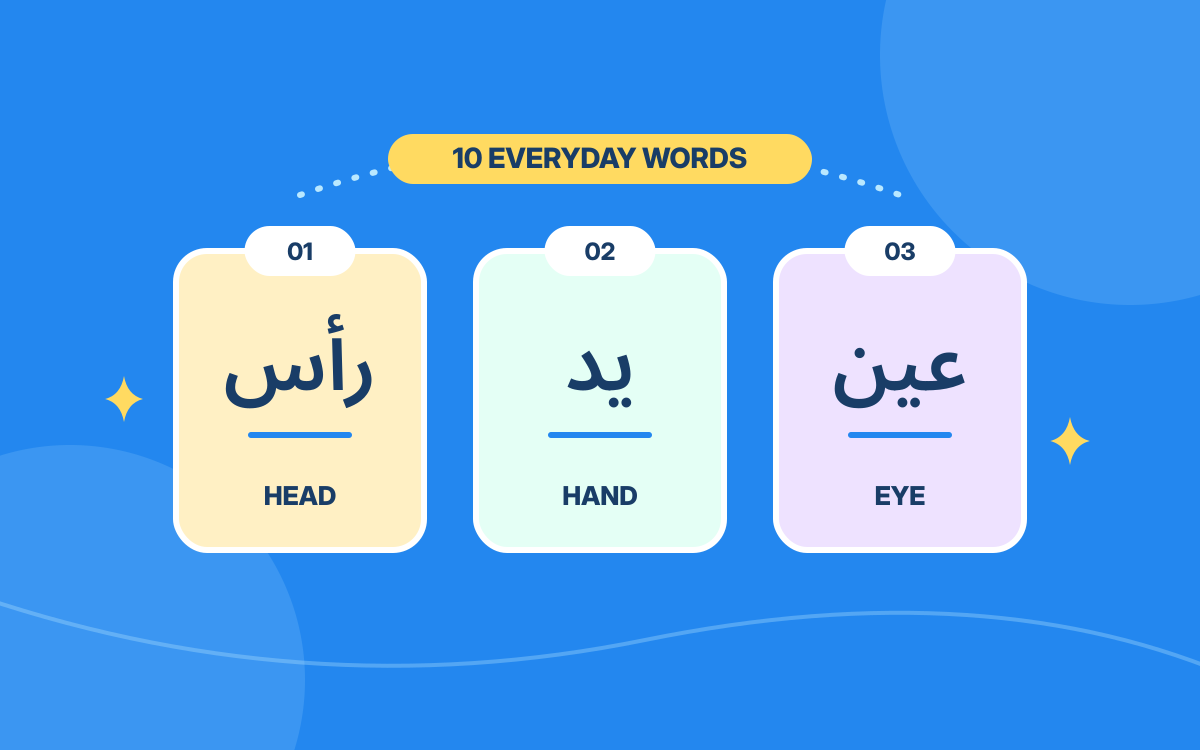
Ras means head, yad means hand, and ayn means eye. Begin with ten singular body-part words in Modern Standard Arabic. Learn the labels in small pairs, then use yadi, my hand, in a short sentence. The focus is everyday vocabulary and a clear meaning for each word.
01Begin with head and hand
ras
Head
yad
Hand
Ras names a head; yad names a hand. These are the singular labels. The Arabic spelling preserves sounds that our plain reading aids simplify, so keep both lines together while learning.
Read the Arabic, recall the meaning, then cover the English and check the two words again.
02Separate eye and ear
ayn
Eye
udhun
Ear
Ayn is an eye; udhun is an ear. Each word is singular even though the body parts commonly occur in pairs. A word for one eye should not be translated as eyes.
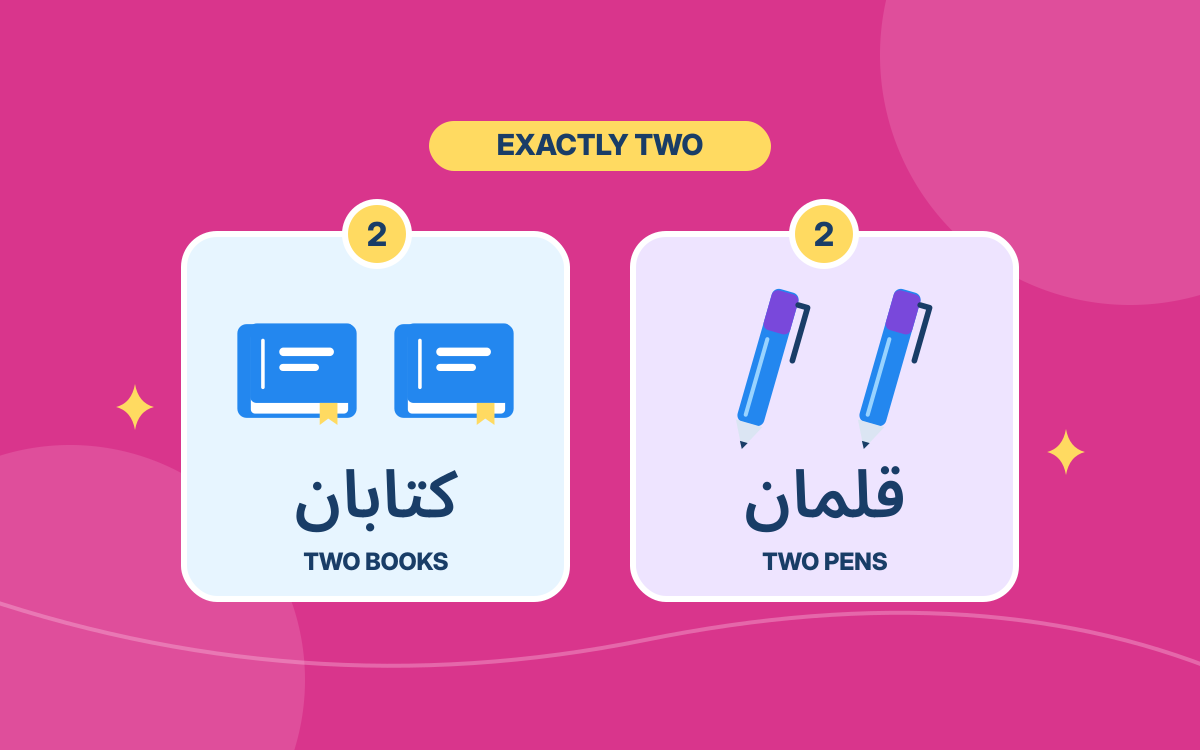
Arabic has special forms for exactly two, but the labels here stay singular. Start by recognising one eye and one ear before learning their dual or plural forms.
- Eye: ayn.
- Ear: udhun.
03Add nose and mouth
anf
Nose
fam
Mouth
Anf means nose, while fam means mouth. Both are short words, but they name different things. Read the full word before choosing an answer.
Keep this pair separate from the previous one: ayn and udhun name eye and ear; anf and fam name nose and mouth. You now have six useful labels. Try recalling them once in English-to-Arabic order and once in the other direction.
04Learn arm and leg
dhira
Arm
saq
Leg
Dhira is arm. Saq is leg, especially the lower leg. Yad, from the first pair, is hand. These labels help you keep nearby body parts distinct.
You may also meet رِجْل rijl for leg. The cards use saq consistently so you can practise one label at a time.
05Finish the set and add “my”
qadam
Foot
dhahr
Back
Qadam is foot; dhahr is back. Keep qadam distinct from saq, leg. These two words complete the ten-item set.
هَذِهِ يَدِي
hadhihi yadi
This is my hand.
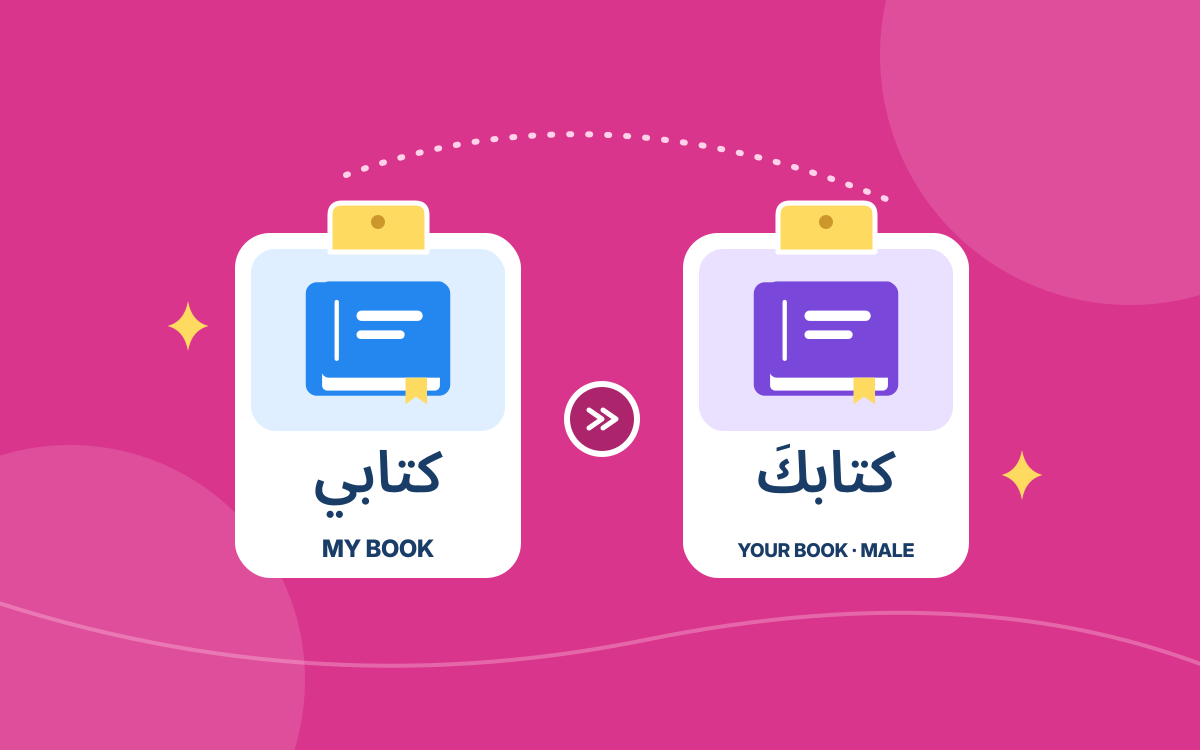
Yadi means my hand: add ي to yad. Hadhihi means this with a feminine noun. Yad is grammatically feminine even though it does not end in ة.
The sentence works for either a man or a woman speaking. Hadhihi agrees with the noun hand, regardless of who is speaking.
What to remember
- Learn the ten labels as singular nouns before adding dual or plural forms.
- Keep hand and arm distinct, and foot and leg distinct, in this vocabulary set.
- Yadi means my hand. Hadhihi yadi works for either speaker because the demonstrative agrees with the noun.
Your reference shelf
Open a guide whenever you need it.
All ten body-part wordsReview the singular labels
| Meaning | Arabic | Plain reading aid |
|---|---|---|
| Head | رَأْس | ras |
| Hand | يَد | yad |
| Eye | عَيْن | ayn |
| Ear | أُذُن | udhun |
| Nose | أَنْف | anf |
| Mouth | فَم | fam |
| Arm | ذِرَاع | dhira |
| Leg | سَاق | saq |
| Foot | قَدَم | qadam |
| Back | ظَهْر | dhahr |
This table gives singular words, not the forms for two or more. Saq commonly refers to the leg or lower leg; rijl is another word you may encounter for leg. Grammatical gender must be learned with the noun: yad is feminine without a final ة.
Sources & further learning
References for the language explanations and learning guidance.