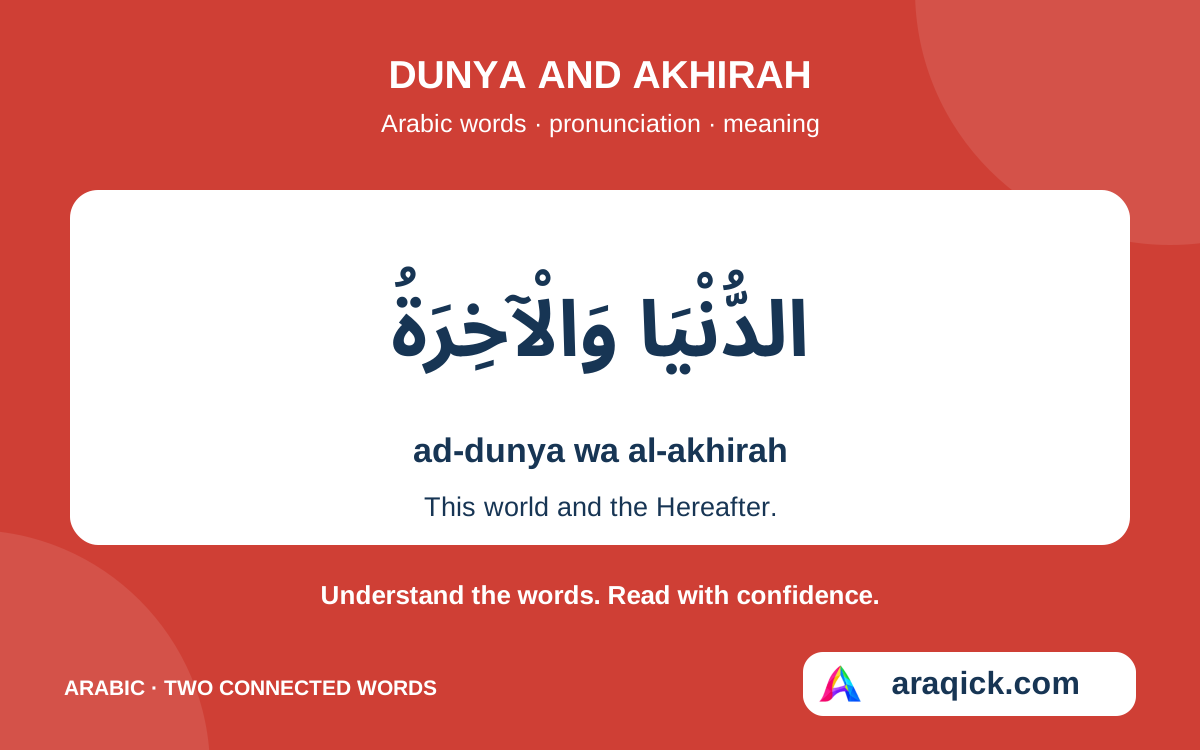
Dunya, دُنْيَا, commonly refers to this world or worldly life in Islamic discussion. Akhirah, آخِرَةٌ, refers to the Hereafter when used in that context, especially as al-akhirah. Both words are Arabic, and their wider grammatical meanings help explain the contrast. Dunya does not simply mean “evil,” and akhirah is not merely an alternative spelling of “another.”
01Dunya refers to this present worldly life
The familiar expression الْحَيَاةُ الدُّنْيَا means “the life of this world.” Here al-hayah supplies the noun “life,” and ad-dunya describes it. Once the context is clear, ad-dunya can stand on its own for worldly life or this world. English translations may choose either wording.
Dunya belongs to the word family connected with nearness. As a feminine comparative or superlative form, it can convey “nearer,” “nearest” or “lower” depending on context. In the expression about life, the reference is to this present life. A root connection helps explain the wording, but it does not replace the phrase’s established meaning.
02Akhirah names the Hereafter in religious context
الْآخِرَةُ, al-aakhirah at a pause, names the Hereafter in many Quranic passages. The word belongs to a family concerning what is last or comes later. It is a feminine form, and its religious use refers to the life to come, rather than simply “a later appointment.”
Grammatical meaning and established religious usage work together. The same word family can appear in ordinary descriptions of a last stage or final item. Check the noun being described and the wider passage. Our common Quranic Arabic words reference offers practice in recognising familiar words without assuming every sentence uses the same English gloss.
03Pronounce dunyaa and aakhirah distinctly
Read دُنْيَا as dun-yaa, with a short u, a clearly present n and a long final aa. The y is a consonant; do not replace the middle with a long ee. With the definite article, the d is doubled in pronunciation: ad-dunyaa. The written article remains alif and laam.
آخِرَةٌ begins with a long aa, represented by the alif with maddah. Say aa-khi-rah at a pause. The kh represents the Arabic خ, a friction sound made farther back in the mouth than English k. Its middle i is short. Aakhirah and dunyaa therefore have their long vowels in different places.
04Read the contrast in its Quranic setting
Quran 87:16–17 contrasts preference for worldly life with the greater and more lasting value of the Hereafter. The wording is part of a message about priorities. It teaches more than the bare dictionary meanings, so read the two verses together rather than treating the nouns as isolated slogans.
Quran 2:201 includes a supplication asking for good in this world and in the Hereafter. That paired request is a useful reminder that dunya itself is not a synonym for evil. For the distinction between a translation and an explanation of a passage, see our translation and tafsir guide.
05Distinguish aakhir from aakhar
آخِرٌ, aakhir, means last or final. آخَرُ, aakhar, means other or another. The short vowel after kh changes, even though an unvowelled spelling may look the same. Their feminine forms also differ: آخِرَةٌ is aakhirah, while أُخْرَى is ukhraa.
This distinction prevents a common reading error. “The Hereafter” is not obtained by translating every occurrence of the root as “another world.” Look at the actual form and the surrounding words. Our adjectives guide explains how descriptive forms change with the noun and why vowel patterns remain important.
06Build a two-context reading habit
First identify whether the passage is discussing worldly life and the Hereafter or using a related adjective in an ordinary comparison. Next read the complete phrase. Words such as “life,” “good” or “last” can clarify the intended meaning. This is more reliable than assigning one English word to every member of a root family.
Finally, practise explaining the pair in one sentence: dunya is this worldly life, and al-akhirah is the Hereafter in Islamic context. Keep that clear answer alongside the broader grammar. Learning both levels lets you understand familiar religious vocabulary while continuing to read the words accurately in other Arabic settings.
What to remember
- Dunya commonly means this world or worldly life; al-akhirah means the Hereafter in Islamic context.
- Dunyaa has a long final aa; aakhirah has a long initial aa and a short middle i.
- Aakhir means last, while aakhar means other or another; form and context distinguish them.
Your reference shelf
Open a guide whenever you need it.
Dunya, akhirah and related formsRead the vowel pattern carefully. Paused readings omit final grammatical endings.
| Arabic | Plain-letter reading | Meaning in context |
|---|---|---|
| دُنْيَا | dunyaa | Nearer or lower feminine form; worldly life in its familiar use |
| الدُّنْيَا | ad-dunyaa | This world; worldly life |
| الْآخِرَةُ | al-aakhirah | The Hereafter in religious context |
| آخِرٌ | aakhir | Last; final |
| آخَرُ | aakhar | Other; another, masculine |
| أُخْرَى | ukhraa | Other; another, feminine |
Useful phrases and reading contextsThese vocabulary phrases are presented separately from the complete Quranic passages; read each source for its full wording.
| Phrase or source | Reading or focus | Meaning or use |
|---|---|---|
| الْحَيَاةُ الدُّنْيَا | al-hayaatu-d-dunyaa | The life of this world; the inner u is retained when connected |
| فِي الدُّنْيَا | fid-dunyaa | In this world; connected reading |
| فِي الْآخِرَةِ | fil-aakhirah at a pause | In the Hereafter |
| Quran 87:16–17 | Worldly life and the lasting Hereafter | Read the contrast and its context together |
| Quran 2:201 | A request for good in both settings | Dunya is not itself a synonym for evil |
Sources & further learning
References for the language explanations and learning guidance.