Common Quranic Arabic words include مِنْ (from), فِي (in), رَبّ (Lord) and كِتَاب (book or scripture). The two expandable tables below contain 50 distinct words selected from frequent Quranic lemmas. Their English meanings are starting points; the sentence determines the best translation.
01Which 50 words are included?
The reference tables collect useful nouns, particles and pointing words from the Quranic Arabic Corpus frequency lists. This is a learning selection, rather than an exact ranking of the fifty most frequent words. The Corpus separates some identical spellings by grammatical function; this guide combines those functions in one row.
Open the two vocabulary tables in Your Reference for entries 1–25 and 26–50. Learn a small group at a time. Recognising these words is useful, but no fixed vocabulary total guarantees a percentage of understanding: grammar, connected forms and the passage itself also matter.
02Learn the small words alongside nouns
Words such as مِنْ, فِي and إِلَىٰ connect ideas. Skipping them can change who acts, where something happens or which relationship a sentence expresses. A familiar noun does not supply those details by itself.
Practise contrasting fee, meaning “in,” with ilaa, meaning “to” or “towards.” Then compare هَٰذَا (this) with ذَٰلِكَ (that). These are masculine singular forms, so do not assume they fit every noun. Our relative pronouns guide explains another small word in the tables: alladhee, meaning “who,” “which” or “that.”
03Why can one word have several meanings?
آيَة can refer to a sign or a Quranic verse. كِتَاب can refer to a book, scripture or a written record. These are not permissions to substitute any English gloss wherever the word appears; surrounding words guide the choice.
Short forms also change function. مَا may introduce “what” or “that which,” but it can also negate. إِنَّ and إِنْ look similar yet serve different purposes. Keep the vowels and doubled consonants visible while studying, then check a complete translated verse rather than joining isolated English glosses mechanically.
04Recognise a word when its form changes
A table entry gives a convenient learning form. Actual verses may attach a pronoun, add the definite article, change a grammatical ending or use a plural. For example, رَبّ is rabb, while رَبِّكَ is rabbika, “your Lord,” when addressing one male. The attached ending carries meaning.
Similarly, kitaab and الْكِتَاب are connected, but the latter includes “the.” Our definite and indefinite nouns guide explains the article. Notice the complete word before reducing it to a dictionary entry; an ending can identify a person or a grammatical relationship.
05Use the reading aids carefully
The tables use plain letters: aa, ee and oo indicate long vowels. These are reminders, not a complete pronunciation system. Arabic has sounds that ordinary English spelling cannot distinguish reliably. For example, أَنْ and عَنْ both appear as an here, although their first consonants differ.
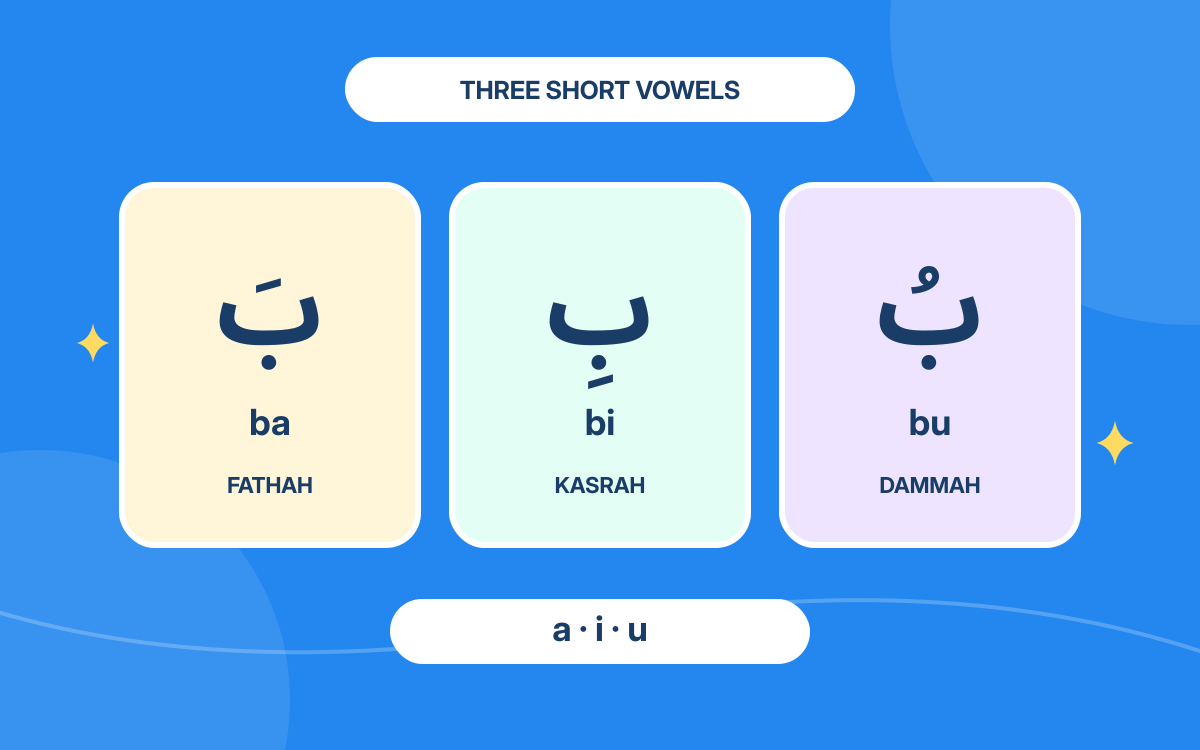
In ma a and ba d, a space marks the position of ayn, a throat consonant; it is not a pause between words. Keep looking at the Arabic and listen to a reliable recitation. The short vowels guide helps you separate a short vowel from a long one. Final grammatical endings are generally omitted from the reading aids.
06A short routine for remembering vocabulary
Choose five entries. Read the Arabic, recall a basic meaning, then check the table. Find each word in a complete verse using the Corpus or a word-by-word Quran display. Note the verse reference and what the word means there. Repeat the group the next day before adding five more.
Use two checks: can you recognise the word without the English column, and can you explain its role in the passage? If either answer is uncertain, revisit the example. Our roots and dictionary forms guide supports the next stage, especially when you begin learning verb families.
What to remember
- The tables contain 50 distinct Quranic words, selected from frequent Corpus lemmas rather than presented as an exact top-fifty ranking.
- One spelling can serve several grammatical functions; context guides its English meaning.
- Learn the Arabic form, notice attached endings, and practise each word in a complete verse.
Your reference shelf
Open a guide whenever you need it.
50-word vocabulary list: entries 1–25Open the first half: common connecting words, nouns and demonstratives.
| No. | Arabic | Plain reading aid | Meaning in context |
|---|---|---|---|
| 1 | مِنْ | min | from; of; among, according to context |
| 2 | اللَّه | allaah | Allah; God |
| 3 | فِي | fee | in; within |
| 4 | إِنَّ | inna | indeed; introduces an emphatic clause |
| 5 | عَلَىٰ | alaa | on; upon; over |
| 6 | الَّذِي | alladhee | who; which; that (masculine singular) |
| 7 | لَا | laa | no; not; do not, depending on the construction |
| 8 | مَا | maa | what; that which; or not, depending on grammar |
| 9 | رَبّ | rabb | Lord; master |
| 10 | إِلَىٰ | ilaa | to; towards |
| 11 | مَنْ | man | who; whoever |
| 12 | إِنْ | in | if; in some constructions, not |
| 13 | أَنْ | an | to; that, before a verb |
| 14 | إِلَّا | illaa | except; only, within a restriction |
| 15 | ذَٰلِكَ | dhaalika | that (masculine singular) |
| 16 | عَنْ | an | from; about; away from |
| 17 | أَرْض | ard | earth; land |
| 18 | قَدْ | qad | certainly/already with a past verb; sometimes may |
| 19 | إِذَا | idhaa | when; if, according to context |
| 20 | قَوْم | qawm | people; a community |
| 21 | آيَة | aayah | sign; verse |
| 22 | أَنَّ | anna | that; introduces a noun clause |
| 23 | كُلّ | kull | every; each; all |
| 24 | لَمْ | lam | not, before a jussive verb, with past reference |
| 25 | ثُمَّ | thumma | then |
50-word vocabulary list: entries 26–50Open the second half, then practise five words in a complete passage.
| No. | Arabic | Plain reading aid | Meaning in context |
|---|---|---|---|
| 26 | رَسُول | rasool | messenger |
| 27 | يَوْم | yawm | day |
| 28 | عَذَاب | adhaab | punishment; torment |
| 29 | هَٰذَا | haadhaa | this (masculine singular) |
| 30 | سَمَاء | samaa | sky; heaven |
| 31 | نَفْس | nafs | self; soul; person |
| 32 | شَيْء | shay | thing; something |
| 33 | أَوْ | aw | or |
| 34 | كِتَاب | kitaab | book; scripture; written record |
| 35 | بَيْنَ | bayna | between; among |
| 36 | حَقّ | haqq | truth; right; that which is due |
| 37 | نَاس | naas | people; humankind |
| 38 | إِذْ | idh | when, often recalling a past event |
| 39 | أُولَٰئِكَ | ulaaika | those |
| 40 | قَبْلَ | qabla | before |
| 41 | مُؤْمِن | mumin | believer |
| 42 | لَوْ | law | if; if only, depending on context |
| 43 | سَبِيل | sabeel | way; path |
| 44 | أَمْر | amr | command; matter; affair |
| 45 | عِنْدَ | inda | at; with; in the presence of |
| 46 | مَعَ | ma a | with; together with |
| 47 | بَعْض | ba d | some; part |
| 48 | خَيْر | khayr | good; better, according to context |
| 49 | إِلَٰه | ilaah | deity; god |
| 50 | نَار | naar | fire |
Sources & further learning
References for the language explanations and learning guidance.