A notebook “with lined paper” has a feature. Arabic can describe it with dhu, meaning “having” or “possessing.” Dhu changes with case, while its following feature stays genitive. The feminine partner is dhat. Start with ordinary singular descriptions and keep the two endings separate.
01Describe a masculine noun as having something
ذُو (dhu) is a noun meaning “having” or “possessing.” In this use it links to an explicit feature noun in an idafa.
عِنْدِي دَفْتَرٌ ذُو وَرَقٍ مُسَطَّرٍ.
indi daftarun dhu waraqin musattarin
I have a notebook with lined paper.
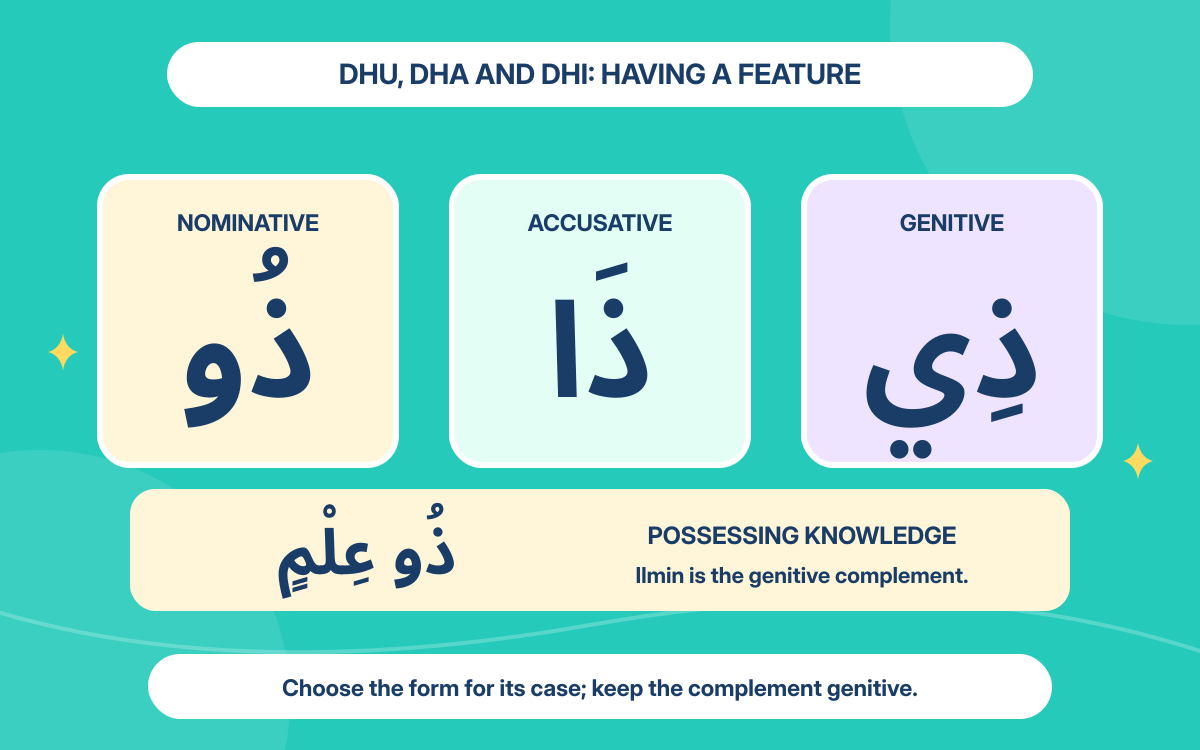
Daftarun is nominative, and dhu describes it in the same case. Dhu is mudaf, so it has no tanween. Waraqin, paper, is its genitive complement. Musattarin describes the paper, so it is genitive too.
02Use dha for an accusative description
The singular masculine forms are ذُو (dhu), nominative; ذَا (dha), accusative; and ذِي (dhi), genitive. Waw, alif and ya are the case signs.
أُرِيدُ دَفْتَرًا ذَا وَرَقٍ مُسَطَّرٍ.
uridu daftaran dha waraqin musattarin
I want a notebook with lined paper.
The notebook is the accusative object, so its description uses dha. The paper and lined description stay genitive. Possessing dha belongs to this case pattern; it is not the demonstrative “this.” Read its construction to distinguish the uses.
03Use dhi with a genitive noun
When the described masculine noun is genitive, its feature-bearing description uses dhi.
كَتَبْتُ فِي دَفْتَرٍ ذِي وَرَقٍ مُسَطَّرٍ.
katabtu fi daftarin dhi waraqin musattarin
I wrote in a notebook with lined paper.
Fi governs daftarin. Dhi agrees with that noun’s genitive case. Waraqin is genitive for a different reason: it is the complement of dhi. The feature does not switch to nominative when dhu is nominative, or accusative when dha is accusative.
04Use dhat with a feminine singular noun
The feminine partner is ذَات (dhat). In this idafa it has ordinary short case vowels: dhatu, dhata and dhati, without tanween.
عِنْدِي حَقِيبَةٌ ذَاتُ جَيْبٍ كَبِيرٍ.
indi haqibatun dhatu jaybin kabirin
I have a bag with a large pocket.
The feminine bag is nominative, so its description begins dhatu. Jaybin is the genitive pocket; kabirin agrees with that masculine pocket. Do not make the pocket’s adjective feminine just because the bag is feminine.
05Separate a description from a predicate
Our examples use an indefinite noun with an indefinite feature phrase as its description. A predicate can describe a definite subject without being definite itself.
الدَّفْتَرُ ذُو وَرَقٍ مُسَطَّرٍ.
addaftaru dhu waraqin musattarin
The notebook has lined paper.
Here addaftar is the definite subject, and dhu begins its nominative predicate. If the phrase is an adjective instead, check definiteness agreement as well as case. The optional reference adds group forms. Plain reading aids simplify sounds and vowel length; Arabic vowel letters preserve the long case sounds in dhu, dha and dhi.
What to remember
- For masculine singular having, use nominative dhu, accusative dha and genitive dhi.
- Dhu, dha and dhi are mudaf in these models; the feature noun after them stays genitive.
- Use feminine dhatu, dhata or dhati by case. Decide whether the phrase is an adjective or a predicate before checking definiteness.
Your reference shelf
Open a guide whenever you need it.
Singular forms and a brief group referenceMasculine case letters, feminine case vowels and plural feature phrases
| Case | Masculine description | Feminine description |
|---|---|---|
| Nominative | دَفْتَرٌ ذُو وَرَقٍ | حَقِيبَةٌ ذَاتُ جَيْبٍ |
| Accusative | أُرِيدُ دَفْتَرًا ذَا وَرَقٍ | أُرِيدُ حَقِيبَةً ذَاتَ جَيْبٍ |
| Genitive | فِي دَفْتَرٍ ذِي وَرَقٍ | فِي حَقِيبَةٍ ذَاتِ جَيْبٍ |
With a masculine human group, the linked forms are nominative ذَوُو (dhawu), and accusative or genitive ذَوِي (dhawi). They have no nun in the idafa: طُلَّابٌ ذَوُو عِلْمٍ, “students with knowledge,” and مَعَ طُلَّابٍ ذَوِي عِلْمٍ, “with students with knowledge.” This is plural dhawi, not singular dhi.
The feminine plural is ذَوَات: nominative طَالِبَاتٌ ذَوَاتُ عِلْمٍ, “female students with knowledge”; after the word for “with,” مَعَ طَالِبَاتٍ ذَوَاتِ عِلْمٍ. Its accusative also uses kasrah under the feminine plural rule. These group forms are an extra reference; the quizzes practise singular features.
Sources & further learning
References for the language explanations and learning guidance.
- Cairo Arabic Academy: dhu, its possession meaning and feminine partner
- Cairo Arabic Academy: dhat and its feminine plural
- Al Jazeera Learning Arabic: the five nouns and their case letters
- Al Jazeera Learning Arabic: genitive dhi
- Al Jazeera Learning Arabic: plural dhawi inflects like a sound masculine plural
- Al Jazeera Learning Arabic: adjective agreement and dhu as a description
- Al Jazeera Learning Arabic: idafa and removal of plural nun
- Al Jazeera Learning Arabic: kasrah as the accusative sign of a sound feminine plural