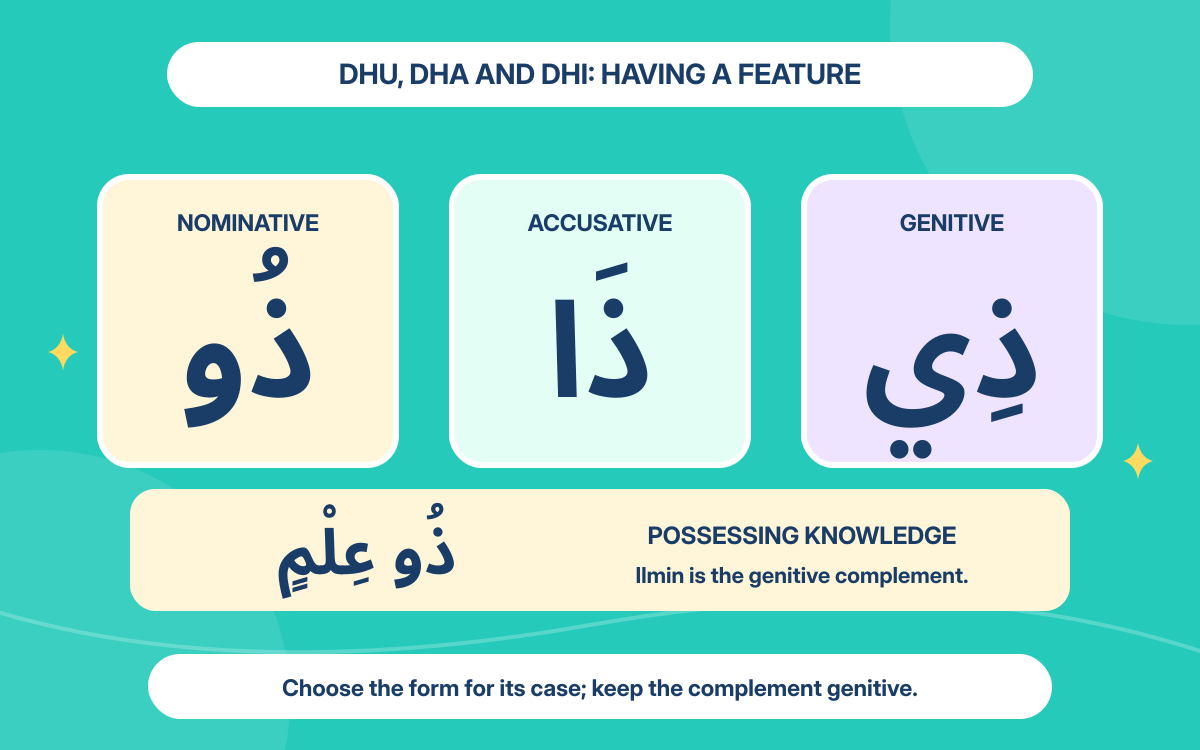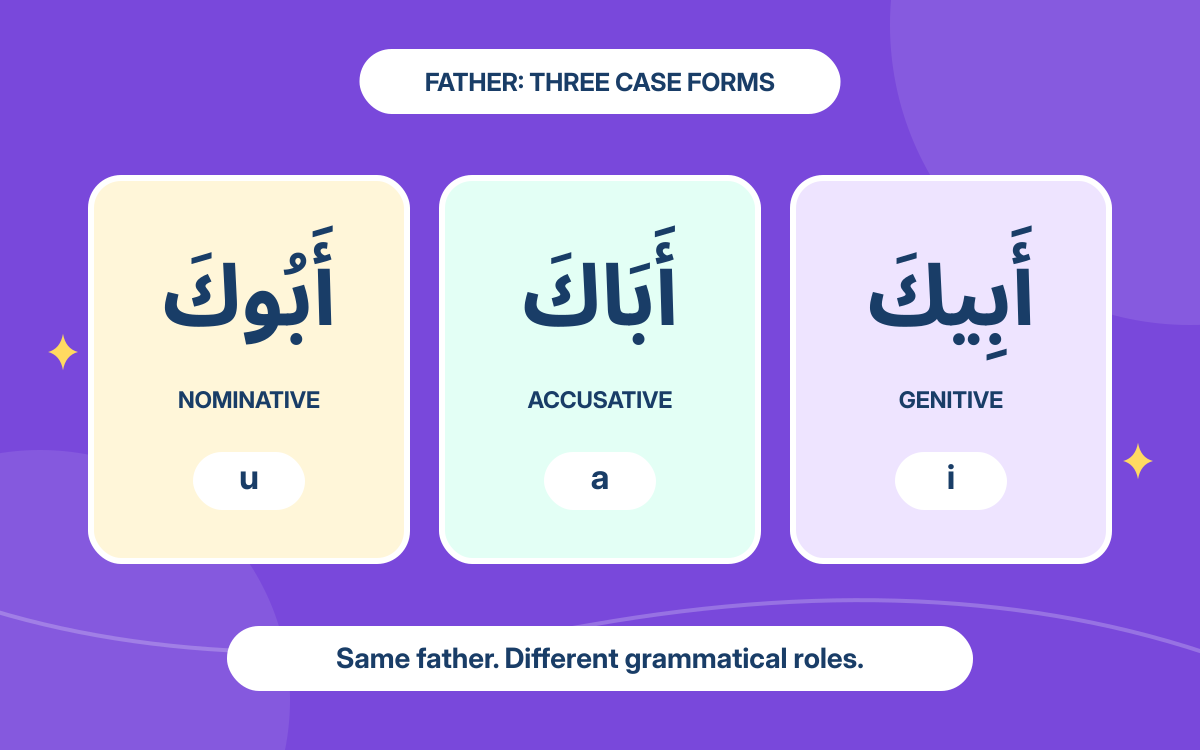
You may know abu as part of an Arabic name, but it also changes with grammatical case. Father and brother belong to a small group often called the five nouns. In the right construction, their case signs are whole vowel letters rather than ordinary short vowel endings.
01Start with “your father”
هَذَا أَبُوكَ
hadha abuka
This is your father.
Here abuka is a nominative predicate. Its waw marks the nominative and gives a long u. The ending ka means “your,” addressing one man. The noun is mudaf, linked to that possessive suffix. Keep the long u: this form is not simply ab with a short vowel.
02Change the case, keep the same person
زُرْتُ أَبَاكَ
zurtu abaka
I visited your father.
مِنْ أَبِيكَ
min abika
From your father
The father receives the visit, so abaka is accusative: alif gives its long a. After min, abika is genitive: ya gives its long i. The suffix ka has not changed.
Abuka, abaka and abika still refer to the same father. Choose u, a or i from the noun’s grammatical role, not from who owns or has the family relationship. All three are singular.
03Apply the same pattern to brother
هَذَا أَخُو مُحَمَّدٍ
hadha akhu muhammadin
This is Muhammad’s brother.
Brother follows the same pattern: أَخُوكَ (akhuka), أَخَاكَ (akhaka), and أَخِيكَ (akhika). The long u, a and i mark nominative, accusative and genitive respectively.
The possessor can also be a separate noun. In the example, akhu is a nominative predicate and Muhammad is the genitive second term of an idafa. Father behaves similarly: أَبُو مُحَمَّدٍ means “Muhammad’s father” in a nominative position.
04Check the conditions before using these letters
For this pattern, father or brother must be singular, in its ordinary form rather than a diminutive, and mudaf to a noun or suffix other than the ya meaning “my.” Duals and plurals use their own patterns.
هُوَ أَبٌ
huwa abun
He is a father.
Here abun is not linked to a possessor, so it has the ordinary short nominative ending with tanween. Do not add waw every time you see the word father. The special letter endings belong to a particular construction, not every use of the vocabulary.
05Treat “my father” as a separate pattern
أَبِي هُنَا
abi huna
My father is here.
The final ya of abi here means “my.” The noun is a nominative subject even though it ends in i. With this speaker suffix, its case signs are estimated before the ya; the visible spelling stays abi across the three cases.
Compare مِنْ أَبِي (min abi), “from my father,” with مِنْ أَبِيكَ (min abika), “from your father.” In abika, ya marks genitive case and ka identifies the possessor. In abi, ya itself identifies the speaker.
What to remember
- In the qualifying singular idafa, father and brother use waw for nominative, alif for accusative and ya for genitive.
- A separate possessor and most possessive suffixes both allow the pattern; an unpossessed noun does not.
- In أَبِي meaning “my father,” ya marks the speaker, and the noun’s case signs are estimated.
Your reference shelf
Open a guide whenever you need it.
Father and brother across three casesCompare long vowel case signs with the speaker suffix
| Case | Your father | Your brother | Sign |
|---|---|---|---|
| Nominative | أَبُوكَ | أَخُوكَ | Waw, long u |
| Accusative | أَبَاكَ | أَخَاكَ | Alif, long a |
| Genitive | أَبِيكَ | أَخِيكَ | Ya, long i |
The traditional group is الْأَسْمَاءُ الْخَمْسَةُ, the five nouns. This guide practises father and brother, not every word in the group. The other members have additional conditions, so do not apply these examples mechanically to all family words.
The possessive suffix is in the genitive position of mudaf ilayh; that does not force its host noun into the genitive. Abuka can be nominative while ka occupies the possessor position.
With the speaker suffix, compare أَبِي هُنَا (“My father is here”), زُرْتُ أَبِي (“I visited my father”), and مِنْ أَبِي (“from my father”). Their roles differ even though abi looks the same.
Sources & further learning
References for the language explanations and learning guidance.