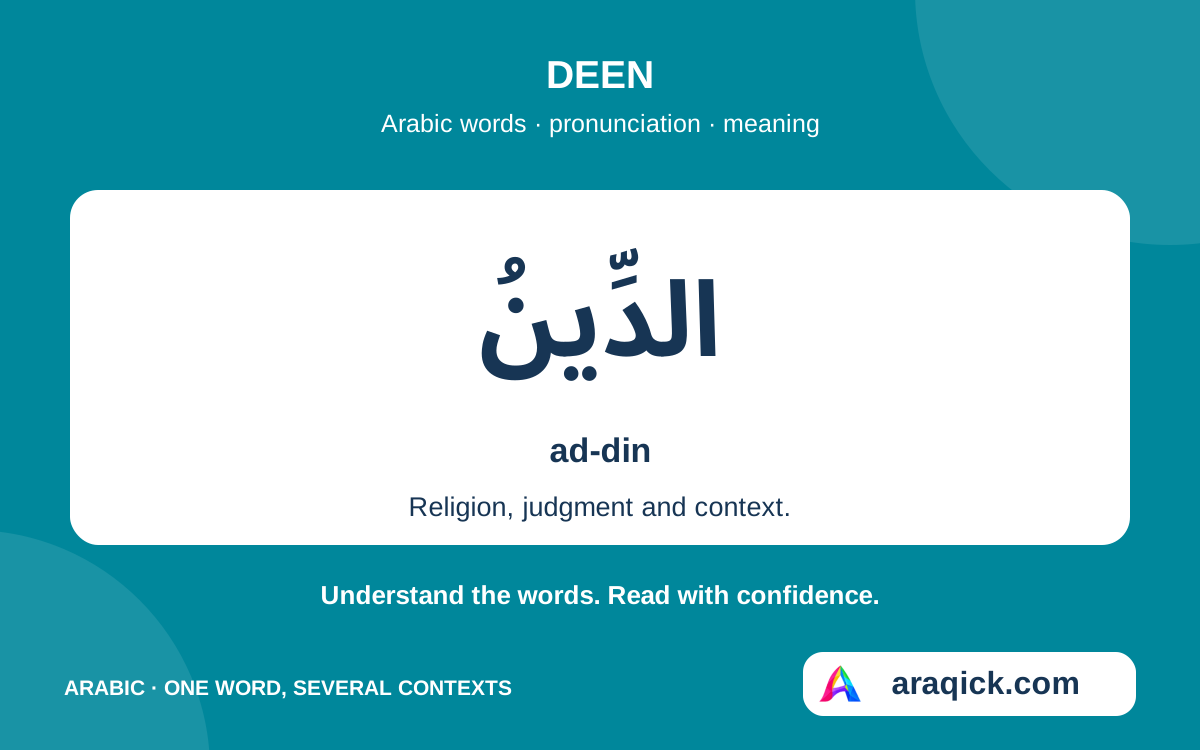
Deen, دِينٌ, commonly means religion or a religious way of life. In other contexts it refers to judgment or recompense, especially in يَوْمُ الدِّينِ, the Day of Judgment. The Arabic reading is diin, with a long ii vowel. It differs from دَيْنٌ, dayn, meaning debt, despite the identical unvowelled letters.
01Religion is a central meaning of deen
In many Islamic discussions, دِينٌ refers to religion, including belief and religious practice. “Religious way of life” can help explain this breadth, but it is an explanatory phrase rather than a compulsory translation for every occurrence. Quran 3:19 uses the word in a religious context.
The word itself is not simply another spelling of Islam. A sentence identifies which religion or religious commitment is meant. Quran 109:6, for example, uses forms referring to the religion of the people addressed and that of the speaker. Our Islam, iman and ihsan guide separates those related religious terms.
02Pronounce diin with one long vowel
The spellings deen and din can represent the same Arabic word. Here, diin makes the long ii explicit: دِ has a short i, while دِي extends it. Keep it as one syllable rather than adding a second spoken vowel. The word ends with the ordinary n sound.
The fully vowelled standalone noun دِينٌ can be read diinun when the grammatical ending is pronounced. At a pause it becomes diin. With the definite article it is الدِّينُ, pronounced ad-diin at a pause: the article’s l assimilates to d, giving a doubled d. The letter l remains in the spelling.
03Yawm ad-diin points to judgment and recompense
In the familiar expression yawm ad-diin, deen refers to judgment or recompense rather than a religion’s name. Quran 1:4 contains this phrase as part of its description of God. The English rendering “Day of Judgment” conveys the sense of accountability in that context.
Our standalone nominative phrase is يَوْمُ الدِّينِ, yawmud-diin when the words connect and the phrase ends at a pause. The u belongs to yawm; the final vowel of diin is paused. Quran 1:4 instead has yawmi because of its sentence structure. Meaning and grammatical endings work together; a different final vowel does not create a different day.
05Dayn means debt, not religion
دَيْنٌ, dayn, contains ay: a short a followed by a consonantal y. دِينٌ, diin, contains long ii. Without vowel marks both appear as دين. The shared spelling therefore does not guarantee the same pronunciation or the same noun.
Quran 2:282 uses dayn in a passage about debt. The Quranic Arabic Corpus groups dayn and diin under the broad root d-y-n, while identifying them as separate nouns. This is a useful reminder that a root connects a family, not one unchanging definition. Vowels and context help distinguish its members; there is no need to force “religion” into every occurrence of these letters.
06Let the sentence choose the translation
When you meet deen, first identify the phrase. A discussion of religious belief usually calls for “religion”; the Day of Judgment expression calls for judgment or recompense. If the passage concerns something owed, check whether the word is actually dayn. These clues are more useful than memorising one English equivalent.
Build a small notebook with three columns: Arabic form, sentence context and a fitting English meaning. Keep your own practice examples distinct from Quran quotations, whose endings belong to their original sentences. Our translation and transliteration guide explains why recognising a sound is only one stage of understanding a passage.
What to remember
- Deen commonly means religion, while yawm ad-diin refers to the Day of Judgment or Recompense.
- Diin has long ii; dayn, meaning debt, has ay and is a separate noun.
- Related roots and similar unvowelled spellings do not remove the need to read words in context.
Your reference shelf
Open a guide whenever you need it.
Deen and related formsNoun readings pause without final case endings; the adjective keeps its doubled final y.
| Arabic | Reading at a pause | Meaning or function |
|---|---|---|
| دِينٌ | diin | Religion; other senses depend on context |
| الدِّينُ | ad-diin | The religion; also the judgment in its appropriate context |
| أَدْيَانٌ | adyaan | Religions; a plural of diin |
| دِينِي | diinii | My religion; possessive ending |
| دِينِيٌّ | diiniyy | Religious; adjective with doubled y |
| دَيْنٌ | dayn | Debt; a separate noun with ay |
Context and grammatical endingsForms are presented for comparison; standalone phrases are not all exact quotations from the cited verses.
| Context or form | Meaning cue | Reading note |
|---|---|---|
| يَوْمُ الدِّينِ | Day of Judgment; standalone nominative phrase | yawmud-diin when connected and paused at the end |
| Quran 1:4 | Judgment or recompense | The verse has yawmi within its own grammatical structure |
| Quran 3:19 and 109:6 | Religion | Read the full passage to identify the religious reference |
| Quran 2:282 | Debt, dayn | Different vowel pattern from diin |
| دِينِي / دِينِيٌّ | My religion / religious | Long final ii versus doubled final y |
Sources & further learning
References for the language explanations and learning guidance.