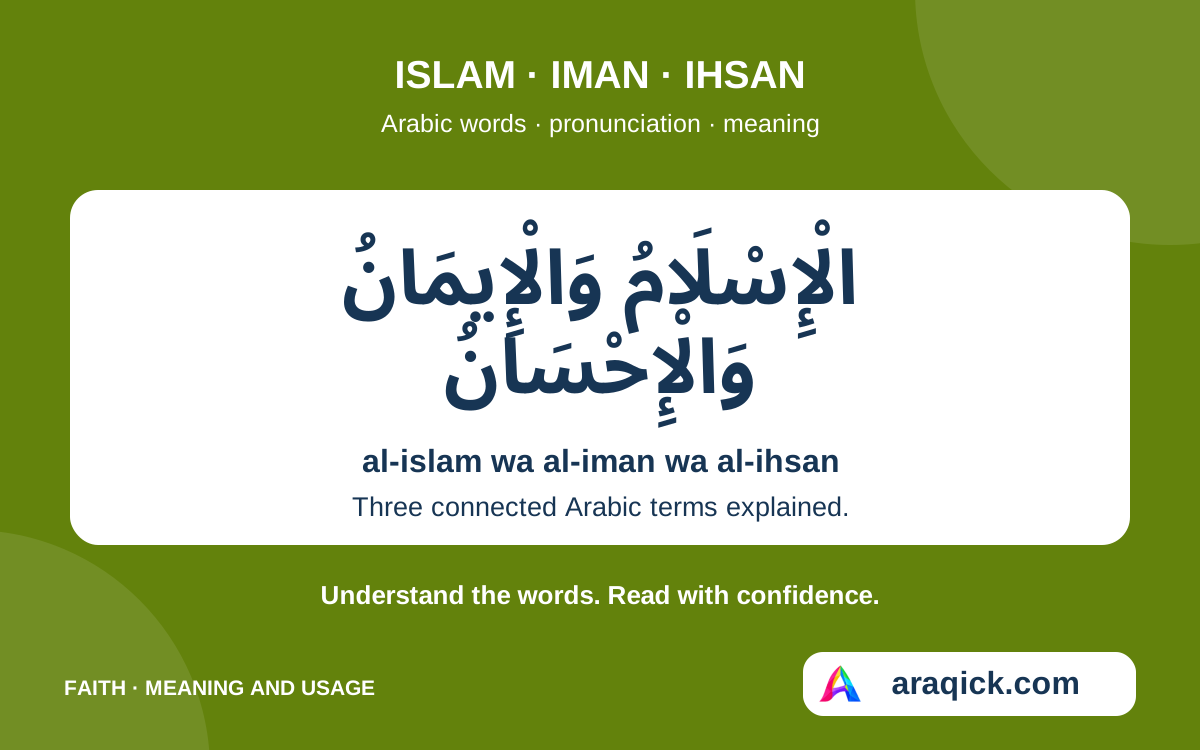
إِسْلَامٌ (islam) concerns submission to God; إِيمَانٌ (iman) concerns faith; إِحْسَانٌ (ihsan) concerns doing good or excellence. In the Hadith of Jibril, the three questions highlight religious practice, beliefs and the quality of worship. They describe connected aspects of religion, rather than three unrelated identities.
01What is the main difference?
A useful starting point is submission, faith and excellence. These English words are short guides, not complete definitions for every passage. Islam also names the religion, iman describes faith, and ihsan can concern good conduct toward others. Read the whole sentence before selecting an English equivalent.
The three Arabic nouns share a long aa near the end, but they come from different roots. Similar English spellings do not make them one word family. Our Arabic roots guide explains how a root and a word pattern work together to form a meaning.
02What does Islam mean in the Jibril report?
In Sahih Muslim 8a, the response about Islam names the testimony of faith, prayer, zakat, Ramadan fasting and pilgrimage for someone able to undertake it. The answer highlights recognisable religious commitments. It does not reduce the entire religion to a list of motions.
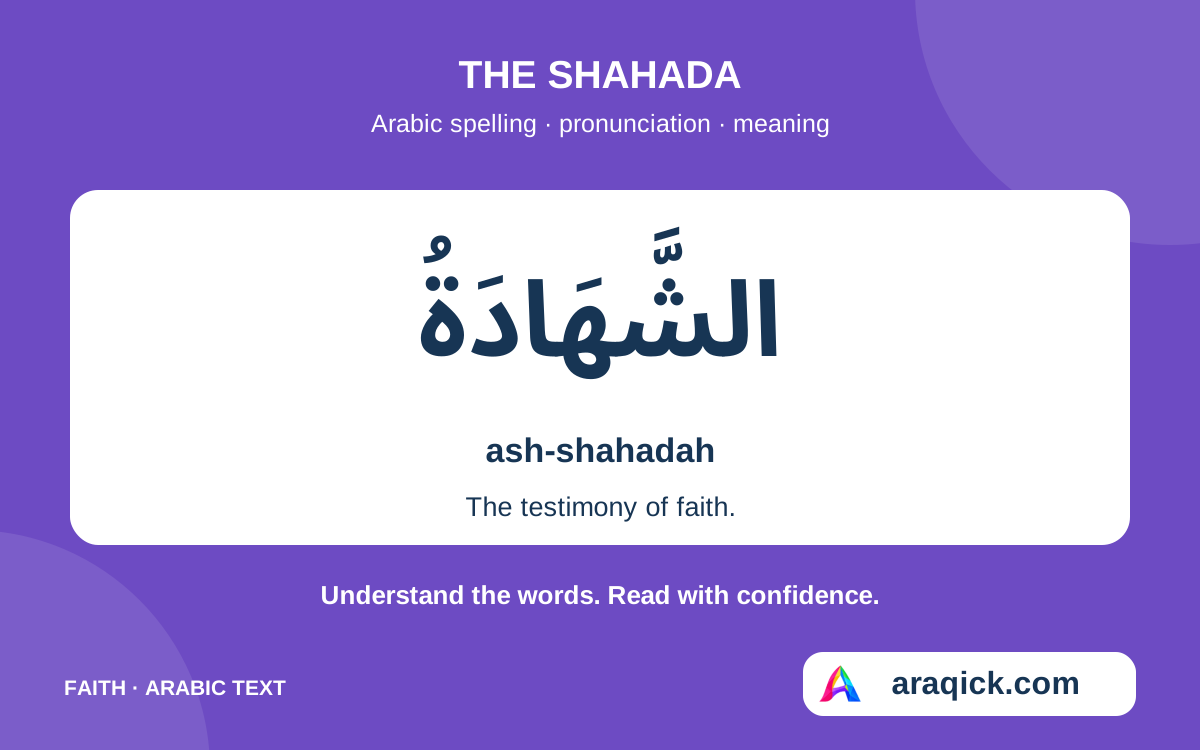
The noun is connected with أَسْلَمَ (aslama), meaning submitted, and مُسْلِمٌ (muslim), a Muslim or one who submits. Its root is س ل م. Salam, meaning peace, belongs to this root family too, but sharing a root does not make Islam and salam interchangeable. Our Shahada guide explains the testimony itself.
03What does iman mean?
Iman means faith or belief in this setting. The Jibril report names faith in God, His angels, His books, His messengers, the Last Day and divine decree, including good and evil. This answer explains the objects of faith rather than introducing another set of prayer movements.
The related verb آمَنَ (aamana) means believed, while مُؤْمِنٌ (mumin) means a believer. The root is أ م ن. Notice that mumin contains hamza: the small sign on the waw is a consonant, not simply an instruction to lengthen the u. Learning the whole form avoids a misleading letter-by-letter guess.
04What does ihsan add?
Ihsan can mean doing good, beneficence or excellence. In the Jibril report, it is explained through worship carried out with awareness that God sees the worshipper, even though the worshipper does not see Him. The focus is the character and attentiveness of worship.
The root ح س ن concerns goodness or beauty. A related word is مُحْسِنٌ (muhsin), someone who does good. Quran 16:90 places ihsan alongside justice in an instruction about conduct. This wider use helps explain why an Arabic passage about ihsan might concern generous treatment of people rather than naming a separate ritual.
05Are the three words always separate categories?
The distinctions depend on how the words are being used. The Jibril report discusses them in separate questions, then describes the encounter as teaching religion. Together they offer a connected picture. A broad use of Islam can name the whole religion, including belief and devotion.
Quran 49:14 distinguishes an outward declaration of submission from faith that has not yet entered the hearts of the people addressed. That specific contrast matters. It does not mean a beginner should sort every person into three fixed boxes from a vocabulary chart. Use the passage to understand its wording and context.
06How do you pronounce the three nouns?
Practise is-laam, ee-maan and ih-saan. Islam and ihsan begin with a short i; iman begins with a long ee. All three have the long aa shown by alif near the end. Ihsan contains ح, a breathy throat consonant distinct from an ordinary English h.
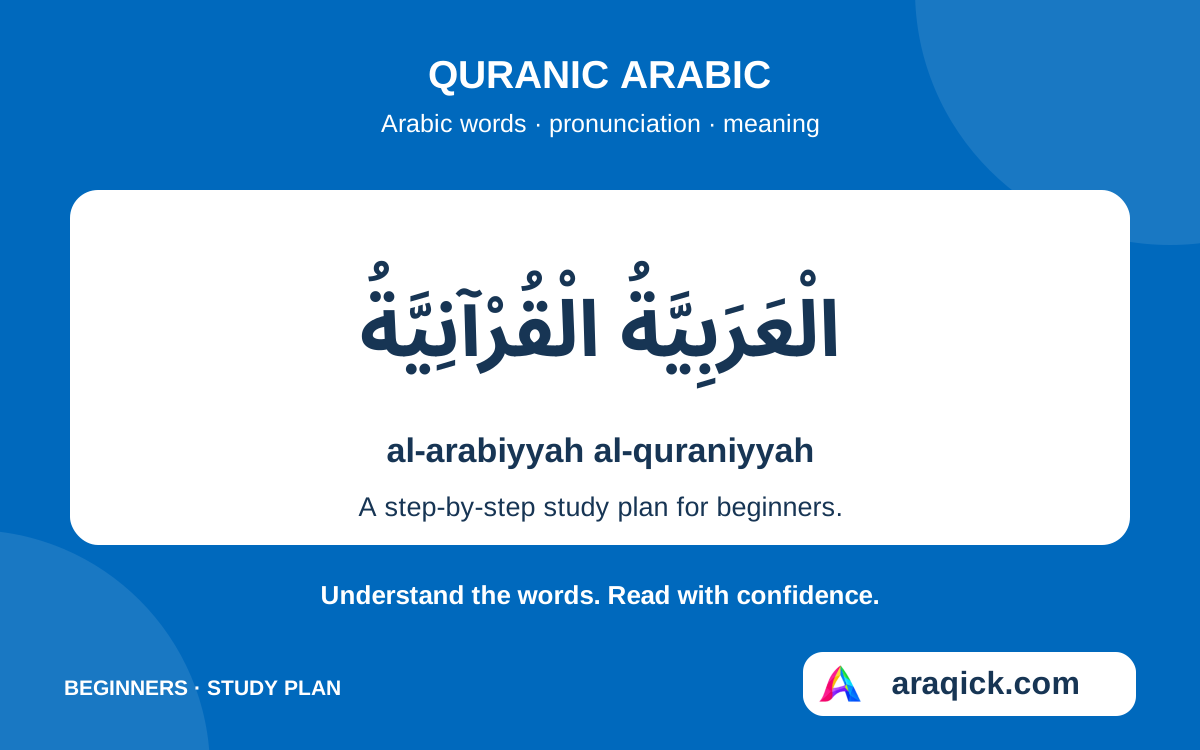
These are pause-form reading aids. Fully marked Arabic may show a final grammatical ending that changes in a sentence. Read each noun beside its related person-word: muslim, mumin and muhsin. For a broader learning routine, our Quranic Arabic study plan combines vocabulary, sounds and short contextual reading.
What to remember
- Islam, iman and ihsan highlight connected ideas of submission, faith and doing good.
- The Jibril report distinguishes their focus; wider usage depends on context.
- Iman begins with long ee, while islam and ihsan begin with short i.
Your reference shelf
Open a guide whenever you need it.
Islam, iman and ihsan comparisonCompare spelling, reading and the focus of the three questions in Muslim 8a.
| Arabic | Pause-form reading | Focus in the Jibril report |
|---|---|---|
| إِسْلَامٌ | islaam | Testimony, prayer, zakat, fasting and pilgrimage when able |
| إِيمَانٌ | eemaan | Faith in God, angels, books, messengers, the Last Day and divine decree |
| إِحْسَانٌ | ihsaan | Worship with awareness of God seeing the worshipper |
Related person-words and verbsA shared root links these forms, but each pattern has its own job.
| Root | Arabic form | Reading | Meaning |
|---|---|---|---|
| س ل م | أَسْلَمَ | aslama | He submitted |
| س ل م | مُسْلِمٌ | muslim | A Muslim; one who submits |
| أ م ن | آمَنَ | aamana | He believed |
| أ م ن | مُؤْمِنٌ | mumin | A believer; hamza is pronounced |
| ح س ن | أَحْسَنَ | ahsana | He did good; he acted well |
| ح س ن | مُحْسِنٌ | muhsin | One who does good |
Sources & further learning
References for the language explanations and learning guidance.