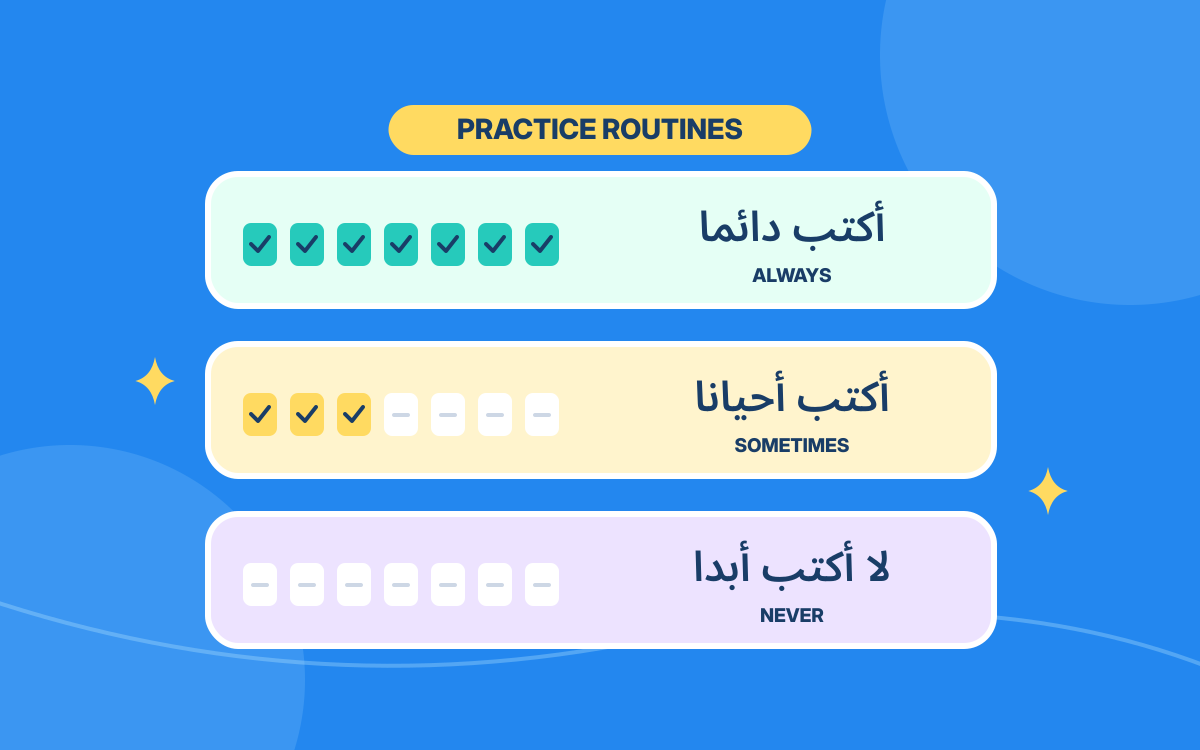
Daiman means always, and ahyanan means sometimes. For never, learn a complete negative sentence such as la aktubu abadan: I never write. These Modern Standard Arabic patterns describe how often something happens. Use three fictional practice routines to see the difference before trying the questions.
01Always: every time in the routine
aktubu daiman
I always write.
أَكْتُبُ aktubu means I write. دَائِمًا daiman adds always. Imagine a practice routine that includes writing every session.
The seven boxes represent seven sessions in this practice routine. Each box has a writing mark.
02Sometimes: on some occasions
aktubu ahyanan
I sometimes write.
Here, writing happens in some sessions and not others. The blue calendar has three writing marks: sessions one, four and six. Other sessions use different activities.
أَحْيَانًا ahyanan means sometimes. The word does not mean exactly three times out of seven; that count belongs to this illustration. It describes occasional repetition without giving a precise schedule.
03Never: keep the whole negative pattern
la aktubu abadan
I never write.
In the third fictional routine, writing is never included. None of the seven boxes has a writing mark.
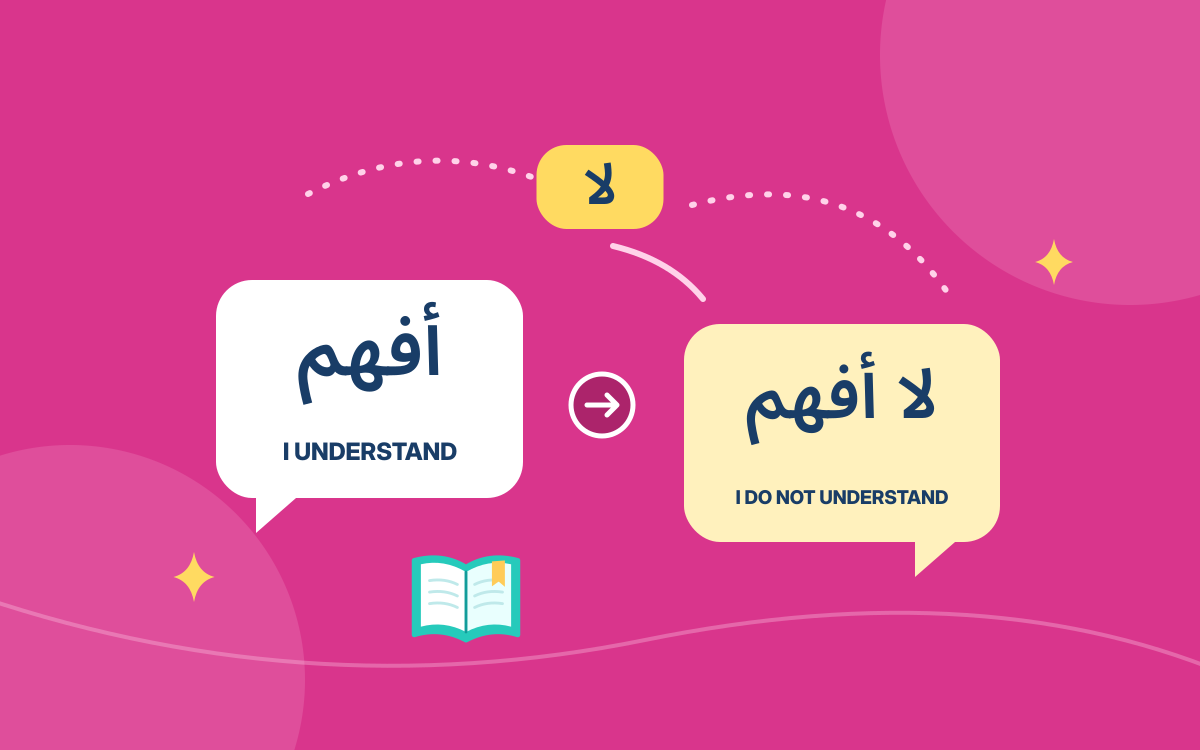
- لَا la makes the present statement negative.
- أَبَدًا abadan strengthens it to never in this sentence.
- The verb remains أَكْتُبُ aktubu.
Do not simply replace daiman with abadan and remove la. Abadan can have other meanings in other constructions; practise it inside the complete negative model here.
04Use a clear practice order
aktubu ahyanan
Verb, then sometimes.
la aktubu abadan
La, then the verb, then abadan.
For these exercises, place always or sometimes after the action. Put la before the verb and abadan at the end for never. This keeps the two patterns easy to compare.
Arabic can place frequency words elsewhere, too. The ordering questions name the practice order so you know which arrangement to build. The meaning depends on the full sentence, not on matching an English word one at a time.
05Try a familiar activity
أَقْرَأُ أَحْيَانًا
aqrau ahyanan
I sometimes read.
لَا أَشْرَبُ الْقَهْوَة أَبَدًا
la ashrabu alqahwa abadan
I never drink coffee.
أَقْرَأُ aqrau means I read. أَشْرَبُ الْقَهْوَة ashrabu alqahwa means I drink coffee. Change the activity while keeping the frequency pattern.
Choose a sentence that is true for you. Always and never are strong claims; sometimes leaves room for variation. When you want an exact count, say the number of times separately rather than assigning a fixed percentage to these words.
What to remember
- Daiman means always; ahyanan means sometimes.
- Use la with the present verb and abadan for the never pattern taught here.
- The calendars illustrate routines; frequency words do not specify fixed percentages.
Your reference shelf
Open a guide whenever you need it.
Keep the frequency patterns nearbyOpen the three writing patterns and two extra examples
| Meaning | Arabic | Plain reading aid |
|---|---|---|
| I always write | أَكْتُبُ دَائِمًا | aktubu daiman |
| I sometimes write | أَكْتُبُ أَحْيَانًا | aktubu ahyanan |
| I never write | لَا أَكْتُبُ أَبَدًا | la aktubu abadan |
| I sometimes read | أَقْرَأُ أَحْيَانًا | aqrau ahyanan |
| I never drink coffee | لَا أَشْرَبُ الْقَهْوَة أَبَدًا | la ashrabu alqahwa abadan |
These examples use present statements about routines. Arabic has other ways to express never, especially when discussing past experience. The simplified reading aids accompany the Arabic spelling rather than replacing it.
Sources & further learning
References for the language explanations and learning guidance.